-
23 February 2023Karsan Hydrogen Fuel Cell Bus e-ATA Hydrogen
-
17 July 2024Small City Buses: The Eco-Friendly Choice for Urban Commutes
-
23 September 2024Different Bus Sizes in Urban Transportation
-
02 October 2024What is a Shuttle Bus? How is it Used in Urban Transportation?
-
29 May 2026Green Hydrogen vs. Battery Electric: Which Zero-Emission Bus Is Right for Your City?
-
15 May 2026Beyond Zero Emissions: Measuring the Real Impact of Sustainable Public Transport
-
08 May 2026Autonomous Driving Levels Explained: From Level 0 to Level 5
-
01 May 2026The Social Impact of Electric Public Transport: Health, Equity and Urban Life
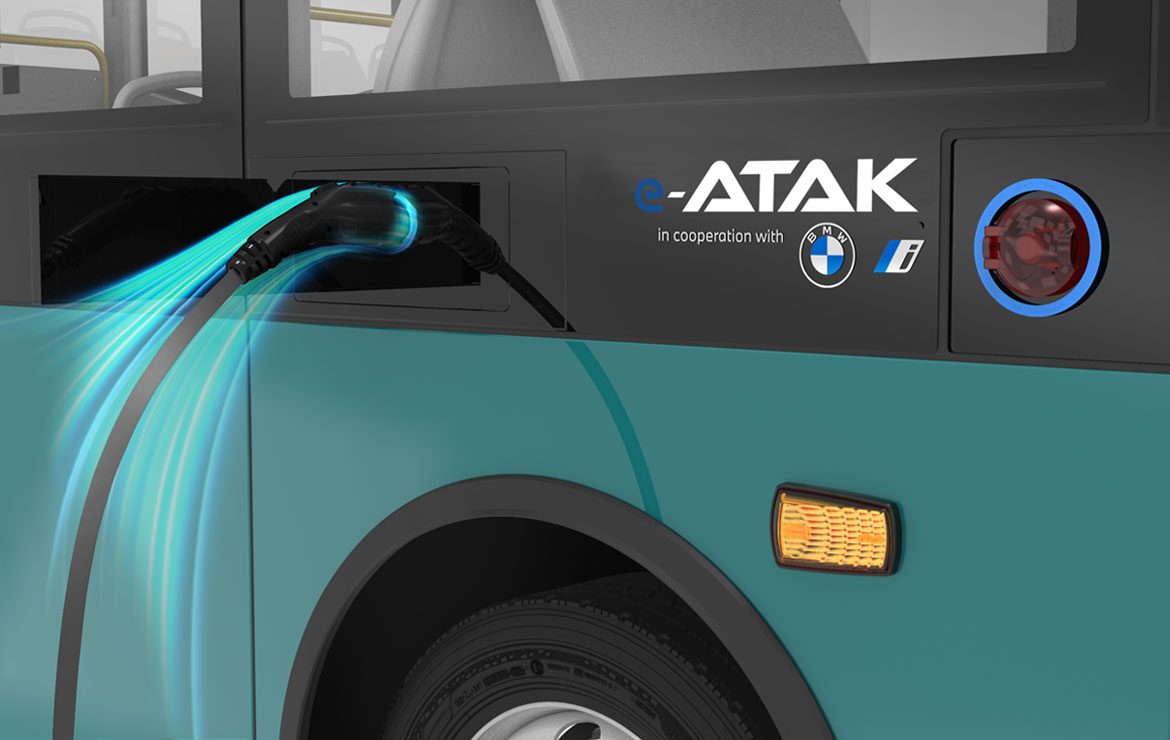
Electrifying a bus fleet is no longer a future plan. For many cities it is an operational reality. Success depends on a well designed charging system that is scalable and easy to manage. The steps below give you a practical route from site selection to smart charging and future proof capacity planning.
Step 1: Location planning
- Analyse routes, depots and layover patterns.
- Map dwell times by shift and by bay.
- Include other on site electrical loads such as lighting and workshops.
- Leave headroom so that capacity can grow with the fleet.
Step 2: Work with the grid operator and the vehicle maker
- Grid upgrades for transformers and feeders can take months, so start early.
- Use utility site surveys to confirm required capacity.
- Track grants and incentives.
- Verify charger to vehicle compatibility with the OEM.
Step 3: Pick your charging strategy
|
Strategy |
Typical Power |
Typical Charging Time |
Best Fit |
|
Depot overnight |
50 to 150 kw |
3 to 10 hours |
Fleets with long parking Windows |
|
Opportunity charging |
300 to 600 kw |
Seconds to 10 mi nutes |
High frequency routes with tight timetables |
|
Hybrid Model |
Mixed |
Mixed |
When you want flexibilty and scale |
Step 4: Smart charging and fleet control
- Automate charge scheduling from live duty needs.
- Use load balancing to flatten peaks.
- Optimise energy cost with time of use tariffs.
- Monitor health and alarms to avoid delays.
Step 5: Plan costs for both capital and operations
Total cost of ownership is the sum of initial investment and running costs. Use a simple framework to keep decisions clear.
Step 5: Cost framework
| Cost Area | What to include |
| Capital | Charges, civil works, grid upgrades, site IT |
| Operations | Electricity, maintenance, software subscription, data links |
| Financing tips | Start with a pilot, a scale in phases, keep power modules modular |
Useful tools
- Argonne AFLEET Online
https://afleet.es.anl.gov/afleet/
- United States Department of Transportation Electric Vehicle Toolkit main page
https://www.transportation.gov/rural/ev/toolkit
Note that infrastructure does not scale in a straight line with fleet size. Each expansion wave needs new space, new capacity and sometimes new control software. A pilot followed by phased growth usually brings the lowest risk.
Step 6: Account for real world operating conditions
Energy use and range vary with weather, driving style, hills and passenger load. Track these factors and adjust the charging plan by season and by route.
Helpful references and planning aids
- FTA resources and guidance for bus electrification
- United States Department of Energy Alternative Fuels Data Center
Operational tips
- Set a route level buffer that reflects winter and summer energy use.
- Use short opportunity charges in peak hours to maintain a healthy reserve.
- Train drivers on smooth acceleration, regenerative braking and efficient speed profiles.
Step 7: Train the team
- Drivers learn safe high voltage practice and efficient operation.
- Technicians learn care of liquid cooled DC equipment and safe work procedures.
- Planners and dispatchers include charging windows in daily run sheets.
Step 8: Build for tomorrow
- Prefer chargers with upgradeable power modules and CCS two or pantograph options.
- Reserve physical space and cable trays for future bays.
- Plan for renewable energy and for battery storage at a later stage.
Quick summary
| Goal | Actions | Benefit |
|---|---|---|
| Grid readiness | Early utility coordination and capacity study | Fewer connection delays |
| Operating efficiency | Smart charging with time of use tariffs | Lower cost per kWh |
| Cost control | TCO modelling and phased growth | Better capital efficiency |
| Service quality | Seasonal range tracking and opportunity charging | Higher service reliability |
Final note
Buses are only as strong as the charging network that supports them. Good decisions on location, grid, strategy, smart control and scalability produce high uptime, low operating cost and cleaner public transport.