-
23 February 2023Karsan Hydrogen Fuel Cell Bus e-ATA Hydrogen
-
17 July 2024Small City Buses: The Eco-Friendly Choice for Urban Commutes
-
23 September 2024Different Bus Sizes in Urban Transportation
-
02 October 2024What is a Shuttle Bus? How is it Used in Urban Transportation?
-
21 September 2026What Is Transit-Oriented Development (TOD)?
-
14 September 2026What Makes a Bus Truly Autonomous? The Sensors and Systems Behind Karsan's e-JEST
-
07 September 2026Measuring Sustainability in Public Transport: Which KPIs Matter Most?
-
28 August 2026Karsan × Toyota: Building the Hydrogen Bus of the Future
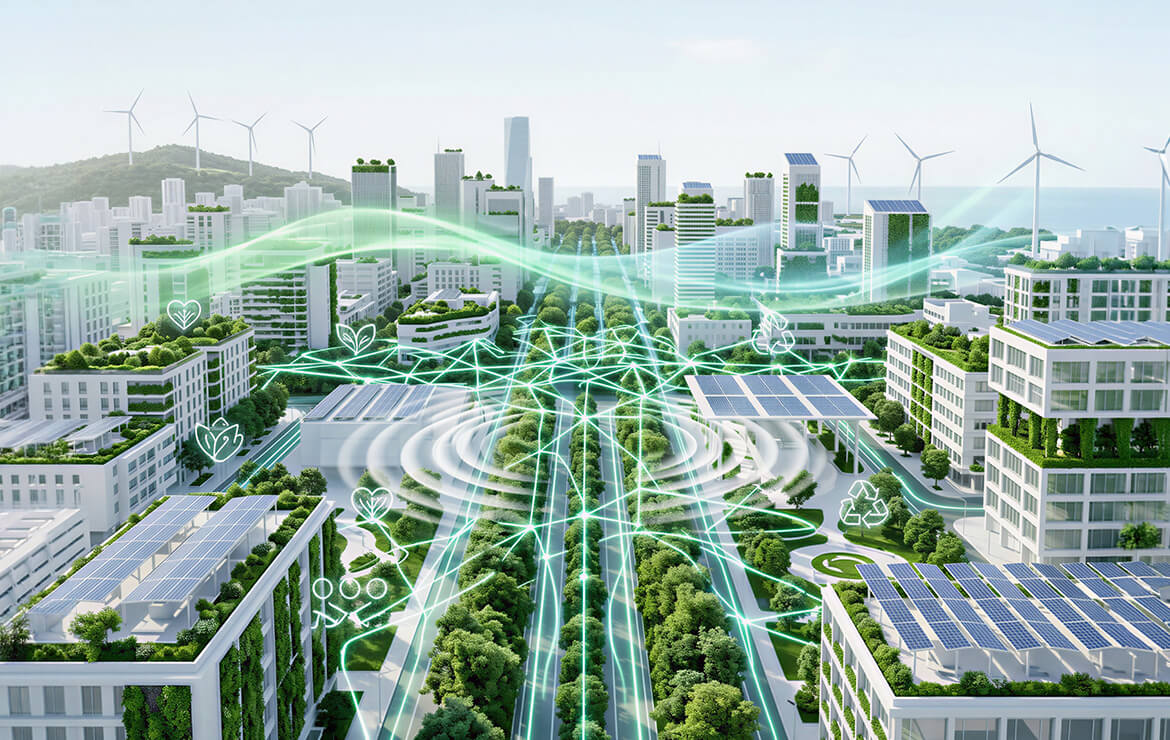
While "zero emissions" has become the primary benchmark for evaluating modern public transit, the true success of sustainable mobility is measured by its holistic impact on the urban ecosystem rather than just the absence of carbon dioxide at the tailpipe. For progressive municipalities, transitioning to a green fleet represents a fundamental shift in public health, economic resilience, and acoustic comfort. Moving beyond simple carbon metrics allows us to understand how advanced technologies—particularly hydrogen and high-capacity electric systems—are reclaiming city streets for the citizens they serve.
Green transit acts as a powerful catalyst for urban renewal and social equity. Decarbonization is merely the starting point of a much larger transformation. Cities are evolving into healthier, more vibrant habitats where technology serves human needs. Modern fleets define the pulse of a smart city by prioritizing long-term environmental harmony.
The Hidden Cost of Urban Air Quality
Traditional internal combustion engines contribute more than just greenhouse gases; they release nitrogen oxides and fine particulate matter, which are directly linked to respiratory diseases and cardiovascular complications in dense urban centers. By eliminating these pollutants at the source, sustainable public transport acts as a preventative healthcare tool for the entire population. Integrating Fuel Cell Electric Vehicles (FCEVs) into the transit mix ensures that the only emission is water, effectively purging toxic elements from the street-level atmosphere where pedestrians, cyclists, and residents are most vulnerable.
Public health remains the ultimate metric for urban success. Cleaner air leads to a measurable reduction in hospital admissions and long-term healthcare costs. Nitrogen oxide levels drop instantly upon the electrification of a route. Particulate matter remains a silent threat that only zero-emission technology can solve. Hydrogen power offers a definitive solution for maintaining total air quality in the busiest corridors.
Acoustic Comfort: The Quiet Revolution
Noise pollution is an often-overlooked environmental hazard that contributes to chronic stress, sleep disruption, and reduced cognitive performance in urban populations. Electric and hydrogen buses operate at significantly lower decibel levels compared to their diesel counterparts, particularly during acceleration and idling at bus stops. This "quiet revolution" transforms the auditory landscape of a city, making outdoor spaces more inviting and increasing the commercial value of residential areas located along high-frequency transit corridors.
Silence significantly enhances the general quality of urban life. Electric motors eliminate the constant roar associated with traditional heavy-duty engines. Street-level stress decreases for residents and workers alike. Peaceful neighborhoods naturally attract more foot traffic and community engagement. Acoustic comfort is now recognized as a key component of modern urban livability.
The Socio-Economic Ripple Effect
The real impact of sustainable transit extends deep into the economic and social fabric of a city. Transitioning to a zero-emission fleet often triggers a "virtuous cycle" that benefits everyone from local business owners to daily commuters. High-quality green transit ensures that all citizens, regardless of income, can move through their city in a healthy, dignified environment.
-
Operational Savings: Lower maintenance requirements and energy costs allow agencies to reinvest in more frequent services.
-
Real Estate Value: Quieter and cleaner streets increase property desirability and support local commerce.
-
Transit Equity: Zero-emission routes ensure that low-income areas do not bear a disproportionate burden of air pollution.
-
Green Job Creation: The shift to electric and hydrogen infrastructure supports new technical roles in the local economy.
Infrastructure investment yields long-term returns for the entire community. Sustainable cities are more successful at attracting top-tier talent and investment. Green fleets significantly reduce the overall environmental cost of high-density living. Efficiency and sustainability drive stable economic growth.
e-ATA Hydrogen: Redefining High-Capacity Sustainability
To achieve total urban air quality without sacrificing operational range or refueling speed, the Karsan e-ATA Hydrogen serves as a pinnacle of sustainable engineering. By utilizing a high-power fuel cell stack and advanced hydrogen storage, this vehicle provides over 500 kilometers of range with a refueling time of less than 10 minutes. It offers the same heavy-duty performance as a traditional bus but with an environmental footprint that is essentially zero—producing only pure water vapor as a byproduct of its energy generation.
Hydrogen power is the ideal solution for long-distance urban routes. Refueling speed matches traditional operational habits, ensuring no loss in service frequency. Range anxiety is eliminated for fleet managers and operators. High-capacity loads require the consistent torque and power that hydrogen technology provides. The e-ATA Hydrogen bridges the gap between massive hauling power and total environmental purity.
Conclusion: A Vision for Total Urban Harmony
The future of public transport lies in a multi-layered approach where innovative technology serves humanity. Measuring the true impact of transit must go beyond the tailpipe to include the breaths taken by children on the sidewalk and the quietude of a neighborhood at night. By championing solutions that deliver zero impact -not just zero emissions - Karsan is helping to build cities that are resilient, inclusive, and fundamentally more human.
The city of tomorrow is shaped by data-driven sustainability, where true progress depends on balancing technological innovation with the natural environment. At the heart of this transformation, public transit remains the backbone of the global green shift. Karsan leads this journey with its hydrogen and electric innovations - moving one step ahead toward a better, more sustainable world.