-
23 February 2023Karsan Hydrogen Fuel Cell Bus e-ATA Hydrogen
-
17 July 2024Small City Buses: The Eco-Friendly Choice for Urban Commutes
-
23 September 2024Different Bus Sizes in Urban Transportation
-
02 October 2024What is a Shuttle Bus? How is it Used in Urban Transportation?
-
21 September 2026What Is Transit-Oriented Development (TOD)?
-
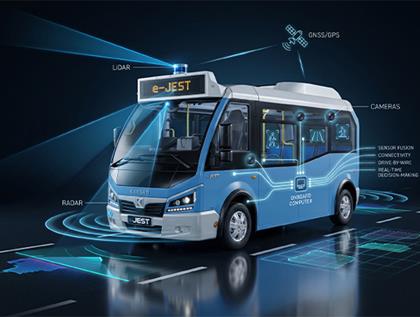
14 September 2026What Makes a Bus Truly Autonomous? The Sensors and Systems Behind Karsan's e-JEST
-
07 September 2026Measuring Sustainability in Public Transport: Which KPIs Matter Most?
-
28 August 2026Karsan × Toyota: Building the Hydrogen Bus of the Future

As urban centers transition away from internal combustion transit networks, municipal transit authorities face growing pressure to quantify their environmental performance. Modern fleet electrification is no longer evaluated solely on local tailpipe reduction; it requires rigorous data harvesting, standardized reporting frameworks, and verifiable key performance indicators (KPIs).
Tracking targeted sustainability metrics enables public transport operators to validate capital investments, optimize depot charging cycles, and comply with strict environmental regulations. Establishing clear benchmark indicators allows transit directors to transform raw operational telemetry into actionable compliance frameworks that prove the broader impact of sustainable public transport.
The 7 Essential Sustainability KPIs for Public Transport Operators
To measure the true ecological footprint of an operating fleet, municipal transit teams must move beyond basic mileage logs and monitor seven core sustainability metrics:
1. Tailpipe Carbon Intensity (gCO2e/km)
Direct Tank-to-Wheel carbon dioxide equivalent emissions generated per vehicle kilometer. Deploying a 100 percent zero emission bus platform brings this metric down to zero, eliminating local combustion toxins inside high-density municipal corridors.
2. Passenger-Kilometer Emissions (gCO2e/pkm)
Carbon intensity scaled to passenger occupancy rates. Evaluating emissions per commuter proves how high-capacity transit reduces per-capita urban pollution compared to private passenger cars.
3. Fleet Energy Efficiency (kWh/km)
Net electrical energy consumed per kilometer driven. Monitoring onboard energy draws under varying weather conditions, passenger loads, and topographies allows fleet managers to evaluate vehicle thermal management efficiency and driver behavior.
4. Fleet Electrification Ratio (%)
The proportion of active zero-emission vehicles is relative to total municipal fleet inventory. Tracking this ratio supports long-term route planning and aligns transit operations with municipal fleet compliance planning for Low Emission Zones.
5. Acoustic Noise Reduction (dBA Delta)
Decibel level reductions achieved by replacing internal combustion engines with electric drivetrains. Lowering ambient vehicle noise from typical diesel levels (75–85 dBA) down to electric baseline levels (60–65 dBA) improves urban liveability and cabin comfort.
6. Regenerative Braking Energy Recovery (%)
The percentage of total propulsion energy captured during vehicle deceleration and returned to the traction battery. High-efficiency regenerative braking reclaims up to 30 percent of kinetic energy while significantly reducing mechanical brake pad wear.
7. Fleet Availability and Uptime Ratio (%)
The percentage of total scheduled operating hours that zero-emission assets remain fully operational. High vehicle uptime validates hardware durability and diagnostic reliability across active daily shift blocks.
Standardizing Data: ESG Reporting Frameworks (GRI & TCFD)
Collecting telemetry is only the first step; sustainability data must be structured to meet global Environmental, Social, and Governance (ESG) compliance mandates. Municipal transit operators and financial stakeholders rely primarily on two standardized frameworks:
-
Global Reporting Initiative (GRI): The GRI 300 series provide specific disclosure guidelines for environmental performance. Under GRI 302 (Energy) and GRI 305 (Emissions), transit agencies report direct Scope 1 emissions, indirect Scope 2 electricity consumption, and Scope 3 supply chain footprints.
-
Task Force on Climate-related Financial Disclosures (TCFD): TCFD guidelines require operators to disclose climate risks and opportunities across four core pillars: Governance, Strategy, Risk Management, and Metrics & Targets. Reporting verified kWh/km and fleet electrification ratios proves a transit agency's resilience against rising carbon taxes and regulatory penalties.
Structuring daily telemetry into GRI and TCFD formats simplifies annual auditing, unlocks green bond financing, and satisfies municipal oversight boards.
Real-World Telemetry: Fleet Insights from Stavanger, Luxembourg, and Florence
Validating sustainability metrics requires evaluating hardware performance in demanding operational environments across European cities:
-
Stavanger, Norway (Autonomous Level 4 Efficiency): Operating in harsh Scandinavian weather along Line 18, the Autonomous e-ATAK serves as Europe's first Level 4 driverless bus capable of navigating complex harbor routes and tunnels. Telemetry logs demonstrate that automated drive-by-wire controls deliver smoother acceleration profiles, optimizing energy efficiency and maintaining consistent kWh/km performance across severe winter temperature fluctuations.
-
Luxembourg (Large-Scale Intercity Decarbonization): Deployed across Europe's largest single midibus fleet of 89 e-ATAK units operating for six regional transit providers, regional authorities track fleet-wide electrification ratios to replace intercity diesel lines. Aggregated fleet telemetry shows massive regional Scope 1 emissions reductions while maintaining high vehicle uptime across intercity routes.
-
Florence, Italy (Compact Urban Heritage Preservation): In the tight historic center of Florence, a fleet of 12 100 percent electric e-JEST minibuses operates inside ancient city walls. Telemetry highlights exceptional energy recovery via regenerative braking on steep historic climbs, while the compact electric minibus footprint eliminates localized tailpipe pollutants and delivers dramatic dBA noise reductions in narrow stone corridors.
Partnering with an Advanced Electric Bus Manufacturer
Establishing a data-driven transit network requires a bus manufacturer that integrates diagnostic telemetry directly into vehicle hardware. As a leading electric bus manufacturer, Karsan designs its zero-emission portfolio from the agile electric micro bus and electric minibus up to the full-size electric city bus with high-throughput CAN bus gateways and real-world diagnostic interfaces.
Whether deploying a single zero emission minibus for historic city centers or scaling a full electric bus municipal fleet, Karsan provides the hardware reliability and data visibility needed to achieve ESG compliance and optimize route productivity.
Conclusion: Transforming Telemetry into Sustainable Transit Growth
Measuring sustainability in public transport is no longer an optional marketing exercise; it is an operational and financial necessity. By tracking core KPIs—such as gCO2e/pkm, kWh/km, and energy recovery percentages—transit agencies can optimize daily depot logistics, lower operational overhead, and satisfy strict GRI and TCFD reporting standards.
To discover how a field-proven zero-emission portfolio can elevate your municipal transit KPIs and streamline ESG compliance, transit directors can explore the modular hardware and digital diagnostic solutions available across Karsan’s Electric Public Transport Range.