-
23 February 2023Karsan Hydrogen Fuel Cell Bus e-ATA Hydrogen
-
17 July 2024Small City Buses: The Eco-Friendly Choice for Urban Commutes
-
23 September 2024Different Bus Sizes in Urban Transportation
-
02 October 2024What is a Shuttle Bus? How is it Used in Urban Transportation?
-
21 September 2026What Is Transit-Oriented Development (TOD)?
-
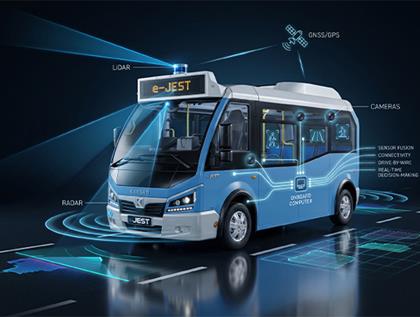
14 September 2026What Makes a Bus Truly Autonomous? The Sensors and Systems Behind Karsan's e-JEST
-
07 September 2026Measuring Sustainability in Public Transport: Which KPIs Matter Most?
-
28 August 2026Karsan × Toyota: Building the Hydrogen Bus of the Future

The rapid evolution of municipal transit requires technological partnerships capable of scaling advanced zero-emission solutions. As European cities establish strict decarbonization targets, municipal operators need heavy-duty vehicles that deliver the operational range and rapid refueling performance of legacy diesel platforms without environmental trade-offs.
The strategic engineering collaboration between Karsan, a leading electric bus manufacturer, and Toyota represents a significant milestone in heavy-duty transit integration. Rather than treating hydrogen technology as a third-party retrofit, this synergy combines Karsan’s high-capacity low-floor vehicle architecture with Toyota’s proven 2nd-generation fuel cell module. The result is the e-ATA Hydrogen, a purpose-built hydrogen bus platform designed to meet the rigorous demands of modern urban transit networks.
Hardware Synergy: Integrating Toyota’s Fuel Cell with Karsan’s Architecture
Executing a reliable fuel cell bus platform requires seamless integration between the electrochemical power generator and the vehicle chassis. At the heart of the e-ATA Hydrogen is Toyota’s 85 kW (continuous) 2nd-generation polymer electrolyte fuel cell stacks a technology refined across millions of operational miles in Toyota’s global zero-emission vehicles and supplied via Toyota Motor Europe’s commercial hydrogen powertrain division.
To maximize passenger capacity, structural safety, and weight distribution, Karsan engineers designed a specialized chassis framework specifically tailored for hydrogen hardware:
- Roof-Mounted Component Topology: The fuel cell module, ultra-lightweight Type 4 composite hydrogen storage tanks, and cooling units are positioned entirely on the roof structure. This spatial layout preserves a 100 percent full low-floor interior corridor, maximizing passenger capacity and accessibility.
- Thermal Management Integration: Toyota’s compact fuel cell stack generates high electrical power alongside waste heat. Karsan integrates advanced liquid-cooling loops that manage stack temperatures while capturing waste heat to power cabin HVAC systems, eliminating auxiliary battery drain during cold weather operations.
- Structural Crash Safety: The roof mounting framework incorporates reinforced load-bearing crash structures that isolate the 350-bar hydrogen tanks from collision impacts, fulfilling stringent UN R134 safety compliance mandates.
Powertrain Dynamics: How Hydrogen and Electricity Interact Onboard
A common misconception in heavy-duty transit is that a hydrogen bus replaces electric propulsion. A hydrogen-powered vehicle is an advanced hybrid-electric platform where hydrogen serves as an onboard energy carrier, and the fuel cell functions as a continuous electricity generator.
The onboard energy conversion pipeline operates through a synchronized tri-component system:
- Electrochemical Energy Conversion: Pressurized hydrogen gas stored at 350 bar feeds into Toyota’s fuel cell stack, reacting with atmospheric oxygen to produce electricity, heat, and pure water vapor.
- Dynamic Energy Buffering: The electricity generated by the fuel cell powers the vehicle directly or charges an onboard high-durability Lithium-titanate-oxide (LTO) battery pack. This battery acts as a high-discharge buffer during peak acceleration and stores energy captured during kinetic regenerative braking.
- High-Torque Electric Propulsion: Power is routed from the buffer system to integrated electric portal axle motors, delivering continuous torque to the wheels without mechanical transmission losses.
This dual-source energy architecture protects the fuel cell stack from transient power spikes, ensuring optimal electrochemical efficiency and extending the operational lifespan of the core stack components. Operators analyzing the underlying physics of electrochemical propulsion can explore broader system mechanisms by reviewing What Is a Hydrogen Fuel Cell Bus?
Range, Capacity, and Rapid Refueling Performance
While battery-electric platforms are ideal for urban routes with predictable depot charging, long-distance municipal corridors require extended range and high vehicle utilization. The e-ATA Hydrogen bridges this gap by providing heavy-duty performance that matches diesel operational profiles.
The platform achieves outstanding operational metrics across key transit parameters:
- Over 500 Kilometers of Operational Range: Equipped with a 1,560-liter total capacity across its composite hydrogen storage array (holding approximately 37 kilograms of usable hydrogen), the e-ATA Hydrogen delivers a verified range exceeding 500 kilometers on a single fill under real-world municipal driving conditions.
- Rapid 7-to-10 Minute Refueling: Unlike battery-electric vehicles that require hours of depot plug-in charging or expensive pantograph infrastructure, a 12-meter zero emission bus powered by hydrogen refuels completely in under 10 minutes at standard 350-bar filling stations.
- Uncompromised Passenger Capacity: By optimizing axle weight distribution and roof integration, the 12-meter e-ATA Hydrogen accommodates up to 90 passengers, ensuring high passenger throughput during peak transit hours.
For transit agencies evaluating long-term fleet decarbonization, hydrogen offers clear operational advantages for high-mileage, hilly, or extreme-temperature routes. Municipal teams reviewing regional infrastructure integration and energy feasibility can examine global deployment outlooks in Hydrogen as the Fuel of the Future: Benefits, Challenges, and Global Outlook .
Real-World Operational Deployments Across Europe
The Karsan and Toyota collaboration has progressed beyond prototype engineering into active municipal service across European transit networks. Urban operators deploying the e-ATA Hydrogen report distinct operational advantages in severe route environments:
- Cold-Weather Range Resilience: In northern European climate conditions where winter temperatures drop below freezing, battery-electric vehicles experience range degradation due to cabin heating demands. The e-ATA Hydrogen utilizes waste thermal energy from the Toyota fuel cell to heat the cabin, maintaining its 500+ km range without sacrificing passenger comfort.
- Continuous Multi-Shift Availability: In high-density cities requiring 18-to-24-hour continuous vehicle availability, rapid 7-minute refueling allows a single electric bus asset to run back-to-back shifts without extended depot downtime.
Operators seeking detailed technical specifications and modular vehicle options can analyze the complete engineering framework available at the official vehicle platform showcase: Karsan e-ATA Hydrogen .
Conclusion: Scaling Next-Generation Zero-Emission Transit
The partnership between Karsan and Toyota demonstrates how combining specialized chassis manufacturing with world-class fuel cell technology creates a market-ready solution for heavy-duty zero-emission transit. By integrating Toyota’s 85 kW fuel cell module directly into Karsan’s high-capacity 12-meter platform, the e-ATA Hydrogen delivers the long range, high passenger capacity, and rapid refueling required to decarbonize complex municipal bus networks.
As cities expand their zero-emission mandates, hydrogen fuel cell technology will play a vital role alongside battery-electric fleets, providing municipal transit authorities with the operational flexibility needed to achieve complete fleet electrification.