-
23 February 2023Karsan Hydrogen Fuel Cell Bus e-ATA Hydrogen
-
17 July 2024Small City Buses: The Eco-Friendly Choice for Urban Commutes
-
23 September 2024Different Bus Sizes in Urban Transportation
-
02 October 2024What is a Shuttle Bus? How is it Used in Urban Transportation?
-
21 September 2026What Is Transit-Oriented Development (TOD)?
-
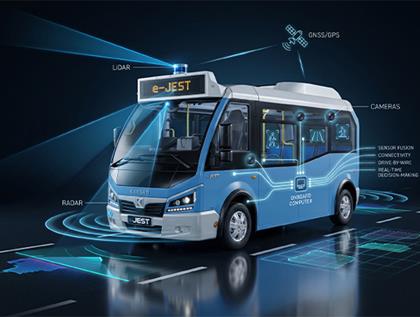
14 September 2026What Makes a Bus Truly Autonomous? The Sensors and Systems Behind Karsan's e-JEST
-
07 September 2026Measuring Sustainability in Public Transport: Which KPIs Matter Most?
-
28 August 2026Karsan × Toyota: Building the Hydrogen Bus of the Future
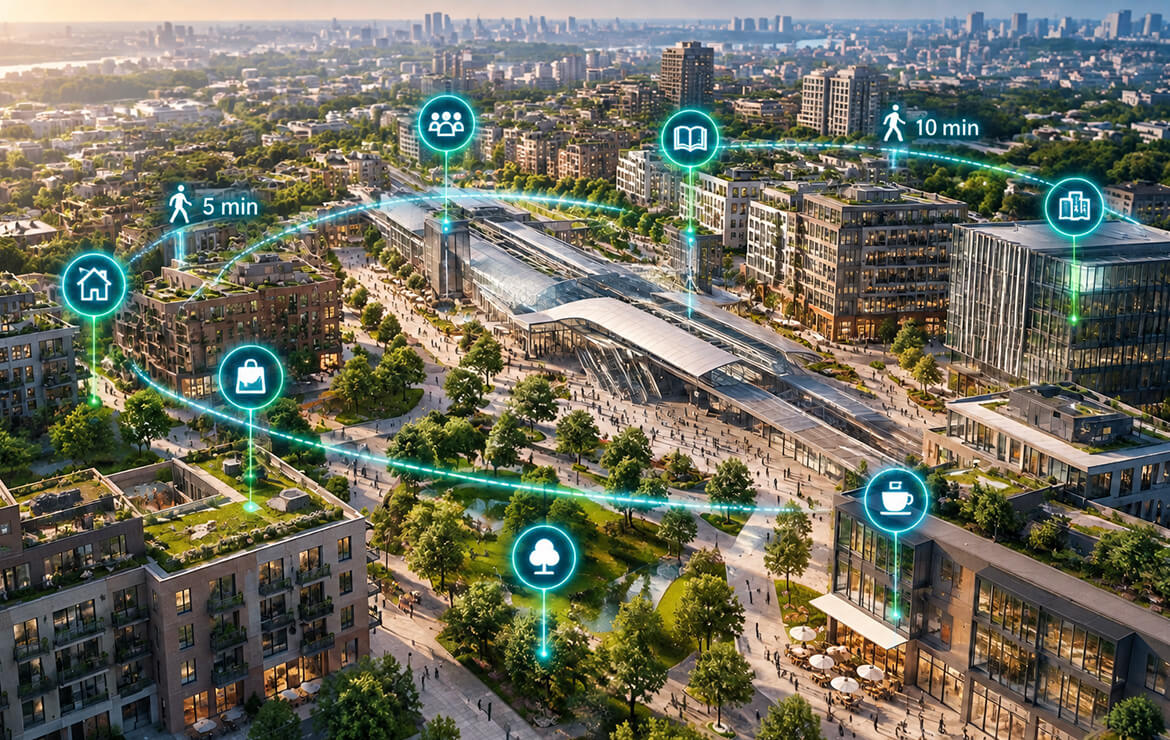
Modern urban centers are confronting an escalating mobility crisis driven by decades of automobile-centric planning. Rapid urban expansion, chronic traffic gridlock, degraded air quality, and fragmented neighborhoods have exposed the fundamental limitations of car-dependent infrastructure. To reverse these trends, city planners and municipal leaders are adopting Transit-Oriented Development (TOD)—an urban design framework that concentrates compact, mixed-use communities within comfortable walking distance of high-frequency public transportation.
Rather than treating housing, commercial centers, and transit infrastructure as isolated municipal silos, TOD integrates them into a unified spatial ecosystem. This human-scaled paradigm shifts the focus of municipal growth away from highway expansion and toward people-focused urban transport planning, creating vibrant, walkable neighborhoods centered around clean public transit.
Core Principles of Transit-Oriented Development
At its core, Transit-Oriented Development aligns land use and mobility infrastructure through a structured, multi-dimensional planning model. Successful TOD frameworks operate around four interconnected spatial principles:
-
High-Quality Transit Proximity: Centering residential and commercial density within a 400 to 800-meter radius (a 5-to-10-minute walk) of high-capacity transit nodes, such as metro rail stations, tram corridors, or rapid bus stops.
-
Pedestrian-First Walkability and Active Mobility: Designing continuous, barrier-free sidewalks, dedicated bike corridors, traffic-calming street layouts, and pedestrianized public squares that make walking and micromobility the most intuitive choice for short trips.
-
Mixed-Use Compact Density: Integrating commercial storefronts, co-working spaces, grocery retail, and healthcare facilities on ground floors, with residential housing stacked above. This eliminates the need for daily vehicle trips to accomplish basic errands.
-
Smart Parking Reforms: Eliminating outdated municipal minimum parking mandates, introducing decoupled parking pricing, and converting excess surface parking lots into mixed-use civic developments or green public spaces.
Decoupling Urban Mobility from Car Dependency
Private vehicle dependency is built on suburban sprawl and single-use Euclidean zoning, which mandate automobile ownership for everyday survival. In car-dependent metropolitan regions, personal vehicles account for more than 75 to 85 percent of all daily passenger trips.
TOD breaks this dependency by shrinking the physical distance between daily destinations. By concentrating employment hubs, daily services, and diverse housing types directly around high-frequency transit stops, TOD achieves significant structural shifts in passenger modal choice:
-
Modal Shift to Clean Transit: Municipalities implementing rigorous TOD frameworks demonstrate a 20 to 40 percent reduction in localized vehicle miles traveled (VMT) compared to conventional suburban developments.
-
The "15-Minute City" Dynamic: Residents living in mature transit-oriented corridors achieve over 50 percent of their daily errands via walking, cycling, or transit, fundamentally reducing household vehicle ownership rates from an average of 1.8 cars per household down to 0.7 or fewer.
-
Alleviating Road Inequity: Decoupling daily mobility from vehicle ownership frees up household budgets, as automobile maintenance, insurance, and fuel routinely consume 15 to 20 percent of personal household income in car-centric regions.
Environmental Footprint: Cutting Congestion and Urban Emissions
Transportation represents one of the largest direct sources of global greenhouse gas (GHG) emissions and urban criteria air pollutants. Internal combustion passenger vehicles generate roughly 120 to 180 grams of CO2 equivalent per passenger-kilometer (gCO2e/pkm) in typical stop-and-go commuting.
When mixed-use planning reduces personal vehicle reliance, the environmental returns compound exponentially:
-
Congestion Mitigation: Every commuter who shifts from single-occupancy vehicle travel to public transit frees up valuable street capacity, mitigating gridlock and eliminating idling waste.
-
Air Quality and Public Health: Reducing fossil-fuel vehicular traffic directly curtails localized emissions of toxic nitrogen oxides (NOx) and fine particulate matter (PM2.5/PM10), lowering childhood asthma rates and urban respiratory illnesses.
-
Decarbonization at Scale: By replacing private car journeys with electrified collective transport, a thriving TOD ecosystem allows cities to harvest the broader impact of sustainable public transport, transforming urban corridors into low-carbon, livable communities.
The Role of Electric Bus Networks in Scalable TOD Corridors
While rail networks historically served as the primary anchors for TOD projects, light rail and subway expansions require decades of construction and capital investments exceeding €50–150 million per kilometer. Consequently, modern urban planners increasingly deploy Bus Rapid Transit (BRT) and high-frequency bus lines as agile, cost-effective backbones for transit-oriented growth.
Integrating an electric city bus fleet along dedicated transit right-of-ways delivers the high passenger throughput of light rail at a fraction of the infrastructure cost. Transitioning these high-capacity trunk lines to a zero emission bus platform eliminates localized exhaust emissions along dense residential streetscapes. Furthermore, because electric drivetrains operate at whisper-quiet sound thresholds (60–65 dBA at low speeds compared to 75–85 dBA for combustion engines), deploying a modern transit electric bus on urban avenues preserves outdoor dining, street retail, and quiet residential living directly adjacent to active bus stops.
Feeder Routes: Micro-Transit and First-Mile/Last-Mile Connectivity
High-capacity trunk lines cannot sustain a transit-oriented district in isolation. The ultimate success of a TOD depends on seamless first-mile and last-mile connectivity—ensuring that residents living on the perimeter of transit catchment zones can reach core rail and BRT hubs without getting behind the wheel of a personal vehicle.
In dense neighborhood streets, steep topographies, and historic urban cores where 12-meter or 18-meter transit vehicles cannot maneuver, agile micro-transit provides the missing link:
-
Agile Demand-Responsive Routing: An electric minibus operates smoothly through tight radius curves and historic pedestrian-shared zones, connecting outer residential pockets directly to central multimodal interchanges.
-
Optimized Fleet Sizing: Running a compact zero emission minibus on neighborhood feeder routes prevents the energy waste of running empty full-size buses during off-peak hours, maintaining high transit frequency while keeping operational energy consumption below 0.6–0.9 kWh/km.
-
Modal Interchange Synergy: Designing intermodal transit plazas that pair feeder bus drop-offs with secure bicycle storage, shared micro-mobility racks, and real-time transit telemetry gives commuters a frictionless transfer experience from their front doors to regional rail networks.
Social Accessibility and Economic Vitality
Beyond ecological preservation and traffic flow, Transit-Oriented Development serves as an engine for inclusive economic growth and social equity:
-
Universal Accessibility: Universal design principles ensure level boarding platforms, tactile paving, low-floor transit entries, and step-free pedestrian crosswalks, granting elderly citizens, children, and individuals with disabilities equal access to municipal services.
-
Equitable Access to Employment: Low-income households disproportionately rely on public transit. By co-locating affordable housing directly adjacent to transit nodes, TOD connects marginalized communities to regional employment clusters, higher education, and quality healthcare.
-
Commercial Foot Traffic and Land Value: Walkable streetscapes generate substantially higher retail foot traffic and commercial vitality than drive-through retail models. Compact transit hubs consistently outperform car-oriented retail strips in long-term commercial real estate resilience and municipal tax revenues per hectare.
Tailoring Fleet Architecture for Next-Generation TOD Corridors
Realizing the full potential of Transit-Oriented Development requires matching vehicle capacities to specific neighborhood densities and passenger route profiles. Rather than relying on a one-size-fits-all vehicle strategy, progressive transport authorities deploy specialized electric bus solutions for urban mobility across tiered route structures:
-
Neighborhood Feeder and Micro-Transit Lines: On narrow historical streets and low-density feeder lines, compact platforms like the 5.8-meter Karsan e-JEST provide quiet, zero-emission agility without disrupting sensitive pedestrian-first zones.
-
Intermediate Secondary Corridors: On feeder routes connecting high-density residential developments to primary metro corridors, 8.3-meter midibuses like the Karsan e-ATAK maintain high passenger throughput while navigating complex suburban turning geometries.
-
High-Capacity Backbone Corridors: On primary multi-modal avenues and dedicated BRT lines, 10, 12, and 18-meter vehicles like the Karsan e-ATA platform deliver the rapid passenger exchange, full low-floor accessibility, and continuous multi-shift endurance needed to power central transit hubs.
By harmonizing compact land use with an appropriately scaled electric bus ecosystem, municipalities can dismantle vehicle dependency and create resilient, human-centered cities built to thrive for generations.