-
23 February 2023Karsan Hydrogen Fuel Cell Bus e-ATA Hydrogen
-
17 July 2024Small City Buses: The Eco-Friendly Choice for Urban Commutes
-
23 September 2024Different Bus Sizes in Urban Transportation
-
02 October 2024What is a Shuttle Bus? How is it Used in Urban Transportation?
-
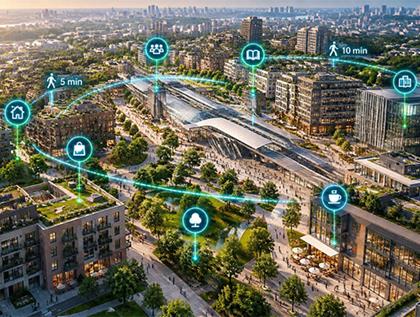
21 September 2026What Is Transit-Oriented Development (TOD)?
-
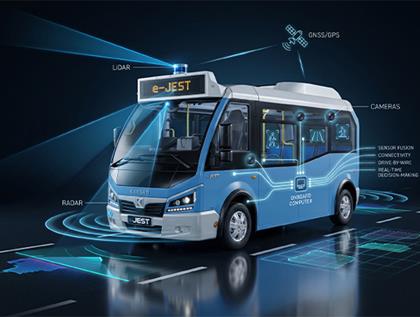
14 September 2026What Makes a Bus Truly Autonomous? The Sensors and Systems Behind Karsan's e-JEST
-
07 September 2026Measuring Sustainability in Public Transport: Which KPIs Matter Most?
-
28 August 2026Karsan × Toyota: Building the Hydrogen Bus of the Future
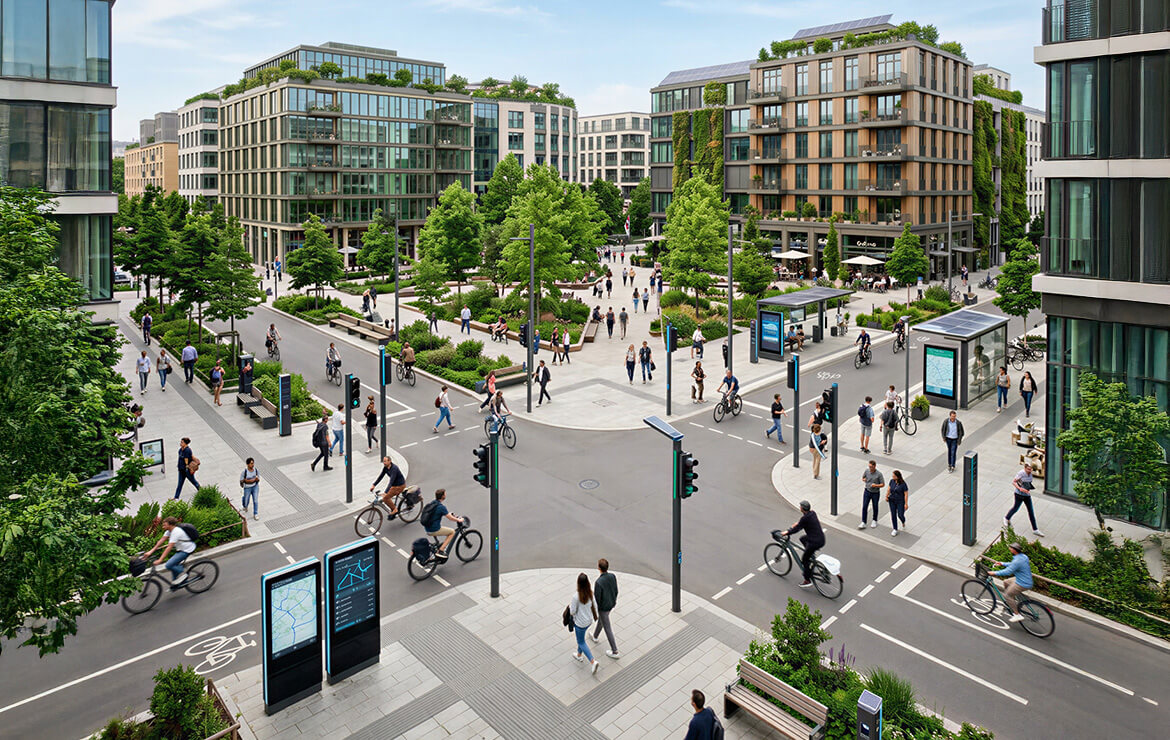
The traditional model of urban planning, which long prioritized private vehicle ownership and expansive road infrastructure, is facing a critical turning point as cities worldwide grapple with congestion, air quality crises, and the urgent need for decarbonization. To build a resilient urban future, transit authorities must move beyond incremental changes and fundamentally rethink how people move through the city fabric. This evolution requires a shift toward human-centric design, where public transportation acts as the primary backbone of an integrated, efficient, and clean mobility ecosystem.
Urban mobility is undergoing a fundamental shift - moving away from car-centric planning toward people-focused design. Cities are reclaiming public spaces for their citizens, while efficiency becomes the defining benchmark of success. Data-driven decision-making is replacing intuition, and sustainability is no longer an option but a guiding principle shaping every investment.
Priority 1: Holistic Fleet Electrification and Zero-Emission Targets
The first priority for any modern city is the complete transition away from fossil-fuel-dependent transit systems. While many municipalities have conducted successful pilot programs, the next phase requires the large-scale electrification of entire depots and networks. This transition involves more than just vehicle procurement; it demands a strategic overhaul of energy infrastructure, smart grid integration, and a commitment to zero-tailpipe emissions across all weight classes, from compact shuttles to articulated heavy-duty buses.
Zero emissions are no longer optional - they are the new standard. As transit systems shift toward renewable energy, high-capacity routes demand consistent, reliable performance. With electrification at scale, operational costs steadily decline, while tailpipe emissions are eliminated for good-paving the way for cleaner, more sustainable cities.
Priority 2: Multimodal Integration and Right-Sizing
A major challenge for urban transit is the inefficiency caused by using the wrong vehicle for the wrong route. Cities must prioritize "right-sizing"- the strategic deployment of diverse vehicle sizes to match specific neighborhood textures. This involves integrating high-speed arterial lines with agile, compact feeders that close the accessibility gap. By fostering a multimodal environment where buses, trains, and last-mile shuttles operate as a single, unified network, cities can significantly reduce car dependency.
In a well-designed urban network, each vehicle plays its role - agile shuttles serve residential areas, while articulated buses efficiently carry demand along the busiest corridors. Seamless transfers enhance the overall passenger experience, and strong connectivity becomes the key to growing ridership. Together, this multimodal approach helps cities reduce congestion and move more people, more efficiently.
Priority 3: The European Success Model in E-Mobility
The acceleration of these priorities is most visible in regions where political will meets technological innovation. Across Europe, cities are setting global benchmarks for how to execute a rapid transition to sustainable mobility. Karsan has been a key partner in this shift, providing the technological foundation for some of the most ambitious transit projects on the continent. By analyzing these real-world applications, it becomes clear that Karsan's electric buses power Europe's urban revolution by delivering reliable, high-performance solutions that meet the rigorous demands of European city centers.
Across Europe, strong policy frameworks are accelerating the adoption of advanced mobility technologies, with air quality at the top of urban agendas. Innovation is continuously tested and proven within complex city environments. In this transformation, Karsan stands as a trusted mobility partner—delivering proven solutions that not only meet today’s challenges but also inspire the next wave of global transit innovation.
Priority 4: Data-Driven Digitalization and Autonomy
The future of urban transport is increasingly defined by intelligence. Digitalization allows transit operators to optimize routes in real-time based on demand, reducing energy waste and improving service frequency. Furthermore, the integration of autonomous technology -specifically Level 4 high automation- presents a solution to labor shortages and operational safety. Cities that prioritize digital infrastructure today will be the ones that lead the transition to autonomous, on-demand public transit tomorrow.
Intelligent software optimizes every kilometer, while real-time data minimizes waiting times and enhances service efficiency. With the integration of autonomy, reliability reaches a new level, supported by smart systems that actively manage energy consumption. At the same time, digital twin technologies enable cities to plan and scale future mobility with confidence.
Conclusion: The Vision for One Step Ahead Mobility
The path forward for urban transport requires a bold departure from the status quo. By prioritizing zero-emission technology, multimodal right-sizing, and intelligent digitalization, municipalities can create cities that are not only cleaner but also more productive and inclusive. Karsan continues to support this global transformation, staying one step ahead in the future of mobility by providing the versatile tools needed to solve the transit challenges of the 21st century.
Cities are evolving into quieter, cleaner, and more livable spaces. Inclusive transit systems are extending mobility to every citizen, while technology continues to break down traditional barriers. As the green transition accelerates, the future of urban life is being shaped by sustainable innovation.