-
23 February 2023Karsan Hydrogen Fuel Cell Bus e-ATA Hydrogen
-
17 July 2024Small City Buses: The Eco-Friendly Choice for Urban Commutes
-
23 September 2024Different Bus Sizes in Urban Transportation
-
02 October 2024What is a Shuttle Bus? How is it Used in Urban Transportation?
-
21 September 2026What Is Transit-Oriented Development (TOD)?
-
14 September 2026What Makes a Bus Truly Autonomous? The Sensors and Systems Behind Karsan's e-JEST
-
07 September 2026Measuring Sustainability in Public Transport: Which KPIs Matter Most?
-
28 August 2026Karsan × Toyota: Building the Hydrogen Bus of the Future
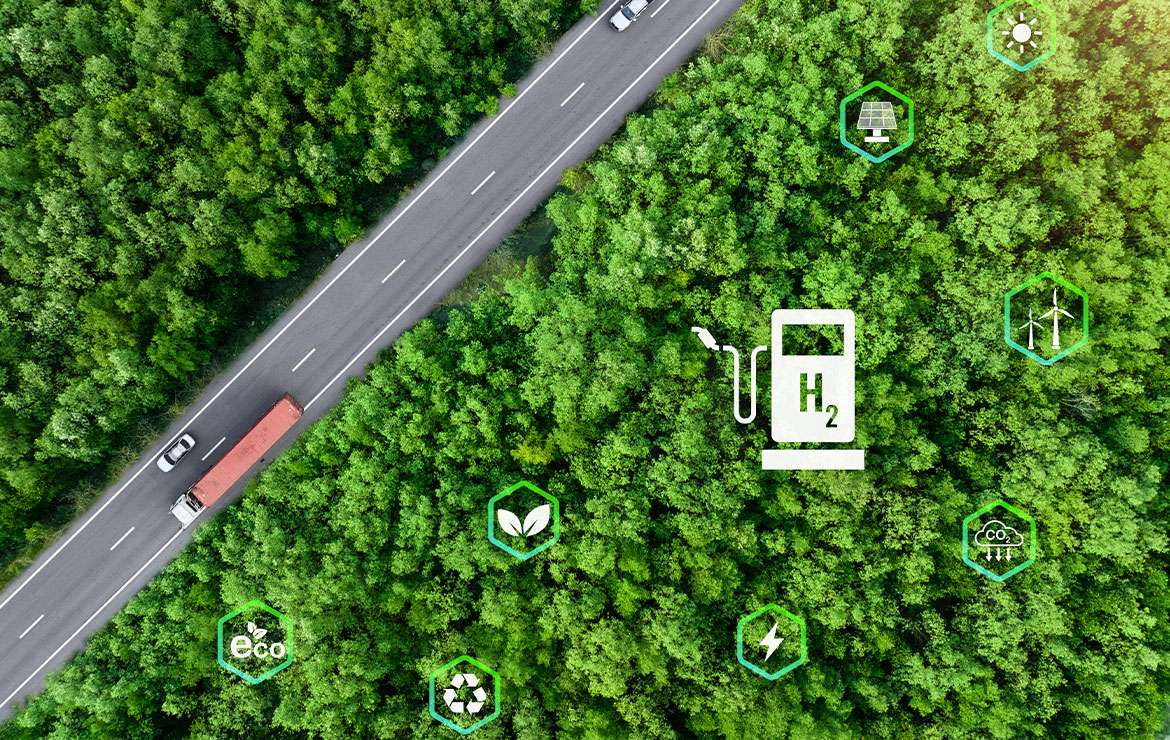
For decades, cities have paid the price of running transportation systems on fossil fuels. Urban air has been choked by nitrogen oxides (NOx) and fine particulates (PM) — pollutants directly linked to diesel engines.
Hydrogen fuel cell electric vehicles (FCEVs) are rapidly shifting from promise to implementation. Their tailpipe emissions are nothing but water vapor — no soot, no toxic gases, no exhaust odor. For cities seeking true zero-emission mobility, this single characteristic is transformative.
Beyond Carbon: The Real Impact of Clean Air
While climate discussions often focus on CO₂, urban air quality represents an equally urgent crisis.
The World Health Organization reports that over 90% of the world’s population breathes air exceeding safe pollution limits. In many major cities, road transport contributes up to 50% of local NOx emissions.
These pollutants:
- Damage lung function
- Reduce life expectancy
- Increase healthcare costs
- Disproportionately affect vulnerable populations
Governments worldwide — from the EU Green Deal to the U.S. Clean Power Plan to China’s 2030 carbon-peak strategy — place hydrogen at the center of long-term decarbonization strategies.
The Hydrogen Advantage
Hydrogen’s power comes from chemistry, not combustion.
FCEVs use a fuel cell stack to generate electricity via an electrochemical reaction between hydrogen and oxygen. The only outputs are heat and pure water.
This means:
- Zero CO₂, even under full passenger load
- Zero NOx and particulate emissions, even in traffic
- Near-silent operation from the electric drivetrain
In simple terms, hydrogen buses help “clean” the streets they operate on — giving cities back what they’ve lost: clean, breathable air.
From Policy to Pavement
Hydrogen investment isn’t just environmental policy — it’s operational strategy.
- The EU targets 40 GW of electrolyzer capacity by 2030
- Japan plans 200,000 hydrogen vehicles on the road
- California integrates hydrogen into its Zero Emission Vehicle mandate
Major manufacturers — Toyota, Volvo, MAN — are developing commercial hydrogen fleets.
Ports like Port of Long Beach generate their own renewable hydrogen to decarbonize freight infrastructure.
For operators, this isn’t theory — it’s business reality.
The Karsan e-ATA HYDROGEN offers:
- 500+ km range
- 15-minutes refueling
Operational reliability equal to diesel
Zero harmful emissions
Cities can maintain clean air without sacrificing transit performance.
Green Hydrogen: Closing the Loop
Hydrogen’s sustainability depends entirely on how it is produced.
Green hydrogen, generated via electrolysis powered by renewable energy, creates a fully carbon-free supply chain.
The International Energy Agency projects that green hydrogen will reach < €2/kg by 2030, becoming cost-competitive with diesel.
This creates a compelling equation:
- Lower lifetime operating costs
- Zero tailpipe pollution
- Compliance with strict emissions regulations
- A scalable path to zero-emission transit
Real Benefits, Real Air
Cities adopting hydrogen buses have already measured:
- Noticeable reductions in local NO₂ levels after only months of operation
- Significant drops in ambient noise, improving public well-being
- Enhanced public perception of clean transport initiatives
Hydrogen vehicles don’t just fight climate change —
they improve daily human experience in dense city environments.
Each trip eliminates:
- A plume of diesel smoke
- A breath of toxic air
- A contribution to respiratory disease
This may ultimately be hydrogen’s most important benefit.
FAQs
What actually comes out of a hydrogen bus exhaust?
Only water vapor — no CO₂, no NOx, no particulates.
It’s technically drinkable (but… best avoided).
How quickly can hydrogen buses refuel?
Approximately 15 minutes, similar to diesel — enabling 500+ km of operation.
Are hydrogen buses practical for urban transport?
Yes. They combine long range, fast refueling, and high passenger capacity — ideal for continuous urban service.
How green is the hydrogen used?
It depends on the source.
Green hydrogen from renewable electrolysis is 100% carbon-free and rapidly expanding worldwide.