-
23 February 2023Karsan Hydrogen Fuel Cell Bus e-ATA Hydrogen
-
17 July 2024Small City Buses: The Eco-Friendly Choice for Urban Commutes
-
23 September 2024Different Bus Sizes in Urban Transportation
-
02 October 2024What is a Shuttle Bus? How is it Used in Urban Transportation?
-
21 September 2026What Is Transit-Oriented Development (TOD)?
-
14 September 2026What Makes a Bus Truly Autonomous? The Sensors and Systems Behind Karsan's e-JEST
-
07 September 2026Measuring Sustainability in Public Transport: Which KPIs Matter Most?
-
28 August 2026Karsan × Toyota: Building the Hydrogen Bus of the Future
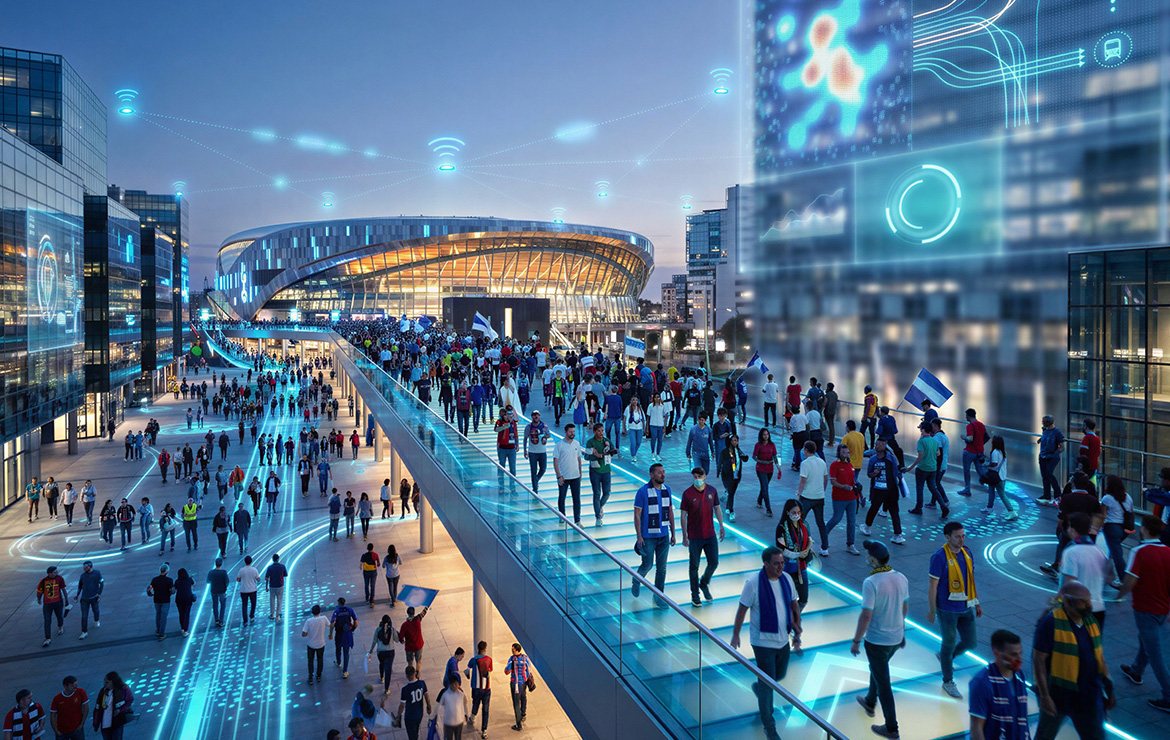
Hosting a mega-sporting event like the FIFA World Cup presents an extraordinary logistical challenge for municipal infrastructure. Within a concentrated timeframe, host cities must absorb millions of international spectators, requiring seamless, continuous transit between international airports, stadium perimeters, hospitality zones, and rapid rail terminals. Traditional public transit networks often buckle under these sudden, extreme demand peaks, leading to terminal congestion, prolonged commuter wait times, and high carbon emissions from auxiliary diesel fleets.
To overcome these structural bottlenecks, smart city planners are turning to autonomous bus solutions. Deploying driverless bus networks allows transit authorities to establish highly predictable, agile, and scalable transit corridors that adjust dynamically to real-time crowd densities. By integrating automated microtransit into the broader event architecture, host cities can eliminate transit deserts, guarantee pedestrian safety inside high-density fan zones, and deliver sustainable event transportation that leaves a permanent, positive infrastructure legacy long after the final whistle.
Managing the Surge: Crowd Logistics and Last-Mile Delivery
The primary obstacle during international sporting events is the "last-mile" bottleneck—the final transit segment connecting high-capacity rail stations or parking hubs with stadium gates. Because stadium footprints are isolated by strict security perimeters, spectators must walk long distances or rely on highly frequent shuttle systems. Traditional human-driven fleets face severe limitations here; scheduling shifts, driver fatigue, and inflexible route allocations prevent continuous operations during midnight matches or sudden schedule shifts.
Autonomous bus transportation solves this volatility through algorithmic dispatching and high vehicle utilization. Automated electric minibus models can operate safely within restricted pedestrian zones, navigating around shifting crowds via real-time sensory perception. By runnihubs andrequency loops that match live passenger boarding speeds, these vehicles stabilize commuter flow, prevent hazardous platform overcrowding at mass transit hubs, and ensure that vulnerable populations experience zero friction when navigating the event boundary.
Operational Efficiency and Systemic Versatility
For transit authorities managing large-scale operations, vehicle sizing and continuous dispatching flexibility are the cornerstones of cost optimization. Deploying a single vehicle class across a multi-layered urban network creates deep capital inefficiencies. While high-volume trunk routes require heavy-duty, large-capacity transit platforms, low-density lines and historic hospitality loops are optimized using smaller, agile platforms that run more frequently without increasing depot energy overhead.
Transit agencies can analyze how these distinct vehicle classes operate under rigorous urban schedules by reviewing the insights showcased in Spotlight on Autonomy: How the Autonomous e-ATAK is Redefining Public Transport Efficiency, which demonstrates how larger Level 4 platforms stabilize municipal public transit efficiency. When paired with compact electric bus solutions, this multi-tier fleet architecture allows host cities to maintain continuous service schedules. This variable vehicle ecosystem ensures that energy distribution remains highly efficient across both sprawling transit lines and tight, historic neighborhood networks.
The Environmental Blueprint: Sustainable Event Mobility
Modern international sporting committees mandate strict carbon reduction targets for all hosting partners, turning sustainable event transportation into a binding regulatory requirement. Auxiliary transit systems that rely on legacy internal combustion engines cannot satisfy these environmental protocols. Transitioning to dedicated, factory-built electric bus platforms with autonomous capabilities eliminates tailpipe emissions across dense fan zones, directly protecting urban air quality.
Beyond zero-emission powertrains, autonomous bus operations maximize energy efficiency through precise, automated driving behaviors. Automated platforms eliminate aggressive acceleration, execute optimized deceleration profiles, and utilize advanced regenerative braking systems to capture kinetic energy during heavy stop-and-start urban traffic. When integrated into broader municipal networks, these automated shuttles maintain continuous spectator flow between high-density transit hubs and stadium perimeters. Planners can analyze how high-frequency shuttle loops optimize municipal passenger workflows by exploring What is a Shuttle Bus? How is it Used in Urban Transportation? to build efficient event mobility networks.
Fleet Sizing for Mega-Events: Balancing Surge Capacity
Managing transportation for a global tournament requires a highly strategic approach to vehicle capacity. Passenger volumes fluctuate drastically during a match day; high-density transit corridors experience immense surges hours before kick-off, while local hospitality zones and historical city centers require a steady, continuous circulation of smaller spectator groups. Attempting to service the entire urban network with uniform, oversized electric city bus fleets during off-peak hours leads to massive energy waste, while relying solely on electric minibus fleets during peak egress causes immediate gridlock.
To maintain perfect operational efficiency under these volatile conditions, transit agencies deploy a balanced, multi-tiered fleet. Karsan addresses this event-driven demand by offering an extensive portfolio of zero emission bus solutions tailored for distinct urban capacities. This allows municipal operators to deploy high-occupancy electric bus models along heavy commuter corridors, while simultaneously utilizing compact electric bus platforms to maintain quick turnaround times within narrow fan zones and localized neighborhood loops. By aligning vehicle scale directly with real-time passenger curves, host cities maximize fleet productivity and keep spectator traffic moving smoothly.
Proven Global Footprints: Karsan’s Real-World Autonomy
The transition toward automated event mobility relies on an experienced electric bus manufacturer (OEM) with validated, high-utilization public service history. Karsan has established an undisputed reference footprint in the driverless sector by executing continuous Level 4 operations across diverse global markets. These active deployments provide critical data points on how autonomous fleets can handle the intense operational pressures of global sporting events:
-
The European Urban Footprint: Operating across strict regulatory zones in Norway, Finland, France, and Romania, Karsan's autonomous platforms have logged thousands of hours in mixed, live traffic. These deployments validate the vehicles' ability to manage complex intersection geometries and maintain absolute service frequencies under fluctuating regional weather conditions.
-
The North American Infrastructure Integration: Through strategic collaborations with leading autonomous tech providers like Beep, Karsan has successfully deployed automated microtransit solutions within critical transit networks in the United States, including high-utilization public paths like the ATL Spoke project in Atlanta.
-
The High-Security Industrial Sector: From pilot programs at dense international airport aprons to public historical loops, Karsan has proven that its sensor-redundant architecture operates safely within restricted, high-security zones where pedestrian safety is paramount.
Conclusion: Leaving a Smarter Infrastructure Legacy
Mega-sporting events like the FIFA World Cup are powerful catalysts for municipal infrastructure modernization. The future of public transportation belongs to host cities that leverage these temporary global spotlights to build permanent, smart mobility ecosystems. By deploying right-sized autonomous bus fleets to solve last-mile bottlenecks, municipal transit networks can successfully balance extreme passenger surges with long-term carbon reduction targets, establishing a cleaner, more efficient urban environment for decades to come.
To discover how a compact electric bus platform can maximize your event route productivity and integrate seamlessly into high-density urban grids, fleet managers can analyze the complete technical layout, battery capacities, and modular passenger arrangements of the Karsan Autonomous e-JEST.