-
23 February 2023Karsan Hydrogen Fuel Cell Bus e-ATA Hydrogen
-
17 July 2024Small City Buses: The Eco-Friendly Choice for Urban Commutes
-
23 September 2024Different Bus Sizes in Urban Transportation
-
02 October 2024What is a Shuttle Bus? How is it Used in Urban Transportation?
-
21 September 2026What Is Transit-Oriented Development (TOD)?
-
14 September 2026What Makes a Bus Truly Autonomous? The Sensors and Systems Behind Karsan's e-JEST
-
07 September 2026Measuring Sustainability in Public Transport: Which KPIs Matter Most?
-
28 August 2026Karsan × Toyota: Building the Hydrogen Bus of the Future
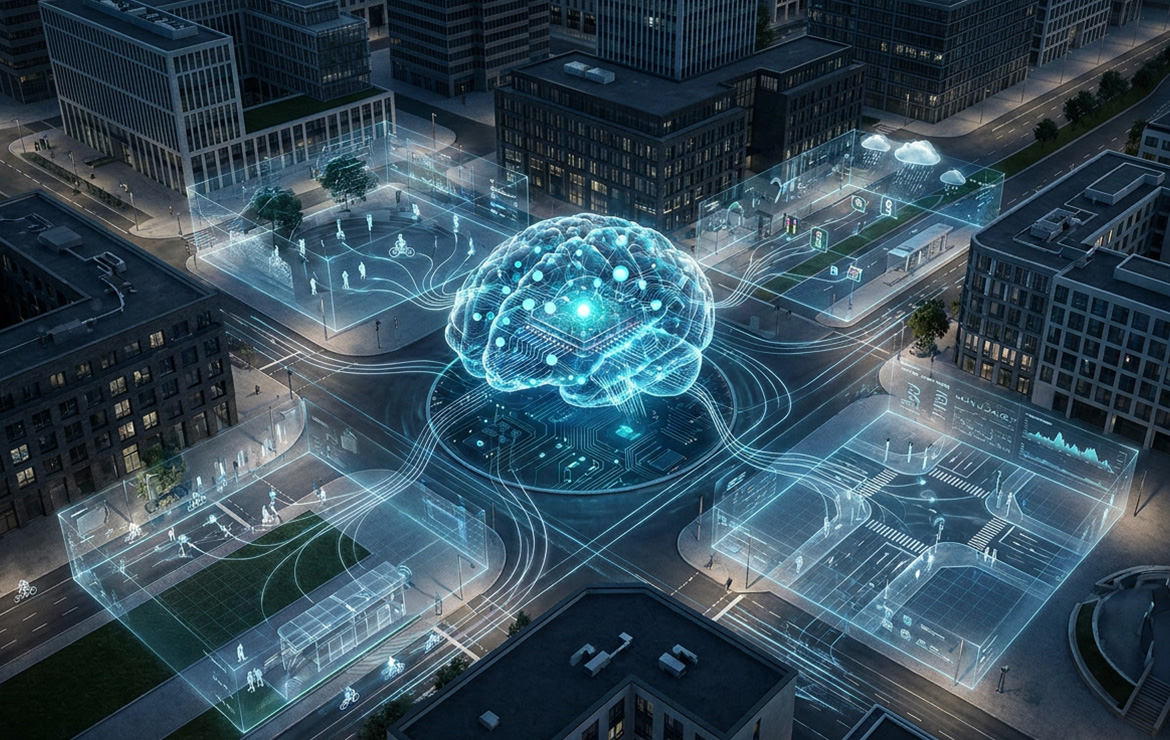
The transition from human-operated transit fleets to fully automated electric bus platforms require far more than mechanical electrification and individual proximity sensors. To navigate the unpredictable variables of dense city center corridors, a driverless bus requires a centralized, cognitive computing architecture capable of executing split-second decisions with absolute reliability. Unveiled globally at CES 2026, Karsan AI serves as this essential technological core, moving beyond standard sensory processing to establish a predictive, intelligent decision-making engine for international public transport networks.
For municipal planning authorities and transit managers looking to integrate artificial intelligence for mobility, this technology fundamentally changes how cities approach urban mass transit. Instead of treating each autonomous bus as an isolated mobile unit, this integrated intelligence creates an active network node that communicates seamlessly with passengers, traffic control nodes, and backend depot infrastructure. By processing vast architectural and operational data sets concurrently, the platform delivers the high-utilization reliability required for modern public transit schedules.
The Core Architecture: Data Processing and Sensory Fusion
At the heart of the platform's execution is an advanced sensory fusion algorithm that aggregates and rationalizes high-frequency data streams from diverse onboard hardware arrays. Operating an autonomous bus technology framework within dense metropolitan traffic demands continuous, environmental awareness. To achieve this, the platform instantly processes data from high-definition LiDAR arrays, long-range radar setups, and deep-learning optical camera networks.
Rather than analyzing each sensor feed in isolation, the centralized model blends these disparate inputs into a dynamic, unified digital map of the immediate surroundings. This sensory fusion architecture eliminates blind spots, filters out environmental noise caused by heavy precipitation or sudden glare, and categorizes objects—such as distinguishing between a static curbside waste container and a pedestrian stepping onto a crosswalk. By constantly validating data across multiple sensor types, the vehicle maintains absolute operational safety under changing urban conditions.
Predictive Algorithmic Logic: Split-Second Decision Making
The true differentiation of this framework lies in its predictive algorithmic capabilities. Conventional driverless systems operate primarily on reactive logic—braking or steering only when an obstacle is detected within a designated safety zone. In contrast, this model utilizes advanced machine learning models to anticipate the trajectory of surrounding road users before an actual movement occurs, significantly minimizing braking jerks and accelerating overall route efficiency.
-
Dynamic Trajectory Prediction: By evaluating the speed, heading history, and contextual surroundings of adjacent cyclists and vehicles, the system forecasts potential lane cut ins or unexpected stops seconds in advance.
-
Proactive Speed Adjustment: The system smooths out acceleration and deceleration cycles by analyzing traffic light timing and intersection densities ahead, which preserves component longevity and maximizes overall passenger comfort.
To understand where these highly responsive automated capabilities sit within international transportation standards, fleet operators can reference our structural overview on Autonomous Driving Levels Explained: From Level 0 to Level 5 to evaluate the core software-to-hardware operational boundaries.
Driving Optimization, Safety, and Fleet Integration
Beyond individual vehicle maneuvering, the deployment of an AI-powered public transport network introduces major systemic benefits to centralized fleet management. This intelligent network actively coordinates with transit dispatch headquarters to optimize energy utilization and minimize depot bottlenecks. Because the onboard system records real-time energy draw during various passenger load states and traffic spikes, it provides precise data models to fine-tune overnight charging scheduling.
Safety analytics are also deeply embedded within this computational workflow. The platform continuously monitors internal diagnostics alongside external route performance. If a specific intersection consistently displays erratic pedestrian movements or unexpected road layout changes, the vehicle records the anomaly and shares the update across the entire localized fleet via cloud-based vehicle-to-everything (V2X) connectivity. To see how these collective intelligence loops form the basis of next-generation transit design, managers can review the foundational vision behind Karsan Autonomous Intelligence architectures.
Smart City Integration and the Passenger Experience
The ultimate objective of this autonomous transit AI framework is to anchor the digital ecosystem of tomorrow’s smart transportation systems. As municipalities install smart traffic signals, digital toll corridors, and connected crosswalk indicators, the vehicle communicates with this municipal infrastructure in real time. This bidirectional data exchange allows each autonomous bus to request priority green lights at crowded intersections, balancing transit timing and preventing terminal gridlock along primary commuter corridors.
This deep integration directly enhances the passenger experience inside the cabin. Because the vehicle coordinates with live digital signage at transit hubs, passenger information displays reflect precise arrival times based on real-world traffic data, rather than static estimates. Inside electric minibus options like the Autonomous e-JEST, the smooth, automated handling profiles eliminate sudden lurches, delivering an exceptionally stable, highly comfortable environment that makes autonomous public transit a highly appealing choice for daily urban commuting.
Portfolio Versatility: Intelligent Scaling Across Urban Layouts
A major structural error in modern smart city procurement is assuming a singular software framework can only support a specific vehicle dimension. Karsan avoids this technological bottleneck by engineering an open, highly versatile intelligence system designed to scale across a diverse range of urban capacities. This ensures that whether a municipality is updating tight historical loops or massive suburban trunk lines, the core decision-making logic remains completely unified.
-
Agile Neighborhood Microtransit: The Autonomous e-JEST, a compact electric bus, integrates the full sensor suite into a highly maneuverable layout, allowing the vehicle to execute precise turns and navigate unpredictable pedestrian traffic within narrow downtown sectors.
-
Mid-Density Corridors: For routes requiring higher passenger volumes without sacrificing urban flexibility, the 8-meter Autonomous e-ATAK electric city bus deploys the exact same predictive computational logic to stabilize mid-density public lines.
-
High-Capacity Articulated Routes: The robust e-ATA series expands the zero emission bus operational footprint across sprawling metropolitan avenues, proving that centralized artificial intelligence can manage high-capacity passenger surges with absolute precision.
Conclusion: The Next Era of Autonomous Fleet Mobility
The unveiling of Karsan AI at CES 2026 establishes a clear path forward for the global public transit sector and reinforces Karsan's position as an electric bus manufacturer. By moving past rigid reactive programming and embracing an interconnected, predictive learning framework, this technology effectively solves the core safety, scheduling, and scaling challenges that have previously slowed widespread automated deployment. As cities continue to expand their smart infrastructure, this advanced computing architecture provides the reliable, data-driven foundation needed to run cleaner, safer, and highly efficient urban transit networks.
To evaluate how a predictive, fully integrated automated infrastructure can maximize your municipal route productivity and align with connected city frameworks, fleet managers can explore the engineering milestones and strategic advantages of Karsan's Vision for AI-Powered Autonomous Mobility.