-
23 February 2023Karsan Hydrogen Fuel Cell Bus e-ATA Hydrogen
-
17 July 2024Small City Buses: The Eco-Friendly Choice for Urban Commutes
-
23 September 2024Different Bus Sizes in Urban Transportation
-
02 October 2024What is a Shuttle Bus? How is it Used in Urban Transportation?
-
21 September 2026What Is Transit-Oriented Development (TOD)?
-
14 September 2026What Makes a Bus Truly Autonomous? The Sensors and Systems Behind Karsan's e-JEST
-
07 September 2026Measuring Sustainability in Public Transport: Which KPIs Matter Most?
-
28 August 2026Karsan × Toyota: Building the Hydrogen Bus of the Future
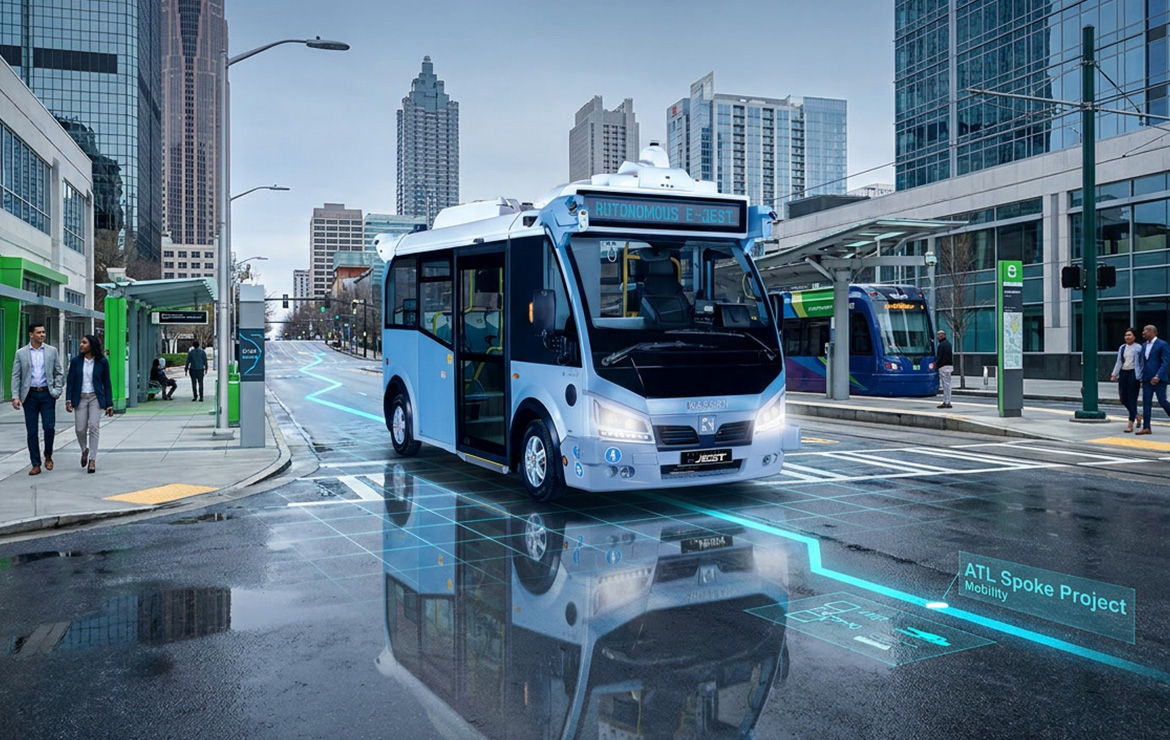
The launch of the "ATL Spoke" pilot project marks a definitive turning point for urban surface transportation in North America. Initiated as a highly coordinated microtransit solution, this deployment introduces the region’s very first zero emission bus service operating within a major metropolitan transit network as an electric micro bus platform. By introducing high-frequency, self-driving shuttles to bridge critical urban gaps, the project demonstrates how purpose-built autonomous bus technology can seamlessly integrate into dense, multi-modal public transit ecosystems.
For transit operators and municipal planners monitoring the evolution of first-and-last-mile logistics, this deployment provides critical real-world data. It shifts the conversation from theoretical autonomous testing to active, high-utilization public service. By connecting high-density rail infrastructure directly with pedestrian-heavy urban greenways, the project establishes a practical blueprint for modernizing city transit networks through automated, zero-emission technologies.
Behind the Alliance: Powering the ATL Spoke Ecosystem
The deployment of this technical complexity requires a deeply integrated ecosystem of regulatory, operational, and technological partners. The ATL Spoke project operates through a strategic collaborative framework uniting public infrastructure with private innovation:
-
MARTA (Metropolitan Atlanta Rapid Transit Authority): Provides the heavy rail backbone, anchoring the service to a primary regional mass transit hub.
-
Atlanta BeltLine, Inc.: Manages the high-traffic pedestrian and economic corridors, ensuring the service aligns with sustainable urban development goals.
-
GTEA (Georgia Transit Excellence Alliance) & City Leadership: Facilitates local regulatory alignment and urban transit integration pathways.
-
Beep, Inc.: Acts as the primary autonomous solutions provider and operational manager, utilizing its advanced software platform to coordinate real-time fleet logistics, vehicle monitoring, and safety operations.
-
Karsan: Serves as the bus manufacturer, delivering a factory-built, highly adaptive automated hardware designed specifically for continuous urban public transit demands.
The primary objective of this collective alliance is to eliminate transit deserts by establishing a high-frequency, reliable link between the MARTA West End Station and the Atlanta BeltLine Southwest Trail. By providing this automated link free of charge to the public, the partners are actively proving that an autonomous transit electric bus can lower the barrier to public transit access, encourage localized economic growth, and significantly reduce reliance on personal internal combustion vehicles in historic urban corridors.
Operational Framework and Real-World Data Blueprint
Unlike isolated, low-speed autonomous demonstrations, the ATL Spoke project is built for rigorous, high-utilization municipal schedules. The service runs on a highly structured operational framework designed to mirror traditional mass transit reliability while maximizing vehicle uptime. Transit managers can review the exact deployment parameters shaping the daily workflow:
-
Fleet Scale: 4 Active Vehicles
-
Service Schedule: 7 Days a Week
-
Daily Operations: 10 Hours per Day
-
Headway Frequency: 12 to 15 Minutes
-
Fare Structure: 100% Free to the Public
This continuous operational tempo generates precise data points regarding battery degradation, autonomous sensor performance in high-humidity urban environments, and passenger boarding velocities. Operating 10 hours a day across the entire week ensures that vehicles encounter diverse traffic flows, varying pedestrian densities, and complex intersection geometries, proving the viability of an automated electric city bus under real-world municipal conditions.
Technical Architecture: Implementing Level 4 Autonomy in the USA
The technological foundation of this deployment relies on highly sophisticated automation variables that eliminate the need for human intervention under specific operational conditions. The vehicles utilized in the project run on advanced software and sensor suite developed in close cooperation with industry-leading automated driving specialists. To understand how these strict automated operational parameters fit within global transit definitions, fleet managers can review the structured framework on Autonomous Driving Levels Explained to analyze the core software-to-hardware architectures.
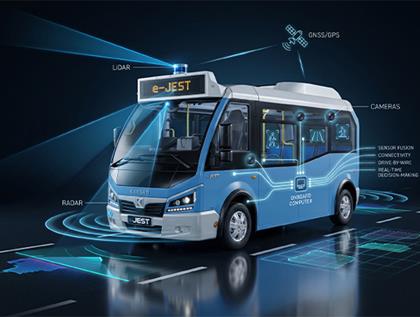
Operating without a traditional driver requires a robust, redundant layer of environmental perception sensors. The platform integrates high-definition LiDAR arrays, advanced radar units, and high-resolution optical cameras to construct a real-time, 360-degree spatial map of the vehicle’s surroundings. This data is processed instantaneously by onboard computing units, allowing the vehicle to execute precise steering maneuvers, navigate roundabouts, manage pedestrian crosswalks, and perform defensive braking protocols autonomously.
This live execution is what defines true municipal automation. To analyze the systemic logic behind these platforms, fleet managers can examine the detailed analysis on How Level 4 Autonomous Buses Work to see how geofenced routing networks maintain absolute operational safety. While an onboard safety attendant remains present during the initial phase to monitor system diagnostics and ensure passenger comfort, the vehicle's dynamic driving tasks are handled entirely by the automated system.
Strategic Fleet Balancing: Scalability Across the Transit Network
While the deployment highlights the unique operational advantages of compact, highly maneuverable platforms in historic neighborhood corridors, modern transit networks demand a diversified approach to fleet sizing. High-density urban loops and major metropolitan feeder routes present highly volatile passenger volumes that require a scalable vehicle architecture. Deploying oversized equipment on low-density feeder lines leads to excessive energy overhead, whereas using under-sized vehicles on main trunk lines causes terminal bottlenecks.
Transit operators looking to avoid these infrastructure bottlenecks can evaluate the comprehensive Karsan Electric Bus Lineup, which spans from a compact electric bus and zero emission minibus up to high-capacity heavy-duty articulated models. As a leading electric bus manufacturer, Karsan provides an adaptive range that allows transit authorities to deploy a small electric minibus for neighborhood feeder loops or off-peak city lines, while reserving heavy-duty platforms for high-capacity commuter corridors. By selecting the precise vehicle dimension for each distinct urban corridor, transit agencies optimize capital investments, minimize depot charging pressures, and ensure total regulatory compliance across their entire network.
Conclusion: The Future of North American Urban Transit
The ATL Spoke project serves as an active, data-driven validation of autonomous public transit in North America. By successfully bridging the gap between heavy rail infrastructure and pedestrian corridors, this deployment proves that automated microtransit is ready to handle the rigors of daily public service. For transit operators looking to reduce operating overhead, lower urban carbon footprints, and solve first-and-last-mile connectivity challenges, the operational data coming out of Atlanta provides a clear roadmap for future deployments.
To evaluate how a compact, highly maneuverable automated platform can integrate into your existing transit network and maximize route productivity, fleet managers can analyze the complete technical layout, battery capacities, and modular passenger arrangements of the Karsan Autonomous e-JEST.