-
23 February 2023Karsan Hydrogen Fuel Cell Bus e-ATA Hydrogen
-
17 July 2024Small City Buses: The Eco-Friendly Choice for Urban Commutes
-
23 September 2024Different Bus Sizes in Urban Transportation
-
02 October 2024What is a Shuttle Bus? How is it Used in Urban Transportation?
-
21 September 2026What Is Transit-Oriented Development (TOD)?
-
14 September 2026What Makes a Bus Truly Autonomous? The Sensors and Systems Behind Karsan's e-JEST
-
07 September 2026Measuring Sustainability in Public Transport: Which KPIs Matter Most?
-
28 August 2026Karsan × Toyota: Building the Hydrogen Bus of the Future
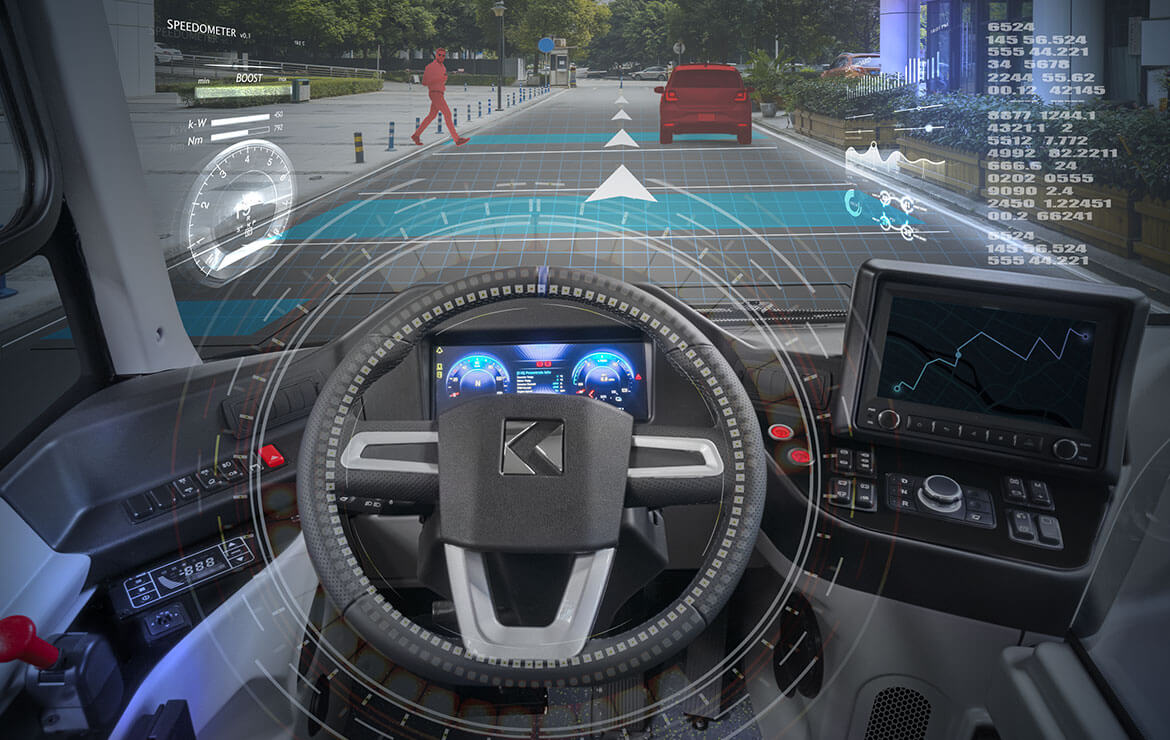
The transition from a human-operated vehicle to a driverless system is not just a replacement of the driver; it is the implementation of a sophisticated digital nervous system. Level 4 autonomous technology represents a significant leap in engineering, where the vehicle is capable of performing all driving functions under specific conditions without human intervention. This technology is designed to navigate complex urban environments with mathematical precision, transforming the very nature of public transportation.
Autonomous transit represents the future of efficiency, where modern software replaces human reflexes and high-tech hardware acts as the sensory organ. This sophisticated setup allows data to flow in real-time, ensuring that safety is deeply embedded into every line of code to drive superior operational performance.
What Is Level 4 Autonomy?
In the context of the SAE (Society of Automotive Engineers) standards, Level 4 refers to "High Automation". Unlike lower levels that require a driver to stay alert, a Level 4 bus manages its own safety, navigation, and emergency responses within a geofenced area or a specific Operational Design Domain (ODD). This means the bus can operate a fixed route, such as a university campus or a city loop, entirely on its own.
In this environment, the bus handles all driving tasks independently, requiring no human backup within its designated geofenced routes. This creates a fully self-reliant system where the technology itself defines the operational boundaries to maintain a safe and predictable service.
How Autonomous Buses Perceive Their Environment
To move safely, an autonomous bus must "see" the world in 360 degrees. Level 4 systems utilize a technique called Sensor Fusion, combining data from multiple sources to create a high-definition map of the surroundings.
-
LiDAR: Uses laser pulses to measure distances, creating a 3D point cloud of objects.
-
Radar: Detects the speed and distance of moving objects, even in poor weather.
-
Thermal Cameras: Identify living beings by their heat signatures.
-
High-Res Cameras: Read traffic signs, lights, and road markings.
By perceiving obstacles instantly, the vehicle utilizes LiDAR to create a digital twin while thermal sensors actively work to protect pedestrians. Because the system's perception is faster than human sight and remains unaffected by adverse weather, it ensures consistent safety across all operating conditions.
How They Make Real-Time Driving Decisions
Once the data is collected, the "Brain" of the bus—an AI-driven computing platform—processes thousands of variables per second. This is known as Path Planning, where the system evaluates traffic flow, pedestrian behavior, and road rules to decide whether to accelerate, brake, or steer. This decision-making process is consistent, effectively eliminating the risks associated with human fatigue or distraction.
Using logic to manage risk, the system's AI calculates the safest possible path by predicting traffic movements through standardized decision-making processes. These sophisticated algorithms work in harmony to ensure a smooth, efficient, and reliable transit experience for all passengers.
How the System Controls the Vehicle: Drive-by-Wire
The transition from a digital decision to a physical movement happens through Drive-by-Wire technology. Instead of mechanical linkages, electronic signals control the steering, braking, and acceleration. This ensures that the execution of the AI’s path is precise to the centimeter.
By replacing traditional mechanical parts with high-precision electronic components, the system achieves highly accurate steering and immediate braking responses. Operating in mere milliseconds, this drive-by-wire technology ensures that the vehicle's performance remains consistent and perfectly aligned with its digital commands.
Safety and Redundancy in Level 4 Systems
A critical aspect of high-level automation is redundancy, meaning every critical system—from power to steering—must have a dedicated backup. If one sensor or controller fails, others immediately compensate to maintain control. This fail-operational architecture ensures that the vehicle can always reach a safe state, providing peace of mind for passengers and operators alike.
With reliability as the top priority, the system utilizes mandatory fail-safe logic and multiple sensors to prevent blind spots. These integrated backups protect every operation, ensuring the system always maintains its primary focus on passenger safety above all else.
Where Level 4 Autonomous Buses Are Used Today
Level 4 buses are no longer experimental; they are operational. From university campuses like Michigan State University to public city routes in Europe, innovative models like the Autonomous e-ATAK and Autonomous e-JEST are proving their value. These vehicles provide consistent service in controlled environments, solving the labor shortage and reducing urban congestion.
These real-world projects demonstrate the viability of the technology, thriving in environments like university campuses and city-wide driverless loops. As efficiency increases daily, Karsan continues to lead this global rollout, showcasing the future of intelligent urban mobility.