-
23 February 2023Karsan Hydrogen Fuel Cell Bus e-ATA Hydrogen
-
17 July 2024Small City Buses: The Eco-Friendly Choice for Urban Commutes
-
23 September 2024Different Bus Sizes in Urban Transportation
-
02 October 2024What is a Shuttle Bus? How is it Used in Urban Transportation?
-
21 September 2026What Is Transit-Oriented Development (TOD)?
-
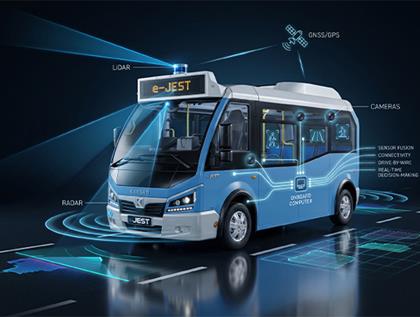
14 September 2026What Makes a Bus Truly Autonomous? The Sensors and Systems Behind Karsan's e-JEST
-
07 September 2026Measuring Sustainability in Public Transport: Which KPIs Matter Most?
-
28 August 2026Karsan × Toyota: Building the Hydrogen Bus of the Future
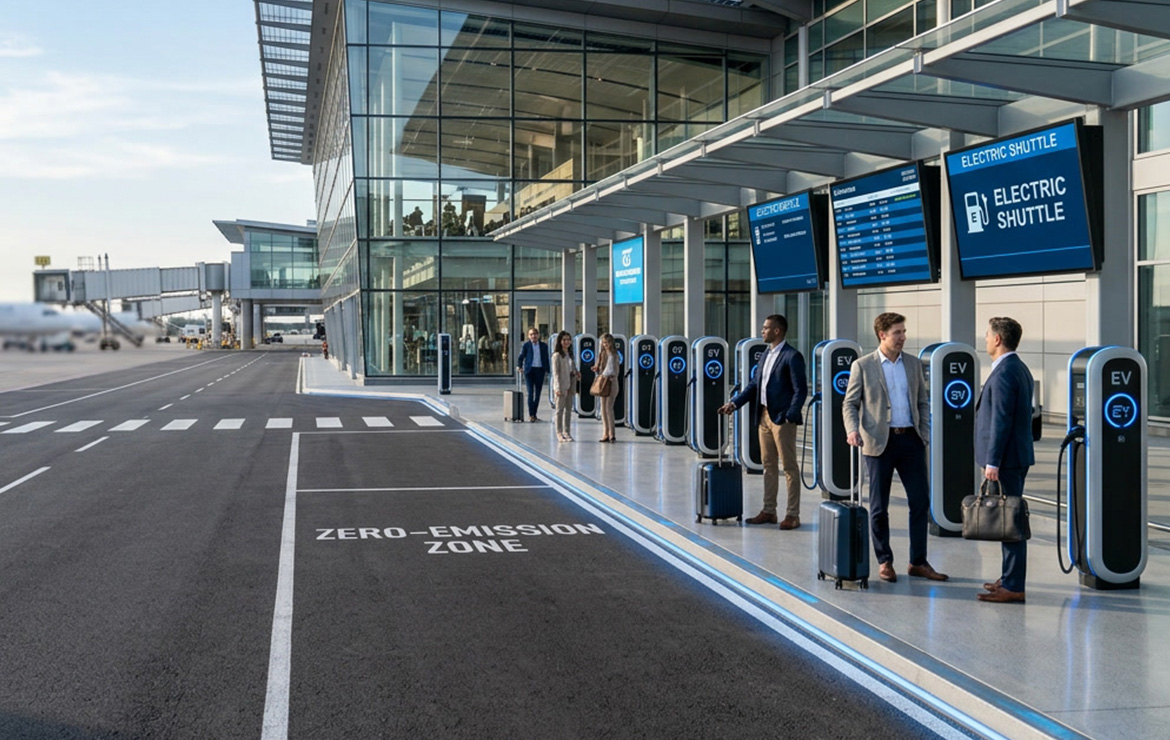
Airports are among the most carbon-intensive transportation hubs globally, with diesel ground shuttles running continuously to connect terminals, parking lots, and rental centers. To combat localized emissions and optimize daily workflows, aviation hubs are rapidly replacing these legacy fleets with sustainable airport transport solutions. Given their predictable routes, constant stop-and-go cycles, and centralized charging opportunities, airport facilities are perfectly suited for swift, full-scale electrification.
Transitioning to a zero-emission airport shuttle is now an operational necessity for environmental compliance. By eliminating fossil-fuel dependency on the ground, airports instantly lower their carbon footprint while creating a significantly healthier, smoke-free environment for both passengers and ground crews.
Operational, Environmental, and Regulatory Advantages
Deploying an airport electric bus brings immediate financial, ecological, and compliance benefits over traditional combustion-engine models, transforming how ground support network’s function. From an operational perspective, because electric powertrains utilize highly efficient battery architectures and contain significantly fewer moving parts, energy costs per kilometer drop drastically while scheduled maintenance intervals are prolonged, substantially lowering the vehicle's Total Cost of Ownership (TCO). This financial predictability allows airport authorities to reallocate critical operational budgets away from fossil-fuel volatility and complex engine repairs toward facility optimization.
From an environmental standpoint, electric fleets eliminate tailpipe emissions of hazardous particulate matter and nitrogen oxides from passenger transfer corridors and enclosed terminal environments. This drastic reduction in air pollution directly protects the health of ground crews and travelers alike, while the near-silent operation of electric motors dramatically reduces noise pollution around terminal drop-off zones and active runways. Regulating bodies and local governments are tightening carbon caps worldwide; thus, adopting zero-emission vehicles ensures that airport operators stay ahead of clean air mandates and avoid severe financial penalties, seamlessly aligning their surface logistics with international airport carbon accreditation frameworks.
This shift is heavily accelerated by international climate directives and local clean air mandates. Many global hubs operate near dense urban centers enforcing strict air quality limits, meaning clean technology adoption is mandatory to avoid heavy financial penalties. To explore the policy frameworks driving this transition, fleet managers can review a comprehensive breakdown on Low Emission Zones Explained, which outlines the structural necessity for eliminating high-polluting vehicles from high-traffic infrastructure.
Karsan as a Strategic Solution Provider: Real-World Airport Data
In this fast-moving sector, Karsan positions itself as a holistic solution provider enabling long-term operational sustainability, rather than just a vehicle manufacturer. Karsan provides the precise tools needed to manage high-security, 24/7 airport transit demands, backed by concrete data from major European deployments:
- The Rotterdam The Hague Airport (RTHA) Milestone: Operating on a 5-kilometer corridor connecting the Meijersplein metro station to the airport terminal, Karsan's technology handles high-frequency passenger transport. This deployment operates flawlessly within live airport traffic ecosystems under an automated framework approved by the Dutch road authority (RDW). Fleet managers can review the official report highlighting Karsan's Autonomous Passenger Services at Rotterdam Airport to analyze how software-driven fleets operate safely around active aviation hubs.
- Intense Apron Testing at iGA Istanbul Airport: Validating its technology in restricted zones, Karsan successfully completed apron testing under real operational conditions at iGA Istanbul Airport. Operating directly alongside aircraft parking positions, the platform proved its ability to safely execute precise flightcrew and passenger workflows. To analyze how these automated platforms scale within heavy airfield logistics, fleet managers can review the comprehensive update detailing how Karsan Continues to Expand Its Autonomous Technology from Public Transportation to Airports for full technical deployment frameworks.
Right Sizing the Airport Fleet for Maximum Efficiency
Every airport corridor presents distinct passenger volumes, meaning a single vehicle size cannot efficiently serve an entire campus. While massive terminal-to-terminal loops require heavy-duty electric buses to prevent bottlenecks during peak arrival waves, off-peak crew transfers or parking lot loops are better served by smaller vehicles to avoid unnecessary energy waste.
Recognizing that airside logistics require flexible fleet configurations, Karsan offers a unique operational advantage with its comprehensive, full-scale product lineup. Rather than forcing facility managers to compromise, the fleet features a completely versatile range spanning from compact 6-meter configurations up to 18-meter high-capacity articulated models. To explore how choosing the correct vehicle dimensions drives long-term efficiency across diverse transit challenges, fleet managers can review the technical guide on Why Size Matters: Karsan's Scalable E-Bus Range to seamlessly align vehicle capacities with their facility's specific layout.
Adopting a right-sized fleet strategy ensures that energy utilization is perfectly matched to passenger density, optimizing depot charging schedules and lowering wear on infrastructure. For high-capacity airport loops requiring advanced independent navigation without a human fallback, transit authorities can Discover the Autonomous e-ATAK to explore its structural specifications. Alternatively, for flexible, short-range connections, planners can Discover the Karsan e-JEST to review its technical layout and modular charging options.
Conclusion: The Future of Airport Shuttles
The transition toward electric airport shuttles is a definitive turning point in the aviation industry's journey toward carbon neutrality. By substituting aging diesel equipment with zero-emission alternatives, airports unlock substantial operational cost reductions while meeting strict clean air mandates. Karsan’s proven track record across demanding environments—from scheduled terminal connections in Rotterdam to high-security apron operations in Istanbul—demonstrates that the technology is mature, reliable, and ready for global deployment.