-
23 February 2023Karsan Hydrogen Fuel Cell Bus e-ATA Hydrogen
-
17 July 2024Small City Buses: The Eco-Friendly Choice for Urban Commutes
-
23 September 2024Different Bus Sizes in Urban Transportation
-
02 October 2024What is a Shuttle Bus? How is it Used in Urban Transportation?
-
21 September 2026What Is Transit-Oriented Development (TOD)?
-
14 September 2026What Makes a Bus Truly Autonomous? The Sensors and Systems Behind Karsan's e-JEST
-
07 September 2026Measuring Sustainability in Public Transport: Which KPIs Matter Most?
-
28 August 2026Karsan × Toyota: Building the Hydrogen Bus of the Future
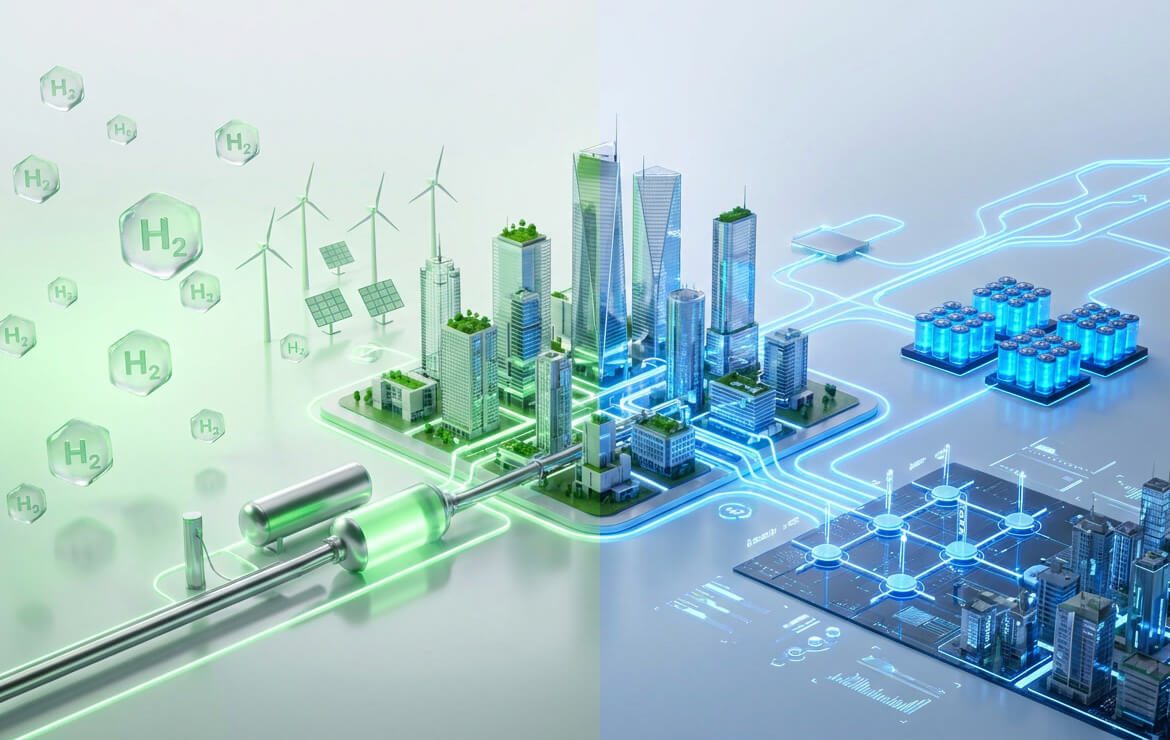
As global cities accelerate toward carbon neutrality, the debate in public transit has shifted from a question of "if" to a question of "how." For municipalities and fleet managers, the primary challenge lies in choosing between two dominant zero-emission technologies: Battery Electric Vehicles (BEV) and Hydrogen Fuel Cell Electric Vehicles (FCEV). Deciding which system fits a city's unique landscape requires a deep dive into complex operational variables, ranging from elevation changes to the limitations of existing energy grids. Karsan offers a balanced, authoritative perspective to help decision-makers navigate this transition with precision.
Decarbonization is a multifaceted journey that requires a strategic understanding of energy density and infrastructure scalability. Every city presents a unique set of energy needs that can only be met by selecting the technology best suited for the specific operational design domain. Right-sizing the fleet is essential for long-term fiscal success, ensuring that sustainable mobility defines the heartbeat of future urban environments.
Battery Electric Vehicles (BEV): The Efficiency Standard for Urban Grids
Battery electric technology has established itself as a primary standard for urban transit due to its superior energy efficiency in direct energy conversions. These systems are meticulously optimized for high-frequency city routes where energy can be efficiently replenished during overnight cycles or via fast-charging systems during scheduled shifts. Battery-powered buses are particularly effective in urban environments with stable electrical infrastructure, allowing operators to leverage the existing local grid to power their fleets with minimal energy loss compared to more complex fuel production cycles.
Direct electrification remains a highly effective method for short to medium-range transit where the charging infrastructure can be centralized within the depot. Maintenance costs are significantly lower than traditional internal combustion systems, providing a predictable operational budget for municipalities. This technology is now widely deployed, serving as the backbone for the electrification of standard urban loops and high-density downtown corridors across the globe.
Comparative Decision Factors: Route, Climate, and Infrastructure
The choice between hydrogen and battery electric often depends on the specific physical and environmental constraints of the transit route. Cities characterized by significant elevation changes or extreme temperature fluctuations may find fuel cell technology more resilient, as it is less susceptible to the discharge rate variations that affect batteries during intense heating or cooling. Conversely, for flat urban landscapes with mild climates and centralized routes, battery electric models often provide the most cost-effective path toward total sustainability.
Topography and climate serve as the primary dictators of energy consumption and must be analyzed before procurement. Infrastructure availability is another critical factor, as the cost and time required to install high-capacity charging stations versus hydrogen refueling stations (HRS) varies significantly by region. Gaining a deeper understanding of What Is a Hydrogen Fuel Cell Bus and its modular advantages helps city planners align their long-term infrastructure goals with the physical demands of their transport network.
Total Cost of Ownership (TCO): Evaluating the Long-Term Investment
A rigorous Electric vs Diesel TCO analysis demonstrates that while zero-emission vehicles require a higher initial capital expenditure, the long-term operational savings are profound. For battery-powered fleets, the primary economic benefit is derived from the low cost of electricity per kilometer and a simplified mechanical architecture that requires fewer repairs. For hydrogen solutions, the TCO becomes increasingly competitive as the green hydrogen economy scales and the cost of production and transportation continues to drop across international markets.
Lower maintenance costs and reduced downtime improve the return on investment over the typical lifespan of a transit vehicle. Fleet managers must evaluate the entire energy ecosystem, including the energy source and infrastructure maintenance, to determine the true fiscal impact on the municipal budget. Financial parity with traditional diesel buses is becoming a commercial reality, making the switch to zero emissions a sound economic decision as much as an environmental one.
Hydrogen Fuel Cell Electric Vehicles (FCEV): High Capacity and Extended Range
While battery systems dominate shorter urban routes, hydrogen stands as a definitive solution for high-intensity operations that require maximum uptime and payload capacity. Modern hydrogen buses are engineered for demanding urban corridors, offering extended range capabilities and a rapid refueling time that mirrors traditional fueling habits. These vehicles utilize a high-performance fuel cell stack, often developed through prestigious global partnerships, to ensure the vehicle maintains consistent power output regardless of the load or the steepness of the terrain.
Green hydrogen transportation is an essential key to decarbonizing long-distance urban transit where the weight of traditional batteries might otherwise compromise passenger capacity. Because the refueling speed is incredibly fast, it allows for seamless integration into existing operational schedules without the need for extensive downtime. To explore the engineering behind this technology, you can view the specifications for the e-ATA Hydrogen. Furthermore, fuel cell systems maintain high performance even in extreme weather conditions, as the chemical process remains largely unaffected by the thermal challenges that can reduce battery range in winter.
Karsan’s Multimodal Approach: Neutrality Through Innovation
Karsan remains one step ahead by maintaining a diverse portfolio that includes world-class solutions for both battery electric and hydrogen fuel cell technologies. By utilizing advanced fuel cell stacks through strategic global partnerships, Karsan ensures that its hydrogen solutions deliver unmatched reliability and range. This dual-technology approach allows for a specialized consultative role, assisting cities in selecting the exact mix of vehicles that will maximize operational uptime while minimizing the carbon footprint of the fleet.
Innovation is driven by the goal of providing a solution for every urban scenario, regardless of the complexity of the route. By offering a diverse range of zero-emission technologies, Karsan prevents the operational bottlenecks that can occur when a fleet relies on a single technology for all conditions. The focus remains consistently on the passenger experience and the environmental integrity of the cities being served.
Frequently Asked Questions (FAQ)
Which technology is better for cold climates? Hydrogen fuel cells are generally less sensitive to extreme cold than battery systems. Fuel cell buses are often the preferred choice for cities with harsh winters because they provide consistent heating and range without significantly draining the propulsion power.
Can I mix electric and hydrogen buses in the same fleet? Yes. Many leading transit agencies utilize a "Mixed Fleet" strategy. This involves deploying battery electric vehicles for short-range city center loops and hydrogen buses for longer, high-capacity routes that connect suburban areas to the city core.
Is green hydrogen safe for public transport? Absolutely. Modern hydrogen storage systems are engineered with high-strength composite tanks that are significantly more durable than traditional fuel tanks. They are equipped with advanced sensors and safety release valves to manage pressure safely under all conditions.
Conclusion: Matching Technology to Your City’s Pulse
There is no "one size fits all" solution in the global transition to zero emissions. The decision between green hydrogen and battery electric depends on a city’s specific energy infrastructure, route intensity, and long-term financial objectives. While battery electric vehicles offer the highest efficiency for standard urban cycles, hydrogen remains an indispensable solution for high-capacity, long-range demands. Karsan is committed to supporting both technological paths, ensuring that the future of mobility is clean, inclusive, and ready for deployment today.
Compare Zero-Emission Solutions