-
23 February 2023Karsan Hydrogen Fuel Cell Bus e-ATA Hydrogen
-
17 July 2024Small City Buses: The Eco-Friendly Choice for Urban Commutes
-
23 September 2024Different Bus Sizes in Urban Transportation
-
02 October 2024What is a Shuttle Bus? How is it Used in Urban Transportation?
-
21 September 2026What Is Transit-Oriented Development (TOD)?
-
14 September 2026What Makes a Bus Truly Autonomous? The Sensors and Systems Behind Karsan's e-JEST
-
07 September 2026Measuring Sustainability in Public Transport: Which KPIs Matter Most?
-
28 August 2026Karsan × Toyota: Building the Hydrogen Bus of the Future
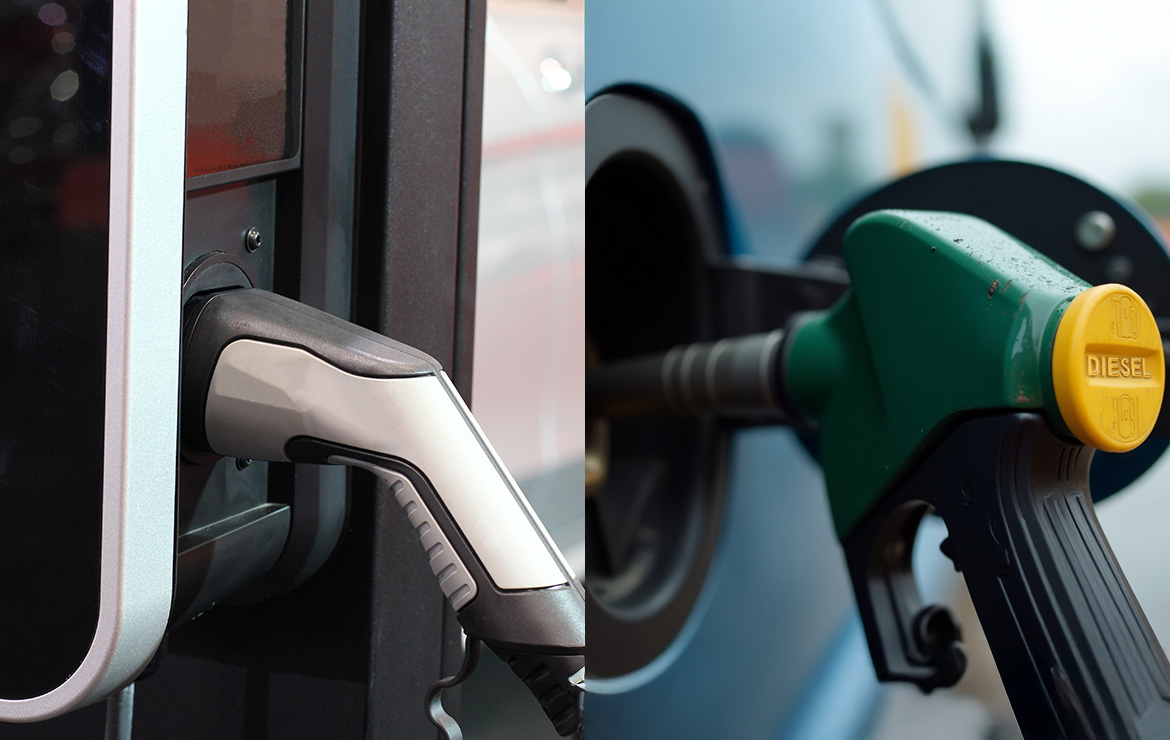
Total Cost of Ownership: Electric Bus vs Diesel Bus
The transportation sector is responsible for roughly a quarter of global energy-related greenhouse gas emissions. Within Europe, road transport contributes around 70% of these emissions, with heavy-duty vehicles—including buses, trucks, and commercial fleets over 3.5 tons—making up just 2% of the fleet but responsible for nearly 25% of emissions.
Buses are among the most visible and essential parts of public transport systems. Today, around 89% of buses in Europe run on diesel, but the transition to zero-emission technology is accelerating. While battery electric buses (BEBs) are becoming more common, cost uncertainty remains one of the biggest barriers to adoption.
That’s where the Total Cost of Ownership (TCO) comes in.
What Is Total Cost of Ownership (TCO)?
TCO is a holistic way of measuring the true financial performance of a vehicle over its lifetime. Instead of just comparing upfront purchase costs, TCO considers:
-
Vehicle cost: purchase price minus residual value
-
Financing: loan interest, repayment terms
-
Energy costs: diesel fuel vs. electricity, plus charging infrastructure
-
Maintenance & repairs: scheduled and unscheduled
-
Battery lifecycle: replacement, second-life, salvage value
This approach shows the real financial picture and helps transit agencies, school districts, and municipalities make better decisions when electrifying fleets.
Purchase Price vs. Operating Costs
-
Diesel buses are cheaper upfront but have higher ongoing fuel and maintenance costs.
-
Electric buses are more expensive to buy (especially due to battery cost), but their daily operations are significantly cheaper.
For example:
-
Initial purchase of an electric bus can be 1.2–1.5x higher than diesel.
-
But electricity is far less volatile than diesel prices, and maintenance costs for BEBs are 30–40% lower thanks to fewer moving parts and regenerative braking.
When considered over a 12–15 year service life, many studies now show that BEBs can achieve cost parity or even savings compared to diesel.
Energy and Infrastructure Costs
-
Diesel costs make up more than half of the TCO for traditional buses.
-
Electricity costs typically account for only 15–20% of BEB TCO.
However, BEBs require charging infrastructure:
-
Depot overnight charging (5–9 hours with 50 kW chargers)
-
Fast charging (pantograph/DCFC) for intensive routes
-
Smart charging software to optimize off-peak rates and minimize grid strain
While infrastructure is a major upfront investment (€10,000–€30,000 per bus on average), it has a longer lifespan than the buses themselves and can be scaled for future fleet growth.
Battery Costs and Lifecycle
-
Batteries represent 30–50% of an electric bus’s cost.
-
Typical battery life: 7–10 years, requiring at least one replacement during the bus’s service life.
-
Salvage value: second-life applications (e.g., energy storage) can offset costs.
-
Battery prices are falling steadily—helping drive down BEB TCO across Europe.
By 2030, industry forecasts suggest that declining battery costs, coupled with rising diesel prices, will make BEBs consistently cheaper over their lifecycle.
Maintenance
Diesel buses require:
-
Oil changes
-
Exhaust system maintenance
-
Frequent brake replacement
Electric buses avoid most of these expenses. Regenerative braking extends brake life, and fewer moving parts mean fewer breakdowns. On average, BEBs save 30–40% on maintenance costs compared to diesel.
Environmental and Policy Drivers
-
The EU has committed to reducing GHG emissions by 55% by 2030 and achieving climate neutrality by 2050.
-
Many member states are mandating zero-emission bus procurement in the next decade.
-
Subsidies, grants, and financing mechanisms are helping close the upfront cost gap.
For operators, environmental benefits also translate into economic resilience: less exposure to fossil fuel volatility and improved air quality in urban areas.
What the Research Shows
-
In 2016, BEBs were still 20–50% more expensive over 12 years compared to diesel.
-
By 2023–24, studies across Poland, Germany, and Southern Europe show BEBs reaching or surpassing TCO parity with diesel in many regions.
-
In France, Belgium, Greece, and Finland, electrification is already the financially favorable option due to high diesel costs and moderate electricity prices.
-
In Malta, Bulgaria, and Cyprus, diesel still looks cheaper—but policy and falling battery prices could change that within the decade.
Electric vs Diesel: Key TCO Comparison
|
Factor |
Diesel Bus |
Electric Bus |
|
Purchase Price |
Lower upfront |
Higher upfront (mainly batteries) |
|
Fuel/Energy |
50%+ of TCO |
15–20% of TCO |
|
Maintenance |
Frequent, costly |
30–40% cheaper |
|
Infrastructure |
Minimal |
Requires investment (but long-lasting) |
|
Battery |
Not applicable |
Replacement + salvage value |
|
Policy Incentives |
Limited |
Strong support (grants, subsidies, EU targets) |
|
Environmental Impact |
High GHG + air pollution |
Zero tailpipe emissions |
When only looking at purchase price, diesel appears cheaper. But when the Total Cost of Ownership is considered—spanning energy, maintenance, infrastructure, and long-term value—electric buses are increasingly the smarter investment.
-
In high-diesel-cost countries, BEBs already outperform diesel financially.
-
Falling battery prices and supportive policies mean TCO parity will expand across Europe by 2030.
-
For school districts, municipalities, and transit agencies, adopting BEBs is not just about sustainability—it’s a sound financial decision for the long run.
The bottom line: Diesel may be cheaper at the start, but electric buses win over time.