-
23 February 2023Karsan Hydrogen Fuel Cell Bus e-ATA Hydrogen
-
17 July 2024Small City Buses: The Eco-Friendly Choice for Urban Commutes
-
23 September 2024Different Bus Sizes in Urban Transportation
-
02 October 2024What is a Shuttle Bus? How is it Used in Urban Transportation?
-
21 September 2026What Is Transit-Oriented Development (TOD)?
-
14 September 2026What Makes a Bus Truly Autonomous? The Sensors and Systems Behind Karsan's e-JEST
-
07 September 2026Measuring Sustainability in Public Transport: Which KPIs Matter Most?
-
28 August 2026Karsan × Toyota: Building the Hydrogen Bus of the Future
True sustainability in transportation is a complete cycle. Many people focus only on tailpipe emissions. They see an electric bus and think the job is done because it does not release smoke. However, professional transport operators and green municipalities look further. They ask a critical question: What happens to the batteries after ten years?
The answer lies in the circular economy. This model moves away from "take-make-waste" patterns. Instead, it focuses on "reduce-reuse-recycle." In the world of zero-emission public transport, the end of a bus's service life is just the beginning of a new chapter for its battery.
Understanding the Battery Life Cycle
An electric bus battery is a high-tech energy storage unit. In a vehicle like the Karsan e-ATAK, these batteries provide high performance for thousands of cycles. Over time, the chemical capacity of any battery decreases. When a battery reaches about 70% to 80% of its original capacity, it is usually replaced for mobile use.
At this point, the battery is no longer ideal for a 300 km daily bus route. But it is not "dead." It still holds a massive amount of energy. Discarding such a valuable resource is a mistake. The circular economy provides two main paths for these units: Second Life and Recycling.
Second Life: From Mobile Power to Stationary Storage
The concept of a "second-life battery" is a pillar of sustainable tourism transport. These units can serve for another 10 to 15 years in less demanding environments.
Energy Storage Systems (ESS)
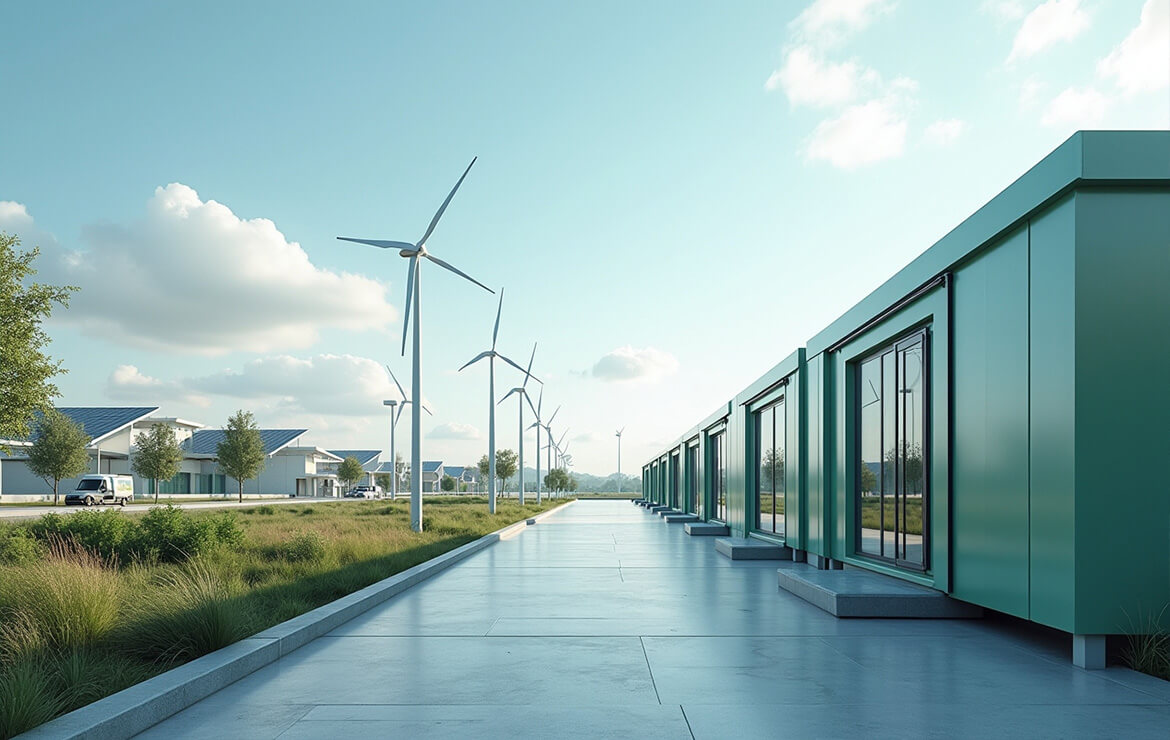
Second-life batteries are perfect for stationary energy storage. Municipalities can use them to store electricity from solar panels or wind turbines.
-
Charging Hubs: A hotel or a bus depot can use old e-bus batteries to store energy during the day. They then use this energy to charge the active fleet at night.
-
Grid Stabilization: These batteries help balance the local power grid during peak hours.
-
Emergency Power: Hospitals or public buildings can use them as backup power sources.
Using a battery in a second-life application doubles its environmental value. It reduces the need to mine new raw materials for stationary storage units.
The BMW Battery Advantage in Karsan Models
Karsan chooses its technology partners with the circular economy in mind. Both the Karsan e-JEST and the Karsan e-ATAK utilize proven BMW i battery technology. This choice is strategic for the battery's afterlife.
BMW batteries are known for their high energy density and durable thermal management systems. Because these batteries are used in millions of passenger cars and buses worldwide, their recycling and second-life processes are standardized.
When a Karsan e-JEST completes its service in a historic city center, its battery remains a high-value asset. The modular design of these batteries makes them easy to remove and repurpose for house-scale or city-scale energy storage. This reliability increases the resale value of the vehicle and lowers the long-term cost for the operator.
Closing the Loop: Recycling and Raw Material Recovery
Eventually, every battery reaches a point where it can no longer store energy efficiently. This is where the final stage of the circular economy begins: high-tech recycling.
Modern recycling processes can recover over 95% of the critical materials inside a battery. This includes:
-
Lithium: The primary carrier of the charge.
-
Cobalt and Nickel: Essential for high energy density.
-
Copper and Aluminum: Used in the internal wiring and casing.
Recovering these materials is much cleaner than traditional mining. It protects biodiversity. It reduces the energy needed to produce new batteries. By choosing an electric city bus fleet, a municipality becomes part of a global effort to create a closed-loop industry.