-
23 February 2023Karsan Hydrogen Fuel Cell Bus e-ATA Hydrogen
-
17 July 2024Small City Buses: The Eco-Friendly Choice for Urban Commutes
-
23 September 2024Different Bus Sizes in Urban Transportation
-
02 October 2024What is a Shuttle Bus? How is it Used in Urban Transportation?
-
21 September 2026What Is Transit-Oriented Development (TOD)?
-
14 September 2026What Makes a Bus Truly Autonomous? The Sensors and Systems Behind Karsan's e-JEST
-
07 September 2026Measuring Sustainability in Public Transport: Which KPIs Matter Most?
-
28 August 2026Karsan × Toyota: Building the Hydrogen Bus of the Future
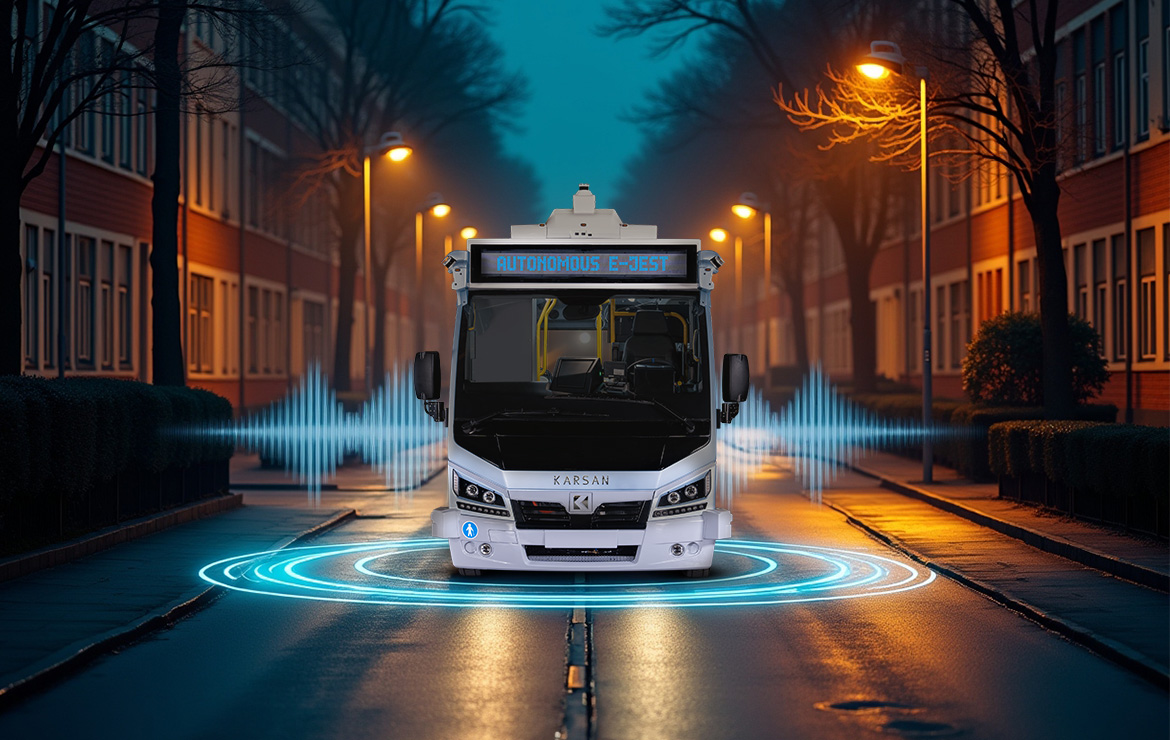
Modern cities face a growing environmental challenge. It is not just about dirty air. It is about noise. The constant roar of traffic affects millions of people. It causes stress. It disrupts sleep. It reduces the quality of life.
Municipalities are now adopting a new goal: The "Silent City". This vision aims to create quieter urban environments. The transition to an electric city bus fleet is the most effective strategy to achieve this. It attacks the problem at its source.
The Invisible Danger: Noise Pollution and Health
Noise is often called the "invisible pollutant". We cannot see it, but we feel its effects. The World Health Organization (WHO) identifies traffic noise as a major health risk.
Constant exposure to high decibel levels raises blood pressure. It increases the risk of heart disease. It causes cognitive impairment in children. Traditional diesel buses are significant contributors to this noise. Their engines vibrate heavily. They are loud even when idling at a red light.
Zero-emission public transport offers an immediate solution. Electric motors are naturally quiet. They eliminate the low-frequency rumble of diesel engines. This creates a calmer environment for pedestrians and residents.
Managing Noise: Day and Night Operations
City life runs 24 hours a day. Transportation needs change from day to night. The acoustic impact of public transport changes too.
Daytime Relief
During the day, cities are chaotic. Sirens, construction work, and private cars create a wall of sound. Adding loud diesel buses makes it worse. An electric city bus glides silently through traffic. It lowers the overall background noise. This allows people to have conversations on the sidewalk. It reduces the stress of the daily commute.
Nighttime Silence
The impact is even greater at night. Background noise drops. A single diesel bus accelerating can wake up an entire street. This disturbs sleep patterns. It leads to fatigue the next day.
Quiet public transport is essential for night shifts. Electric buses can operate late routes without disturbing residents. They can enter residential neighborhoods silently. This extends public transport hours without complaints from the community.
Comparison: Diesel vs. Electric Bus Noise Levels
The difference in sound output is measurable and significant. The table below illustrates the advantage of electric technology.
|
Operation Mode |
Diesel Bus Noise Level |
Electric Bus Noise Level |
Human Perception |
|
Idling (Stationary) |
75 - 80 dB |
~0 dB (Silent) |
Electric is virtually silent at stops. |
|
Acceleration (0-30 km/h) |
80 - 85 dB |
60 - 65 dB |
Diesel is twice as loud perceptually. |
|
Cruising (50 km/h) |
85+ dB |
70 - 75 dB |
Tire noise dominates for both. |
The Role of Compact Vehicles in Acoustic Comfort
Noise behaves differently in different spaces. In wide avenues, sound disperses. In narrow streets, sound bounces off buildings. This is the "canyon effect". It amplifies the noise of a large diesel engine.
Using a standard 12-meter bus in a narrow street is acoustically poor. The engine noise echoes. It reaches the upper floors of apartments.
Karsan e-JEST and e-ATAK: Designed for the City
This creates a need for the compact electric bus. Smaller, electric vehicles minimize this reverberation.
The Karsan e-JEST (6 meters) is ideal for residential zones and narrow city centers. It moves almost silently. It does not create the air pressure and noise vibration of a large vehicle.
The Karsan e-ATAK (8 meters) offers a middle ground. It carries more passengers than a minibus. Yet, it remains quieter and smaller than a full-size bus. These models allow operators to provide service right to the passenger's door. They do this without destroying the peace of the neighborhood.
Sustainable Tourism Transport and City Atmosphere
A quiet city is an attractive city. This applies to tourism as well. Visitors appreciate a peaceful atmosphere. They want to enjoy the architecture and the culture. They do not want to shout over traffic noise.
Sustainable tourism transport includes acoustic sustainability. Cities that use electric fleets offer a premium experience. Visitors leave with positive memories. They remember the sounds of the city, not the noise of the traffic.
Conclusion: A Healthier, Quieter Future
The "Silent City" is an achievable vision. It requires a strategic shift in public transport. Replacing noisy diesel engines with electric motors is the first step.
Municipalities must consider the health of their citizens. They must value the quality of sleep and the reduction of stress. Models like the Karsan e-JEST and e-ATAK offer the right tools. They provide quiet public transport solutions for every street type. A quieter city is a healthier, happier city for everyone.