-
23 February 2023Karsan Hydrogen Fuel Cell Bus e-ATA Hydrogen
-
17 July 2024Small City Buses: The Eco-Friendly Choice for Urban Commutes
-
23 September 2024Different Bus Sizes in Urban Transportation
-
02 October 2024What is a Shuttle Bus? How is it Used in Urban Transportation?
-
21 September 2026What Is Transit-Oriented Development (TOD)?
-
14 September 2026What Makes a Bus Truly Autonomous? The Sensors and Systems Behind Karsan's e-JEST
-
07 September 2026Measuring Sustainability in Public Transport: Which KPIs Matter Most?
-
28 August 2026Karsan × Toyota: Building the Hydrogen Bus of the Future
Tourism is a global competition. Cities compete for visitors, investment, and prestige. In the past, a famous museum or a beautiful beach was enough to attract people. Today, the rules have changed.
Modern travelers look for more than just sights. They look for values. They care about the planet. They prefer destinations that respect the environment. This shift has created a new concept: Zero-Emission Tourism.
For municipalities and local governments, this is a branding opportunity. Transitioning to an electric city bus fleet is not just an operational upgrade. It is a powerful marketing statement. It tells the world that your city is modern, responsible, and ready for the future.
The New Definition of a "Premium" Destination
In the luxury tourism market, "clean" is the new standard. A city covered in smog cannot claim to be a premium destination. Traffic noise destroys the romantic atmosphere of a historic center.
A city brand relies on perception. When a tourist steps off a plane and boards a silent, clean electric shuttle, their perception is positive. They feel safe. They feel respected.
Sustainable tourism transport acts as a mobile advertisement for the city's quality of life. It shows that the local administration invests in the well-being of its residents and guests. This builds trust. It encourages visitors to return.
Attracting the Eco-Conscious Traveler
Demographics are shifting. Millennials and Generation Z now make up a large portion of the tourism market. These groups are highly environmentally aware. Studies show they are willing to pay more for sustainable services.
They avoid destinations with bad environmental records. They share their experiences on social media instantly. A photo of a black smoke cloud from a diesel bus can damage a city's reputation in seconds.
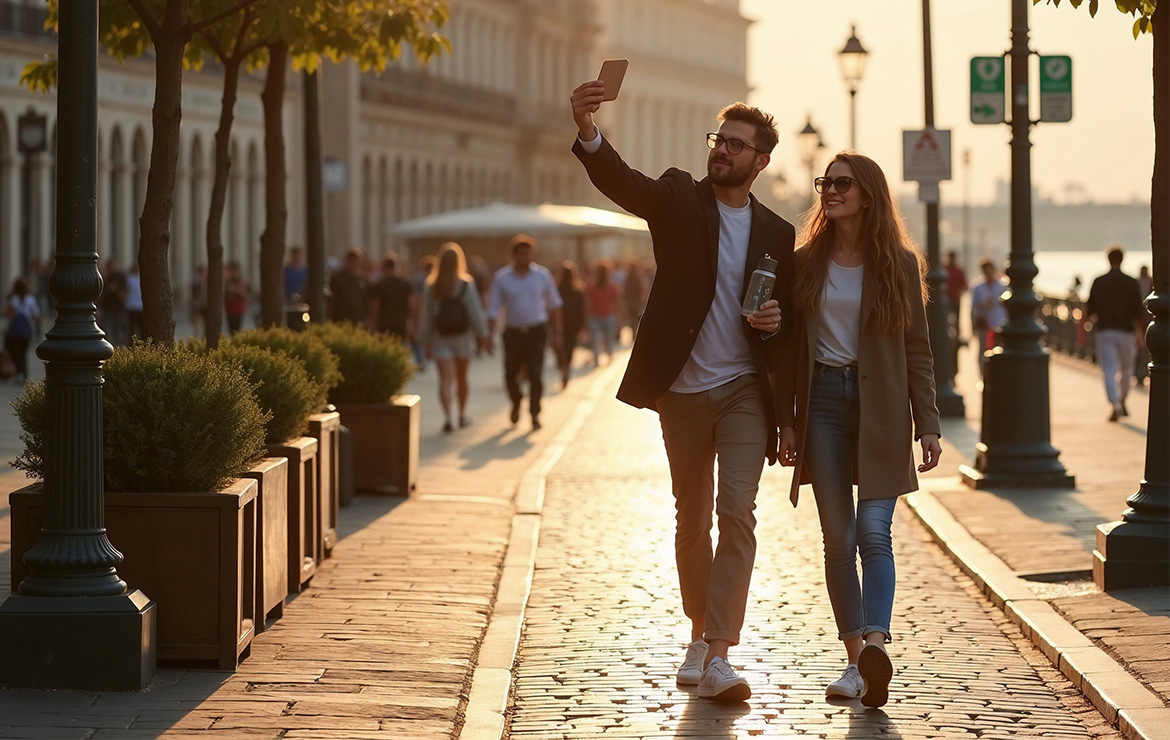
Conversely, a selfie in front of a modern, zero-emission public transport vehicle sends a positive message. It aligns the city with the personal values of the visitor. It turns the tourist into a brand ambassador for the destination.
Visual Impact: The Role of Design in City Branding
City branding is also about aesthetics. The vehicles on the street contribute to the visual landscape. Old, bulky diesel buses often clash with historical architecture. They look industrial and outdated.
Compact electric bus models offer a different aesthetic. They are often sleek and modern. They fit better into the urban fabric.
Karsan e-JEST: Harmony with History
The Karsan e-JEST is a prime example of this harmony. Its 6-meter size is unobtrusive. It does not block the view of historical facades. Its modern design looks like a piece of smart technology, not heavy machinery. When a city uses the e-JEST in its narrow historic streets, it signals that it protects its heritage while embracing innovation.
Karsan e-ATAK: Modern Mobility
The Karsan e-ATAK (8 meters) represents the efficiency of the city. It connects different districts smoothly. Seeing these quiet vehicles glide through the city center reinforces the image of a well-organized, high-tech metropolis.
Global Cities Leading the Change
Cities like Paris, London, and Oslo are racing to ban diesel vehicles. They market themselves as "Green Capitals". This title attracts international conferences, festivals, and high-end tourism.
Smaller tourist towns can compete by moving faster. A coastal town that converts 100% of its fleet to electric becomes a "Green Oasis". This is a unique selling proposition (USP). It distinguishes the town from its neighbors. It attracts tour operators who specialize in eco-tourism.
Beyond Marketing: Real Economic Benefits
A strong green brand brings economic growth.
-
Higher Occupancy: Clean cities attract more visitors throughout the year.
-
Better Health: Reducing local emissions lowers healthcare costs for the municipality.
-
Property Value: Real estate in quiet, clean zones increases in value.
Investing in electric city bus fleets creates a cycle of prosperity. The city becomes cleaner. More tourists visit. The economy grows. The city invests more in sustainability.
Conclusion: The Fleet is the Message
Marshall McLuhan famously said, "The medium is the message." In urban mobility, the vehicle is the message.
A diesel bus sends a message of the past. It speaks of pollution and neglect. An electric bus sends a message of the future. It speaks of care and innovation.
Municipalities must decide what message they want to send. Adopting models like the Karsan e-JEST and e-ATAK is a strategic move. It elevates the city brand. It ensures that the destination remains competitive in the age of Zero-Emission Tourism.