-
23 February 2023Karsan Hydrogen Fuel Cell Bus e-ATA Hydrogen
-
17 July 2024Small City Buses: The Eco-Friendly Choice for Urban Commutes
-
23 September 2024Different Bus Sizes in Urban Transportation
-
02 October 2024What is a Shuttle Bus? How is it Used in Urban Transportation?
-
21 September 2026What Is Transit-Oriented Development (TOD)?
-
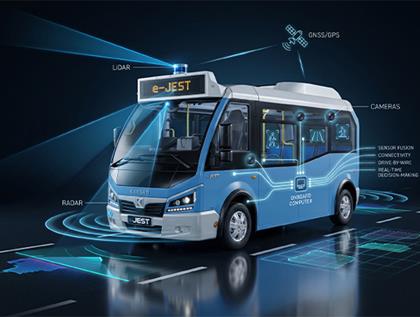
14 September 2026What Makes a Bus Truly Autonomous? The Sensors and Systems Behind Karsan's e-JEST
-
07 September 2026Measuring Sustainability in Public Transport: Which KPIs Matter Most?
-
28 August 2026Karsan × Toyota: Building the Hydrogen Bus of the Future

Across Europe, the rapid expansion of Low Emission Zones (LEZs) and Ultra Low Emission Zones (ULEZs) are fundamentally changing the landscape of urban mobility. For municipal transit agencies and private fleet operators, these zones no longer represent distant environmental targets; they are becoming key operational and planning consideration that require long-term fleet planning and gradual transition strategies. Navigating these regulatory frameworks requires shifting away from traditional internal combustion engines and toward zero-emission architectures that satisfy strict tailpipe emissions thresholds. Transit managers who understand the broader context of these policy tools can review the foundational guide on What Are Low Emission Zones and Why Do We Need Them to align their long-term fleet purchasing decisions with regional air quality initiatives.
Transitioning to compliance within low emission zone public transport networks demands a systematic approach to asset management. Operators must move past temporary vehicle retrofits and instead adopt a phased vehicle replacement timeline that addresses the specific enforcement dates of each metropolitan area. By executing a calculated transition plan, public transport providers can maintain access to regulated urban service routes, eliminate the risk of severe regulatory fines, and protect their overall capital investments.
How Major European LEZs Are Reshaping Public Transport Operations
The real-world impact of clean air mandates is best observed through the enforcement mechanisms of major European metropolitan areas. In London, the expansion of the Ultra Low Emission Zone (ULEZ) requires all buses and heavy vehicles to meet strict Euro VI standards or transition entirely to zero-emission powertrains to avoid steep daily charges. Similarly, Paris has accelerated its Zones à Faibles Émissions (ZFE) timeline, aiming to eliminate all diesel-powered public and private transport from its central streets by the turn of the decade.
Amsterdam’s MilieuZone represents an even more stringent operational boundary, establishing dedicated zero-emission zones for commercial trucks and other designated vehicle categories. These progressive restrictions increasingly limit the use of older fossil-fuel vehicles in central urban areas, supporting broader efforts to improve air quality and reduce emissions. To learn more about the environmental benefits of zero-emission public transport, transit agencies can explore our guide, guide Reducing Carbon Footprint in Public Transport, which explains how electric buses contribute to cleaner air, lower greenhouse gas emissions, and more sustainable urban mobility. To maintain access to regulated urban routes, transit agencies should develop long-term fleet transition plans that progressively introduce zero-emission vehicles while aligning operations with evolving local regulations.
Step-by-Step Transition Planning for Fleet Managers
Achieving comprehensive bus fleet low emission zone compliance requires a structured operational roadmap rather than isolated procurement choices. Fleet operators should approach this transition through four distinct phases:
-
The Fleet Compliance Audit: Operators must analyze every vehicle in their inventory, cataloging engine emission ratings, remaining lifecycle values, and daily mileage demands. This data allows management to isolate which routes face immediate disruptions from local LEZ timelines.
-
Depot Infrastructure Evaluation: Transitioning to a high-performance LEZ electric bus fleet requires assessing the local power grid's capacity. Operators must calculate the electricity grid requirements needed to support mixed charging strategies - such as overnight depot charging combined with rapid opportunity charging stations at terminal ends. To streamline these high-voltage infrastructure layouts and assess municipal grid capabilities, managers can directly utilize the foundational resource planning steps outlined in Electric Bus Charging: A Fleet Manager's Guide to effectively organize their depot power allocation.
-
Right-Sized Vehicle Selection: Matching vehicle capacity to real-world route density prevents capital waste. While heavy-duty corridors require high-occupancy buses, deploying oversized vehicles on low-density feeder routes increases energy overhead and creates infrastructure bottlenecks within tight historic emission zones.
-
Pilot Testing and Fleet Scaling: Before initiating a full-scale fleet replacement, operators must deploy zero-emission vehicles on select trial routes to gather baseline performance data. This phase validates real-world battery range under regional weather conditions and helps refine driver training and depot dispatch workflows before final infrastructure expansion.
Karsan as a Strategic Solution Provider: Enabling Operational Continuity
In this highly regulated environment, Karsan positions itself as a mobility solutions partner enabling long-term operational sustainability, rather than just a vehicle manufacturer. Karsan supports transit agencies with a comprehensive portfolio of electric mobility solutions designed to meet the evolving requirements of zero-emission urban transport. By offering factory-built, 100% electric platforms with flexible charging arrangements, Karsan supports that fleet operators can maintain strict service schedules while driving down their local environmental footprint.
For high-density historic town centers, narrow neighborhood loops, and vital feeder networks where large traditional buses cannot operate efficiently, choosing an agile platform is critical. Transit operators looking to integrate a flexible, highly efficient vehicle into their compliance strategy can explore comprehensive options by reviewing the technical specifications of the Karsan Electric Bus Lineup, which spans from the highly compact e-JEST Electric Minibus—perfectly balancing nimble dimensions with an advanced zero-emission powertrain—up to high-capacity heavy-duty articulated transit models.
Frequently Asked Questions (FAQ)
What are the primary operational steps for a transit operator transitioning to an LEZ-compliant fleet? Transit operators should begin with a comprehensive fleet compliance audit to evaluate vehicle lifecycles and emissions ratings. This must be followed by a detailed depot infrastructure assessment to analyze local power grid capacity, and a right-sized vehicle selection strategy to match bus dimensions with route densities.
How do tight emission zones like Amsterdam’s MilieuZone or Paris's ZFE affect older vehicle fleets? These zones progressively tighten emission requirements, restricting access for older diesel vehicles. Fleet operators who fail to transition face severe operational penalties, escalating regulatory fines, and reduced ability to operate on regulated urban routes.
Why is right-sizing critical for fleet compliance inside strict urban emission zones? Deploying traditional, oversized buses on low-density feeder loops or historic city corridors creates unnecessary energy overhead and infrastructure bottlenecks. Utilizing right-sized, agile platforms like the Karsan e-JEST optimize energy consumption and depot charging schedules while maintaining strict urban transit frequency.
Future-Proofing Modern Public Transit
Low Emission Zones are permanently reshaping the operational requirements of European public transport, turning zero-emission execution into a mandatory standard for business survival. For transit operators, the choice is clear: implement a proactive, structured compliance plan or face escalating operational penalties and eventual route exclusions. By leveraging targeted fleet audits, building a scalable charging ecosystem, and deploying right-sized electric solutions, fleet managers can turn compliance challenges into a powerful competitive edge. The future of urban transport belongs to operators who treat zero-emission mandates not as an obstacle, but as the foundation for a cleaner, more efficient transit ecosystem.