-
23 February 2023Karsan Hydrogen Fuel Cell Bus e-ATA Hydrogen
-
17 July 2024Small City Buses: The Eco-Friendly Choice for Urban Commutes
-
23 September 2024Different Bus Sizes in Urban Transportation
-
02 October 2024What is a Shuttle Bus? How is it Used in Urban Transportation?
-
21 September 2026What Is Transit-Oriented Development (TOD)?
-
14 September 2026What Makes a Bus Truly Autonomous? The Sensors and Systems Behind Karsan's e-JEST
-
07 September 2026Measuring Sustainability in Public Transport: Which KPIs Matter Most?
-
28 August 2026Karsan × Toyota: Building the Hydrogen Bus of the Future
Throughout this series, we have defined the First- and Last-Mile Challenge that plagues U.S. transit and identified Autonomous Minibuses as the "Missing Link" solution. But for city mayors, campus administrators, and fleet managers, the most pressing question remains:
"Where do we start? Where does this technology generate the fastest Return on Investment (ROI) today?"
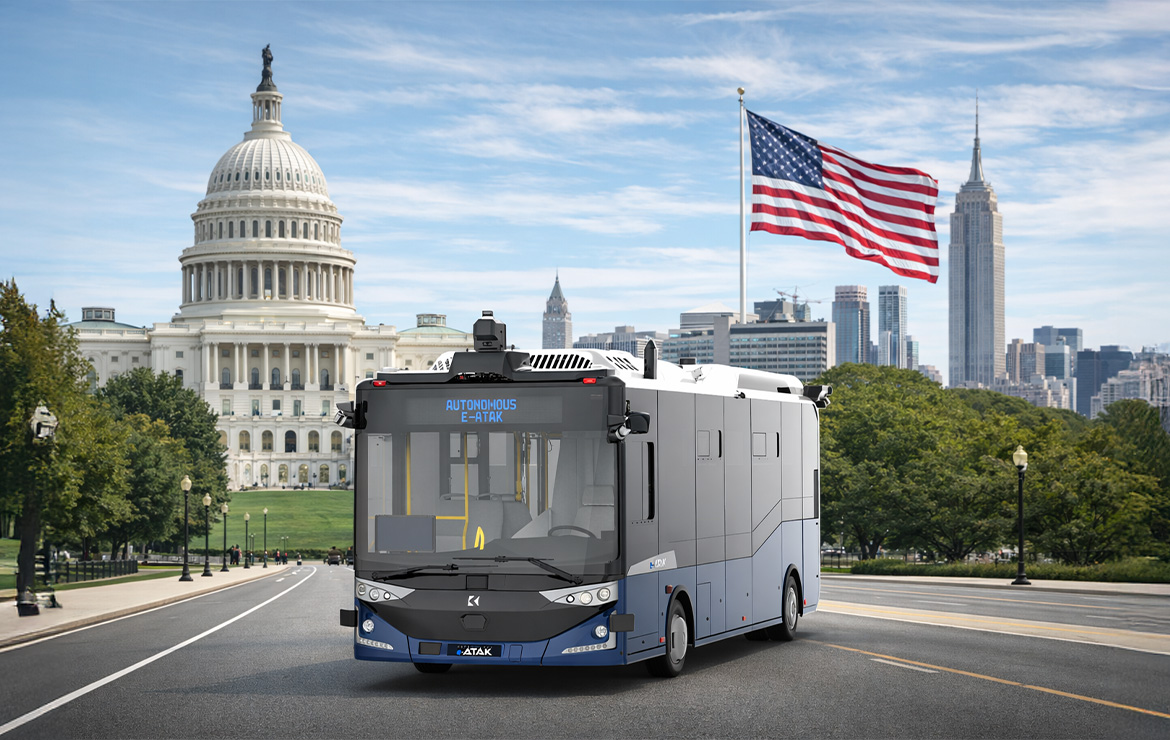
Moving from theory to practice requires a strategic map. Autonomous vehicles are not just futuristic concepts; they are practical tools that solve specific operational headaches. By deploying right-sized, Level 4 vehicles like the Karsan Autonomous e-ATAK in the right environments, stakeholders can maximize value immediately.
Here are the primary use cases where autonomous minibuses are transforming mobility in the United States.
1. Campuses and Business Districts (The "Safe Playground")
University campuses and large corporate business parks represent the ideal "controlled" or "semi-controlled" environments for autonomous deployment. These areas typically feature lower speed limits, well-defined road networks, and high pedestrian activity—conditions where safety is paramount.
-
The Use Case: Connecting dormitories to classrooms, or parking structures to office buildings.
-
The Value: Students and employees need reliable, repetitive loops. Autonomous shuttles provide this consistency without the high cost of human-staffed shifts.
-
Real-World Proof: This is not hypothetical. At Michigan State University (MSU), the Karsan Autonomous e-ATAK has been successfully transporting students and faculty, proving that Level 4 technology can integrate safely into a bustling campus ecosystem alongside cars, cyclists, and pedestrians.
2. Airports and Intermodal Transit Hubs
Airports are 24/7 cities that never sleep. Moving passengers and staff between terminals, rental car centers, and long-term parking lots is a logistical challenge, especially during off-peak hours when staffing is difficult and expensive.
-
The Use Case: Continuous shuttle loops between transit hubs (train stations) and airport terminals or parking facilities.
-
The Value: Autonomous minibuses solve the late-night labor shortage. They offer 24/7 continuous service, ensuring that a flight crew arriving at 3:00 AM or a traveler parking their car has a reliable, safe, and immediate transfer option. This eliminates the "wait anxiety" often associated with airport shuttles.
3. Suburban and Low-Density Urban Areas
As discussed in our first post, traditional 40-foot buses are inefficient in sprawling suburbs, leading to the "Ghost Bus" phenomenon. However, cutting service to these areas creates transit deserts.
-
The Use Case: First- and Last-Mile feeder routes connecting suburban neighborhoods to the main commuter rail or metro station.
-
The Value: By deploying right-sized autonomous buses in an On-Demand capacity, transit agencies can reduce operational costs while increasing coverage. Instead of a fixed route that no one uses, the bus responds to demand, making public transit economically viable in areas where it was previously impossible to sustain.
4. The Bottom Line: Operational Cost and Efficiency
For transit authorities, the decision to automate is ultimately financial. Labor costs typically account for the largest portion of a transit agency’s operating budget. Combined with a nationwide driver shortage, agencies are forced to cut routes.
- TCO Advantage: Autonomous electric buses stabilize operating costs. While there is an initial investment in technology, the long-term Total Cost of Ownership (TCO) is favorable due to the elimination of driver scheduling constraints and the lower maintenance requirements of electric powertrains (fewer moving parts, no oil changes).
- Resource Allocation: Automation allows agencies to reallocate their human drivers to complex, high-density arterial routes where they are needed most, while autonomous units handle the repetitive feeder loops.
5. Supporting a Sustainable and Inclusive Future
Finally, value is measured by social impact. The U.S. market demands transportation that is accessible to all.
- Inclusive Design: The Karsan Autonomous e-ATAK is designed with a low floor and is fully ADA (Americans with Disabilities Act) compliant. This ensures that elderly passengers and those with mobility challenges can use the service independently, promoting equity in public transit.
- Zero Emissions: As cities strive for "Net Zero" targets, replacing diesel shuttles with electric autonomous buses immediately reduces the carbon footprint of the community, contributing to cleaner air and quieter streets.
Conclusion: From Innovation to Implementation
The era of piloting autonomous technology for the sake of novelty is over. We have entered the era of value generation.
Whether it is streamlining operations on a university campus, ensuring 24/7 reliability at an airport, or reconnecting a suburban neighborhood to the city, autonomous minibuses offer a scalable solution. By deploying vehicles like the Karsan Autonomous e-ATAK today, U.S. decision-makers are not just investing in technology; they are investing in a more efficient, cost-effective, and accessible future for their communities.
To learn more about how Karsan’s autonomous and electric solutions can be deployed in your city or campus, visit Karsan US.