-
23 February 2023Karsan Hydrogen Fuel Cell Bus e-ATA Hydrogen
-
17 July 2024Small City Buses: The Eco-Friendly Choice for Urban Commutes
-
23 September 2024Different Bus Sizes in Urban Transportation
-
02 October 2024What is a Shuttle Bus? How is it Used in Urban Transportation?
-
21 September 2026What Is Transit-Oriented Development (TOD)?
-
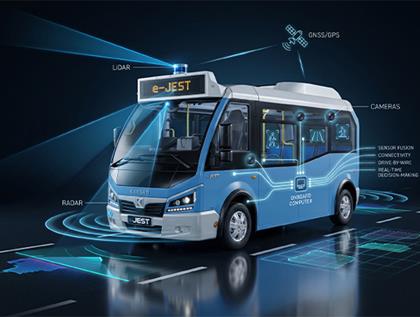
14 September 2026What Makes a Bus Truly Autonomous? The Sensors and Systems Behind Karsan's e-JEST
-
07 September 2026Measuring Sustainability in Public Transport: Which KPIs Matter Most?
-
28 August 2026Karsan × Toyota: Building the Hydrogen Bus of the Future

What is After-Sales?
At Karsan, we believe that after-sales represents the first step in building a lasting partnership with our clients. Once a sale is made, the focus shifts to maintaining the vehicle's performance, reducing downtime and ensuring overall reliability.
While many manufacturers consider after-sales a "support" function, at Karsan, we treat it as a critical element in building and sustaining that reliability. In other words, while design, data and dedication represent the foundation of uptime, it is the after-sales process that makes sure those elements come together.
How We Support Our Clients' Fleets
With authorized workshops located throughout Europe and Asia, as well as in Latin America and North Africa, Karsan provides a truly global service footprint. From the moment a bus leaves the factory floor in Turkey (or wherever it is manufactured), it is backed by a local service center, ready to provide technical assistance and support whenever needed.
Our service model is based on speed and accessibility. Technicians are certified and trained to handle any issue that arises, and spare parts are readily available for delivery anywhere in the world.
We understand that fleet operators cannot afford to lose hours waiting for parts, processing paperwork or dealing with administrative delays. As such, we've designed our system to anticipate and minimize downtime through proactive preparation and planning.
Why Does After-Sales Matter?
When companies purchase new buses, they're not just investing in equipment — they're betting on uptime. Whether you operate a dozen buses in a small town, hundreds across a metropolitan area or thousands globally, you're counting on those buses to move passengers reliably and efficiently.
Downtime, whether due to mechanical failure or poor maintenance, directly affects route timeliness, customer satisfaction and operational expenses. Therefore, the question is not "who makes the best buses?" but "who will keep them running?"
To this end, we believe that after-sales has become the defining factor in mobility — a key differentiator among bus manufacturers.
Preventative vs Reactive Maintenance
While reactive maintenance (fixing something once it fails) is a relic of the past, Karsan's approach is proactive and preventative. Powered by telematics and real-time data, our connected service platform continually monitors the condition of every vehicle in service.
Using real-time performance data (brake pressure, battery temperature, energy consumption etc.) collected from each vehicle, Karsan identifies potential issues before they cause a breakdown. This information is immediately communicated to service centers, which prepare spare parts and schedule maintenance before the vehicle experiences a malfunction.
Predictive maintenance provides uptime insurance — protecting against lost revenue caused by unexpected downtime.
Benefits of Using Genuine Parts and Skilled Technicians
While rapid response is important, it is equally essential to use the correct parts to ensure repairs meet the manufacturer's specifications.
Karsan maintains regional warehouse facilities stocked with OEM-approved parts.
Each Karsan technician receives ongoing training to stay current with evolving technologies such as high-voltage systems and hydrogen fuel cells.
Because technology constantly evolves — but trust comes from experts prepared for every situation.
Digital Solutions Supporting After-Sales
Digitalization should enhance every aspect of service, not complicate it.
Karsan's digital solutions include:
• Real-time remote monitoring of fleet performance
• Automated scheduling of routine maintenance
• Tracking of parts orders and deliveries
• Instant technical support via chat or video
• Online access to technical documentation and FAQs
These tools eliminate unnecessary steps and streamline the service experience — improving efficiency and customer satisfaction.
Supporting Service Teams to Support Customers
Behind every successful service event is a team of trained and empowered technicians, advisors and specialists.
Karsan provides them with tools, resources, knowledge bases, and direct communication with engineering teams — enabling faster problem-solving and stronger customer relationships.
Service Teams Are Not Just Repairing Vehicles — They Are Keeping Promises
Every after-sales interaction generates valuable data that feeds back into Karsan's product development and engineering teams.
Maintenance requests, customer feedback and replacement parts are analyzed to identify trends and areas for improvement.
Engineering teams refine designs, implement software updates and make improvements benefiting the entire fleet — including future models.
Data Fuels Long-Term Customer Relationships
Modern after-sales is focused on anticipation rather than reaction.
By collecting millions of data points from vehicles in service, Karsan analyzes performance patterns, optimizes maintenance schedules and tailors service programs to each client.
Two identical buses operating in different environments may require vastly different maintenance plans. Data allows Karsan to detect these needs — but human expertise ensures the right decisions are made.
The Human Factor in a Digital Age
Even in a digital world, human interaction remains essential to exceptional service.
A reassuring voice, a technician explaining a repair, or a follow-up call transforms service into a relationship.
Technology enables service — but people deliver it.
From Cost Center to Competitive Differentiator
After-sales used to be viewed as an unavoidable expense. Those days are gone.
Today, after-sales is a strategic advantage that fosters brand loyalty, supports stability and optimizes TCO.
Here's why:
• Predictive maintenance extends vehicle life and reduces operating costs.
• Integrated systems streamline tasks and minimize errors.
• Rapid parts logistics reduce downtime.
• Service data identifies opportunities to reduce energy usage.
• High customer satisfaction leads to repeat business and referrals.
The better a manufacturer’s after-sales network, the greater its competitive advantage.
Empowering Service Teams to Deliver Excellent Service
The transportation industry continues to learn that happy employees create happy customers.
Busy workshops can be stressful. By equipping technicians with tools, training and resources, Karsan empowers them to perform better — and stay longer.
When service teams are empowered, they don’t just fix faster — they fix better.
Takeaway Points: The Future of After-Sales
• Uptime is everything. Predictive maintenance and data-driven service increase fleet availability.
• Service defines trust. Customers measure reliability by how service performs under pressure.
• Digital tools amplify people. The best digital systems simplify and accelerate support.
• Genuine parts and skilled technicians ensure long-term performance.
• Continuous feedback from the field fuels innovation.
Conclusion
Today's buses feature advanced technology, clean energy systems and increasing autonomy — but none of this replaces the importance of a reliable service partner.
Even the most sophisticated bus is only as good as the team behind it.
Therefore, at Karsan, after-sales is not just an obligation — it is a promise to every operator, every city and every passenger relying on the bus to arrive on time, every time.