-
23 February 2023Karsan Hydrogen Fuel Cell Bus e-ATA Hydrogen
-
17 July 2024Small City Buses: The Eco-Friendly Choice for Urban Commutes
-
23 September 2024Different Bus Sizes in Urban Transportation
-
02 October 2024What is a Shuttle Bus? How is it Used in Urban Transportation?
-
21 September 2026What Is Transit-Oriented Development (TOD)?
-
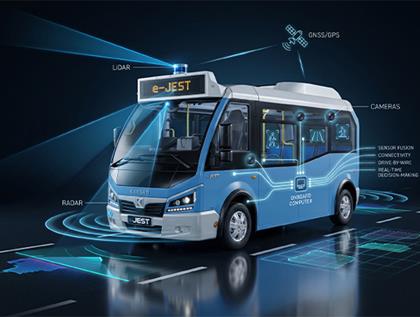
14 September 2026What Makes a Bus Truly Autonomous? The Sensors and Systems Behind Karsan's e-JEST
-
07 September 2026Measuring Sustainability in Public Transport: Which KPIs Matter Most?
-
28 August 2026Karsan × Toyota: Building the Hydrogen Bus of the Future

In the landscape of European urban transformation, Romania has emerged as a dominant leader, significantly outperforming many established Western counterparts in the transition to zero-emission mobility. By the start of 2025, the country achieved a remarkable 62.9% electric bus registration rate, a figure that places Romania among the top-tier European nations for growth velocity, often rivaling the pace of Nordic markets and the Netherlands. This shift is not merely a localized trend but a nationwide movement where public transport is being redefined through massive capital injections and high-performance technology to meet the stringent environmental standards of the coming decade.
The evolution of the romania bus market reflects a broader European ambition to decarbonize heavy-duty transit networks. As cities across the country phase out legacy diesel engines, they are replacing them with intelligent, silent, and efficient electric solutions that enhance the overall quality of urban life. This transition is being fueled by a combination of strong political will, mandatory EU directives, and strategic international partnerships that prioritize long-term ecological health over short-term savings.
How EU Climate Policies Accelerated Romania’s Electrification
Romania’s rapid adoption of electric transit is deeply rooted in the framework of the European Green Deal and the "Fit for 55" package, which mandates a significant reduction in transport emissions. The Clean Vehicles Directive has acted as a catalyst, requiring member states to ensure that a specific percentage of their public procurement contracts are for zero-emission vehicles. Consequently, Romania has moved with unexpected speed to align its national laws with these EU regulations, transforming environmental compliance into a competitive economic advantage for its municipalities.
These EU climate policies have provided more than just a regulatory roadmap; they have created a sense of urgency that has accelerated the retirement of aging fossil-fuel fleets. By embracing these standards early, Romania has avoided the "lag" seen in other markets, positioning itself as a primary laboratory for large-scale urban electrification. This alignment ensures that Romanian cities are not just meeting current mandates but are future-proofing their transit systems against even stricter upcoming European air quality standards.
The Role of PNRR Funding in Modernizing Transit
The primary financial engine behind this rapid growth is the National Recovery and Resilience Plan (PNRR), which has provided the necessary multi-billion-euro backbone for municipalities to overhaul their aging fleets. With active projects now spanning more than 40 cities, Romania has utilized these funds to bypass incremental changes and move directly toward high-capacity, zero-emission systems. This structured funding has allowed even mid-sized municipalities to implement state-of-the-art infrastructure that would have otherwise taken decades to finance through local budgets alone.
Investment at this scale ensures that the transition to an electric bus in Romania is sustainable and widespread rather than being limited to a few major hubs. By focusing on total fleet electrification, the PNRR framework is setting a precedent for how targeted financial instruments can accelerate the adoption of a zero emission bus across a diverse geographical landscape. The impact is visible in the cleaner air and reduced noise levels that are quickly becoming a standard expectation in Romanian urban centers.
Scaling Infrastructure: The Backbone of the Romanian Transit Revolution
A critical factor in the success of the Romanian market is the simultaneous development of high-capacity charging infrastructure alongside vehicle procurement. Romanian municipalities have recognized that electrification is not simply about the vehicles, but about creating a resilient energy grid capable of supporting rapid and overnight charging cycles. From smart grid integrations to high-power charging hubs in metropolitan depots, the country is investing heavily in the "invisible" side of the transit revolution to ensure operational continuity.
The development of this infrastructure has allowed cities to maintain the same service frequency as traditional diesel fleets without facing energy bottlenecks. By prioritizing decentralized charging points and modernizing depot power stations, Romania has successfully addressed the logistical challenges that often stall electrification projects elsewhere. This infrastructure-first mindset ensures that the growth seen today is built on a stable foundation that can support even larger fleets in the future.
Karsan as a Strategic Solution Provider: Enabling Long-Term Sustainability
In this competitive and fast-moving environment, Karsan has solidified its position not merely as a manufacturer, but as a primary architect of Romania’s green revolution. Currently serving as the second-largest provider in the market, Karsan’s role goes beyond delivering hardware; it is about enabling long-term operational sustainability through a comprehensive support ecosystem. Through its strategic partnership with AAR, Karsan provides the technical expertise and maintenance frameworks necessary to ensure maximum uptime and efficiency for municipal operators across the country.
This positioning as a holistic solution provider means that Karsan’s versatile range, including the high-capacity e-ATA 12m and e-ATA 18m, is supported by data-driven insights and localized service teams. These vehicles are selected for their ability to handle the rigorous demands of romania public transport, offering the durability needed for all-day service in high-density corridors. By focusing on the entire lifecycle of the vehicle, Karsan ensures that Romanian cities can achieve their decarbonization goals without compromising on reliability.
Success Stories: From Timișoara to Constanța
The data-driven success of the Romanian market is best illustrated through its flagship municipal projects, where fleet electrification and long-term modernization programs continue to create measurable progress. In Constanța, the city has significantly strengthened its coastal mobility with 22 modern e-ATA 12m vehicles, proving that zero-emission solutions are exceptionally effective in varying climates and high-traffic tourist zones. Furthermore, major transport modernization agreements—such as the large-scale e-ATA procurement projects structured for Timișoara—demonstrate how key urban hubs are establishing clear, long-term frameworks for heavy-duty corridor electrification.
These strategic city projects serve as living laboratories for the electric bus market in Europe, demonstrating that large-scale zero-emission investment translates directly into improved transit efficiency and high passenger satisfaction. As more municipalities observe these successful models, the regional demand for high-performance transport alternatives remains strong. This growing momentum reinforces a larger trend where comprehensive municipal data consistently supports the shift toward the e-ATA fleet as a sound economic and environmental investment for high-capacity routes.
Frequently Asked Questions (FAQ)
Why is Romania's electric bus registration rate higher than the European average? Romania's 62.9% registration rate is a result of the early and aggressive utilization of EU PNRR funds combined with strict adherence to the EU Clean Vehicles Directive. While many nations are gradually transitioning, Romania has prioritized total fleet replacements in over 40 cities simultaneously.
How does EU policy impact Romania's transit decisions? EU climate policies like the European Green Deal and the "Fit for 55" package mandate lower transport emissions. Romania has utilized these regulations as a roadmap to modernize its infrastructure, using EU-backed financing to meet these high environmental standards.
What is Karsan’s market position in Romania? Karsan is currently the second-largest solution provider in the Romanian electric bus market. Beyond supplying vehicles like the e-ATA and e-JEST, Karsan acts as a strategic partner through its collaboration with AAR, providing infrastructure support and long-term maintenance to ensure operational sustainability.
The Path to 2030
Romania’s journey to becoming a top electric bus market in Europe is a testament to what is possible when strategic funding, local political commitment, and advanced technology converge. As the country moves toward its 2030 targets, the lessons learned from its 40+ active city projects will provide invaluable insights for other European nations currently in the earlier stages of their electrification journey. The future of Romanian mobility is bright, silent, and undeniably electric, setting a new standard for urban life across the continent.