-
23 February 2023Karsan Hydrogen Fuel Cell Bus e-ATA Hydrogen
-
17 July 2024Small City Buses: The Eco-Friendly Choice for Urban Commutes
-
23 September 2024Different Bus Sizes in Urban Transportation
-
02 October 2024What is a Shuttle Bus? How is it Used in Urban Transportation?
-
21 September 2026What Is Transit-Oriented Development (TOD)?
-
14 September 2026What Makes a Bus Truly Autonomous? The Sensors and Systems Behind Karsan's e-JEST
-
07 September 2026Measuring Sustainability in Public Transport: Which KPIs Matter Most?
-
28 August 2026Karsan × Toyota: Building the Hydrogen Bus of the Future
Driver Training for Autonomous / Electric Buses: What Operators Need to Know
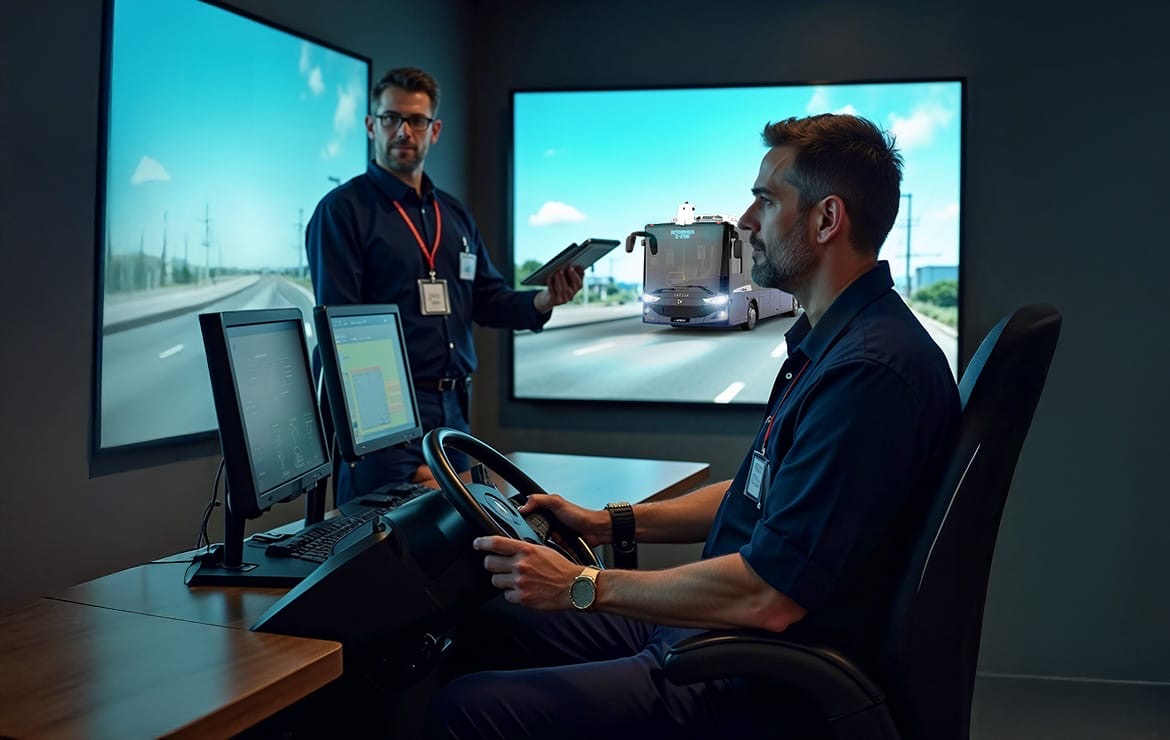
The future of public transport is electric — and increasingly, autonomous. Across the United States and Europe, battery-electric buses, school buses, and autonomous shuttles are already reshaping how cities and communities move. But while technology is advancing rapidly, the success of this transition depends on people: the drivers, technicians, and fleet managers who must adapt to new vehicles, systems, and safety requirements.
Training operators is no longer optional; it is the foundation of safe, efficient, and sustainable bus operations.
Understanding the Shift: From Diesel to Electric
Operating an electric bus is not the same as operating a diesel vehicle. Drivers need to learn:
-
Electric powertrains: instant torque, regenerative braking, and energy recovery.
-
Range management: how acceleration, braking, and climate control impact battery life.
-
Charging operations: plug-in vs. overhead charging, scheduling, and grid management.
-
Silent operation: electric buses are quieter, which increases pedestrian risks if drivers don’t compensate with awareness.
“Most EVs are just as safe, if not safer, than any other vehicle on the road. We had to demystify what it means to operate an EV while reminding drivers they are part of our carbon-neutral goal.”
— Katie Keeton, Siemens Fleet Manager
Safety First in a High-Voltage World
Electric buses bring new safety considerations. Operators must be trained in:
-
High-voltage awareness – safe handling of batteries, cables, and distribution modules.
-
Emergency procedures – fire response, manual service disconnects, and lockout/tagout.
-
System overrides – knowing when and how to take control from driver-assist systems.
According to the National Highway Traffic Safety Administration (NHTSA), EVs are 19% more likely to strike pedestrians due to low noise. Training must reinforce eye contact, signaling, and other awareness practices.
Ecodriving: Small Changes, Big Impact
Driving style directly impacts energy efficiency and passenger comfort. A six-month pilot in Athens with trolley bus drivers demonstrated that ecodriving training led to a 10.8% reduction in energy consumption, with no increase in travel time.
Benefits of ecodriving include:
-
Lower emissions and energy use.
-
Reduced accidents and maintenance costs.
-
Less stress for drivers.
-
A smoother ride for passengers.
Scaling such training programs could avoid thousands of tons of CO₂ emissions annually while paying back their costs in just months.
Training Standards: Building a Unified Approach
As more zero-emission buses enter service, fragmented training creates risks. The World Resources Institute’s Electric School Bus Initiative has released the first set of Electric School Bus Training Standards, peer-reviewed by over 50 experts.
They include:
-
Introductory training for community members and first responders.
-
Driver modules covering regenerative braking, charging, and safe operation.
-
Technician modules with high-voltage safety and service requirements.
-
Fleet manager standards on depot setup, signage, and PPE access.
These standards complement efforts by ASE, NFPA, SAE, and APTA, ensuring that workforce reskilling is aligned with safety best practices.
Lessons from German Pilot Projects
Germany is actively testing how autonomous buses can be integrated into public transport:
-
KIRA Project (Darmstadt/Offenbach) – On-demand autonomous shuttles booked via app, currently supervised by staff, with plans for fully driverless operations.
-
MINGA Project (Munich) – Researching ride pooling, solo autonomous buses, and platoons to supplement scheduled services by 2025.
-
SAFESTREAM Project – Developing Level 4 driverless operations without safety drivers in controlled zones.
-
ABSOLUT II Project – Replacing on-board safety drivers with remote supervisors in control centers, preparing systems for scaling and industrial production.
These projects show that autonomous buses can safely share roads with traditional traffic, but also reveal challenges: mass-production readiness, viable business models, and passenger trust.
Engaging and Supporting Drivers
Training isn’t just about safety checklists — it’s also about building confidence and buy-in. Fleet managers are using:
-
Workshops & demos to demystify EVs.
-
Telematics & gamification to encourage efficient driving.
-
Train-the-trainer models where supervisors spread best practices.
As Erin Sweeney noted, “Drivers can be so amped to drive their EVs that they may not have their full attention on the road. Engaging them in sustainability goals alongside safety is critical.”
Drivers as Partners in the Transition
Electric and autonomous buses promise cleaner air, safer roads, and more efficient mobility. But the transition will only succeed if drivers are properly prepared.
-
Education builds confidence in new systems.
-
Ecodriving saves energy and reduces emissions.
-
Unified standards ensure safety across fleets.
-
Engagement fosters acceptance and sustainability culture.
The operator’s role is not disappearing — it is evolving. With the right training, today’s bus drivers can become tomorrow’s mobility leaders, ensuring the safe and sustainable future of public transport.