-
23 February 2023Karsan Hydrogen Fuel Cell Bus e-ATA Hydrogen
-
17 July 2024Small City Buses: The Eco-Friendly Choice for Urban Commutes
-
23 September 2024Different Bus Sizes in Urban Transportation
-
02 October 2024What is a Shuttle Bus? How is it Used in Urban Transportation?
-
21 September 2026What Is Transit-Oriented Development (TOD)?
-
14 September 2026What Makes a Bus Truly Autonomous? The Sensors and Systems Behind Karsan's e-JEST
-
07 September 2026Measuring Sustainability in Public Transport: Which KPIs Matter Most?
-
28 August 2026Karsan × Toyota: Building the Hydrogen Bus of the Future
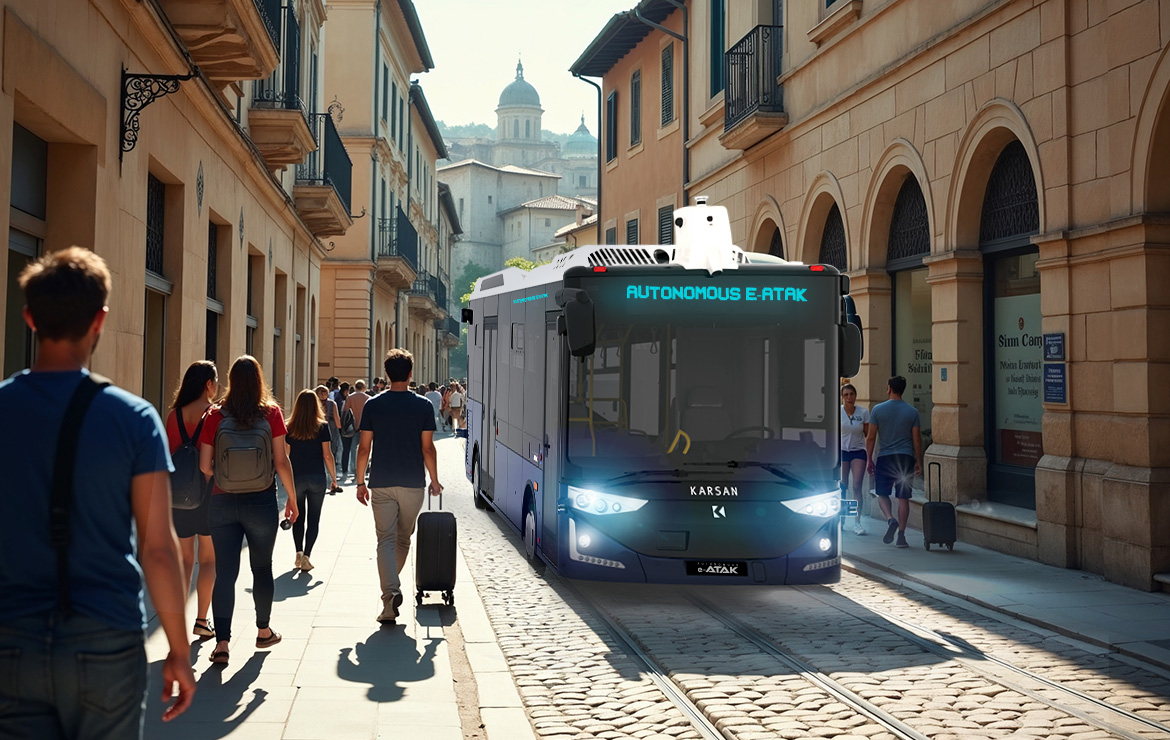
Popular tourist destinations face a difficult challenge. They attract millions of visitors every year. These visitors boost the local economy. However, they also strain the local infrastructure. Crowds cause congestion. Old transportation methods create noise and pollution. This harms the quality of life for residents. It also reduces the satisfaction of the tourists.
Municipalities and transport operators must find a balance. They need to move people efficiently. Yet, they must protect the historical and natural environment. The solution lies in the transition to an electric city bus fleet. This shift is not just a trend. It is a necessity for sustainable tourism transport.
The Problem with Traditional Transport in Historical Zones
Historical cities usually have narrow streets. They were built centuries ago for pedestrians or horses. They were not designed for large, diesel-powered vehicles. Large buses block traffic. Their engines create loud noise. This noise bounces off stone walls in narrow alleys. It disturbs the peace of the area.
Furthermore, diesel engines emit exhaust fumes. These fumes are unpleasant for pedestrians. They force tourists to cover their noses while walking. This creates a negative memory of the destination. Local governments need a cleaner approach.
Preserving the Atmosphere with Quiet Public Transport
Silence is a luxury in modern cities. This is especially true in vacation spots. Tourists visit these places to relax. They want to hear the sounds of the city, not the roar of an engine.
Electric vehicles offer a significant advantage here. They provide quiet public transport. An electric motor generates almost no noise at low speeds. This difference changes the street atmosphere immediately. Pedestrians can talk without shouting. Guides can explain history without competing with bus engines.
Residents benefit the most. Early morning transfers often wake up locals. Electric buses eliminate this disturbance. A silent fleet shows respect for the local community.
Noise Level Comparison: Diesel vs. Electric
The following table shows the difference in noise levels between traditional and electric buses.
|
Vehicle Type |
Average Noise Level (Decibels) |
Impact on Street Environment |
|
Diesel City Bus |
80 - 85 dB |
Disruptive to conversation and sleep. |
|
Electric City Bus |
65 - 70 dB |
Comparable to normal conversation. |
Compact Solutions for Narrow Historical Streets
Size matters in historical city centers. A standard 12-meter bus cannot turn in a medieval street. It gets stuck. It blocks intersections. Operators often use smaller diesel vans instead. However, these vans are uncomfortable. They are rarely accessible for passengers with disabilities.
This is where the compact electric bus becomes the ideal solution. Manufacturers now offer vehicles designed specifically for these constraints.
The Strategic Advantage of Karsan e-JEST and e-ATAK
Karsan understands this specific need. The Karsan e-JEST operates in the 6-meter class. It functions like a minibus but offers the comfort of a large bus. It maneuvers easily through tight corners. It can climb steep hills found in old coastal towns.
For slightly larger groups, the Karsan e-ATAK serves the 8-meter class. It offers higher passenger capacity without the bulk of a full-sized bus. These models allow public transport to reach the city center. Passengers do not have to walk long distances with luggage. They get off the bus right next to their hotel or the museum.
These vehicles use high-tech BMW batteries. This ensures reliability throughout the day. Operators do not need to worry about range anxiety during standard city shifts.
Zero-Emission Public Transport Protects Heritage
Air pollution does more than harm human lungs. It damages buildings. Black soot from diesel exhaust sticks to facades. It ruins ancient marble and limestone. Cleaning these historical structures is expensive. It requires chemicals that can cause further damage over time.
Zero-emission public transport stops this problem at the source. Electric buses release no tailpipe emissions. The air remains clear. The buildings stay clean for longer periods.
This approach creates a green image for the municipality. Tourists today are eco-conscious. They prefer destinations that care about the environment. A city with a fully electric fleet markets itself as a green destination. This attracts high-value tourism.
Improving Passenger Comfort and Experience
The passenger experience inside an electric city bus is superior to a diesel bus. There is no engine vibration. The ride is smooth. This reduces motion sickness on winding roads.
The Karsan e-JEST and Karsan e-ATAK offer low floors. This makes boarding easy for everyone. Parents with strollers, elderly tourists, and wheelchair users can enter without assistance. Accessibility is a key requirement for modern tourism.
Conclusion: The Future of Tourist Mobility
The era of noisy, smelly diesel buses in tourist centers is ending. Municipalities have a clear choice. They can continue with outdated technology that harms their city. Or, they can invest in the future.
Electric buses offer a silent, clean, and comfortable alternative. Models like the e-JEST and e-ATAK solve the problem of narrow streets. They provide sustainable tourism transport without compromising performance.
City planners and operators must prioritize this shift. It protects the historical heritage. It improves the quality of life for residents. It guarantees a better experience for visitors. A quiet, clean city is a city that people want to visit again.