-
23 February 2023Karsan Hydrogen Fuel Cell Bus e-ATA Hydrogen
-
17 July 2024Small City Buses: The Eco-Friendly Choice for Urban Commutes
-
23 September 2024Different Bus Sizes in Urban Transportation
-
02 October 2024What is a Shuttle Bus? How is it Used in Urban Transportation?
-
21 September 2026What Is Transit-Oriented Development (TOD)?
-
14 September 2026What Makes a Bus Truly Autonomous? The Sensors and Systems Behind Karsan's e-JEST
-
07 September 2026Measuring Sustainability in Public Transport: Which KPIs Matter Most?
-
28 August 2026Karsan × Toyota: Building the Hydrogen Bus of the Future
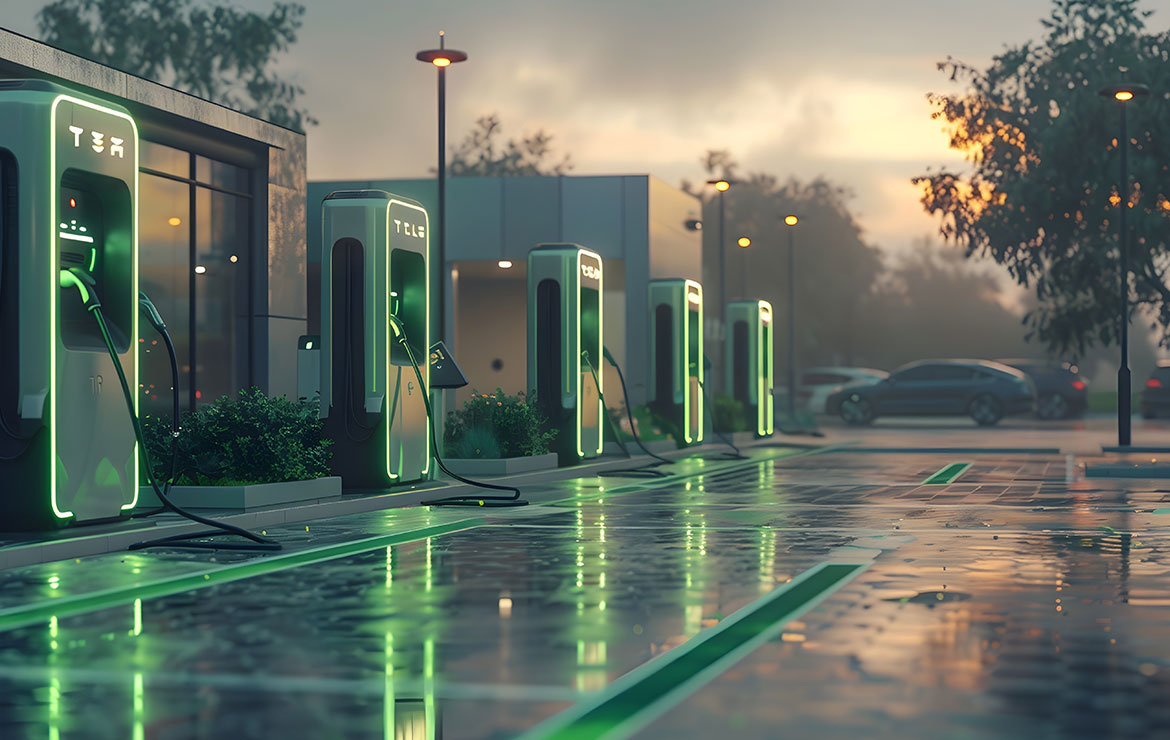
“Okay, we have our buses… Now what?”
Every bus fleet manager eventually asks this question.
You have your quiet, zero-emission BEVs — but how do you charge them?
Transitioning to BEVs isn’t just replacing diesel engines with battery packs.
It requires rethinking your depot operations, energy planning, and infrastructure layout [1].
Charging is the single biggest factor determining whether your BEV transition is smooth or bottlenecked at the yard.
Understanding the Depot Dilemma
Many fleet managers underestimate the complexity of depot charging until they experience it firsthand. Installing chargers is easy — planning them is not.
Depot charging affects:
-
Energy supply and grid capacity
-
Vehicle scheduling and downtime
-
Parking flow and depot real estate
-
Safety, ventilation, and regulatory compliance
-
Long-term scalability for fleet growth
A well-designed depot becomes a competitive advantage, not just an electrical facility.
Choosing Two Charging Strategies: AC vs. DC
Your depot’s charging design starts with a key choice:
How and when do you want your BEVs to charge? [2]
AC Charging (Slow or Overnight Charging)
Think of AC as your fleet’s “sleep mode.”
AC charging is used for overnight depot charging. Buses return at the end of the day and plug in for 4–8 hours.
Benefits:
-
Low cost per kWh
-
Utilizes off-peak electricity
-
Easy installation and maintenance
-
Ideal for predictable daily routes
Best suited for:
Urban or regional services traveling 150–250 km/day.
Karsan e-JEST and e-ATAK work seamlessly with AC depot charging via standard connectors.
DC Charging (Fast or Opportunity Charging)
If AC is “rest,” DC is “readiness.”
DC charging enables daytime top-ups where buses gain 20–80% SOC in under an hour.
Benefits:
-
Rapid charge turnaround
-
Supports longer routes with fewer buses
-
Ideal for multi-shift or intercity operations
Best suited for:
High-frequency routes or fleets with minimal downtime.
Karsan e-ATA 12 and e-ATA 18 support DC fast charging up to 200 kW, enabling mid-day top-ups during driver breaks.
Hybrid Charging Strategy: Balancing AC + DC
The most efficient depots do not choose AC or DC — they use both.
A hybrid approach includes:
-
AC for predictable overnight replenishment
-
DC for daytime flexibility
This creates:
-
Lower energy cost overall
-
Maximum uptime
-
Balanced grid load
-
Future scalability
Planning for Power: Assessing Grid Capacity
Electric buses don’t just need chargers — they need power.
Before planning charging infrastructure, fleets should analyze:
-
Maximum available grid power
-
How many buses charge simultaneously
-
Whether to stagger charging to reduce peak load
-
Availability of on-site solar or renewables
Large fleets pair their depots with smart load management systems to balance energy consumption and avoid peak tariffs [3].
Physical Depot Design
Charging logistics are as much about space as they are about energy.
Key considerations:
-
Clear drive paths to avoid queues and excessive reversing
-
Chargers installed near parking positions to minimize cable length
-
Space allocated for future charger expansion
-
Ventilation and fire compliance for indoor depots
Efficient depot design increases safety and minimizes operational bottlenecks.
Role of Digital Tools
Modern BEV fleets depend heavily on smart charging management systems (CMS) [4].
Digital platforms:
-
Schedule charging based on SOC, usage, and route demand
-
Optimize energy use to avoid peak tariffs
-
Integrate with telematics and fleet management
-
Support AC/DC chargers through open OCPP protocols
Karsan vehicles synchronize seamlessly with major CMS providers, ensuring hardware scalability and renewable integration.
How Karsan Vehicles Fit Into Your Depot Environment
All Karsan models — e-JEST, e-ATAK, e-ATA, e-ATA HYDROGEN — are engineered for depot compatibility.
Shared Karsan charging characteristics:
-
Dual AC & DC compatibility
-
Open OCPP communication
-
Optimized battery modules for charge-cycle efficiency
-
Advanced thermal management for consistent charging performance
Whether operating small city shuttles or large intercity buses, Karsan vehicles integrate smoothly into any depot plan.
Future-Proofing Your Charging Ecosystem
Depot charging is not a one-time investment — it is an evolving ecosystem.
To ensure long-term success:
-
Plan expansion in phases
-
Choose scalable, OCPP-compliant hardware
-
Track performance through CMS dashboards
-
Be adaptable — hydrogen and next-gen battery systems will complement BEVs
A smart depot established today becomes the backbone of your zero-emission future.
Conclusion
Going green starts with ambition — but succeeds with planning.
Choosing AC or DC isn’t just technical. It defines fleet flexibility.
With Karsan’s future-ready BEVs, your depot becomes more than a charging yard —
it becomes the heart of your electric operation.
Efficient. Scalable. Built for the road ahead.
KAYNAKÇA
[1] BEV Depot Charging Fundamentals
IEA Electric Bus Deployment Report – https://www.iea.org
UITP Depot Electrification Study – https://www.uitp.org
[2] AC vs DC Charging Characteristics
ABB Charging Infrastructure Guide – https://new.abb.com
Enel X AC/DC Charging Overview – https://www.enelx.com
[3] Depot Load Management & Grid Capacity
Siemens Smart Depot Energy Systems – https://www.siemens.com
Schneider Electric Fleet Load Balancing – https://www.se.com
[4] Smart Charging Management Systems (CMS)
ChargePoint Fleet CMS – https://www.chargepoint.com
OCPP Protocol Overview – https://www.openchargealliance.org