-
23 February 2023Karsan Hydrogen Fuel Cell Bus e-ATA Hydrogen
-
17 July 2024Small City Buses: The Eco-Friendly Choice for Urban Commutes
-
23 September 2024Different Bus Sizes in Urban Transportation
-
02 October 2024What is a Shuttle Bus? How is it Used in Urban Transportation?
-
21 September 2026What Is Transit-Oriented Development (TOD)?
-
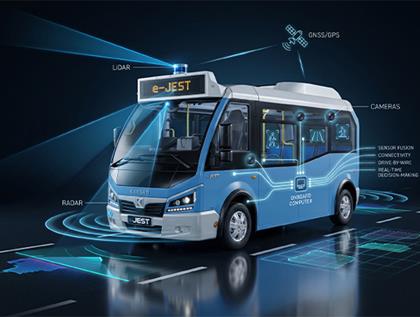
14 September 2026What Makes a Bus Truly Autonomous? The Sensors and Systems Behind Karsan's e-JEST
-
07 September 2026Measuring Sustainability in Public Transport: Which KPIs Matter Most?
-
28 August 2026Karsan × Toyota: Building the Hydrogen Bus of the Future

The Net Zero Mandate: Why Decarbonizing Your Fleet Must Be A Necessity — Not An Option
Pressure mounts — and increases rapidly
Transportation accounts for about 27 percent of the United States' and about one-quarter of Europe's greenhouse gas emissions, mainly due to cars, trucks, buses, and ships. Transportation has been viewed as the cost of mobility for decades. However, the world has moved on.
Public and private fleet operators are facing increasing pressure from regulators, investors and customers to "go green." The European Green Deal and the Fit for 55 legislative package have converted climate ambitions into legal obligations.
While the above may seem abstract, the business ramifications are very real: fleet decarbonization has evolved into both a compliance issue and a market opportunity.
ESG and the new rules of the road
With the EU's Fit for 55 plan requiring a reduction in emissions of at least 55 percent by 2030, transportation — among the hardest sectors to decarbonize — will be affected. The implementation of stricter CO2 standards, low emission zones and ESG-based procurement requirements will reshape competition.
The way that tenders are evaluated has changed. Ten years ago, fleet proposals were primarily evaluated on price and service quality. Today, ESG metrics are now included along with price. If an operator fails to decarbonize, they risk not only fines, but also the loss of the ability to bid on future contracts.
Therefore, "wait" has become the most expensive option in the business.
The cost of waiting - What happens if you wait?
Transitioning can be expensive - not transitioning is even more expensive.
Increased operating expenses: Volatility in the cost of fossil fuels continues. Rising carbon taxes will continue to increase the Total Cost of Ownership (TCO) for diesel fleets.
Missing incentives: Subsidies for zero-emission vehicles, depots and infrastructure are limited. When those subsidies are eliminated, the financial advantage of an earlier move to zero-emissions will disappear.
Negative reputation: Customers - especially municipalities - want to see tangible evidence of the progress toward their climate objectives. Old diesel fleets can quickly damage an operator's brand image.
Penalties for non-compliance: Failure to meet EU emission standards or national zero-emission mandates can result in fines, route bans and operational restrictions.
Therefore, the real question is not "can we afford to decarbonize?" but rather "how long can we afford to wait?"
A confusing regulatory environment
Internationally, operators share common concerns: the regulatory environment is still patchwork. Those operators who wish to invest in greener fleets are still faced with an uncertain regulatory environment.
According to one prominent industry expert, the lack of a unified EU policy framework regarding greenhouse gas emissions and renewable fuels is the main obstacle. Although the regulations exist, they are fragmented and vary between institutions.
The lack of a consistent EU-wide policy framework makes it extremely difficult for companies to make long-term commitments to investing in their fleets. The uncertainty affects not only the capital expenditures associated with investing in alternative energy sources, but also the cost of energy itself and the adoption of other key alternatives such as biogas.
Industry experts agree that what is necessary is a well-to-wheel approach to evaluating emissions - i.e., evaluate emissions "from well-to-wheel," not just at the tailpipe. With that clarity, companies will be able to make informed, cost-effective investments in their fleets.
Experts also agree that regulation should incentivize the development of renewable energy, not simply punish the consumption of fossil fuels. Instead of solely relying on carbon penalties to encourage the transition to cleaner fuels, governments should provide strong incentives for the accelerated development and deployment of all cleaner, viable fuels - including biomethane to jump-start the transition.
Biomethane is gaining attention as a renewable fuel well-suited for long-haul trucking - where the use of batteries remains impractical. In the UK, heavy-duty trucks using advanced biomethane systems already achieve diesel-like ranges of up to 1,100 km per fill - a clear indication of progress.
Opportunity - New Technology, New Economics
Despite the regulatory complexities, the economics of clean transport are changing quickly.
The global green logistics market is growing at a rate of approximately six percent annually, while battery prices - after some recent volatility in supply chains - continue to trend downward. By 2025, light commercial battery electric vehicles (BEVs) are anticipated to achieve 90-95 percent of the cost per mile of diesel - a remarkable improvement since just ten years ago.
Infrastructure, once considered a barrier to widespread adoption of electric vehicles, is also advancing. According to surveys, over half of current BEV fleet operators indicate that setting up charging for their fleets took more than a year - however, many of those installations are now forming scalable templates for additional growth.
Investments in hydrogen infrastructure are also growing - although it is still relatively nascent. By the end of the 2020s, it is anticipated that fuel cell vehicles will become economically competitive for long-distance hauls - the most challenging sector to decarbonize.
Lessons from Early Movers
Throughout Europe and beyond, early adopters are demonstrating that zero-emission fleets are not only practical but also profitable.
Dutch public transportation agencies are currently operating fully-electric fleets that demonstrate lower total lifetime cost compared to diesel fleets.
A German logistics company transitioned part of its long-haul fleet to CNG and BEV, resulting in over 40% reductions in CO2 emissions.
Turkish cities such as Izmir and Bursa are introducing Karsan's e-ATA and e-JEST models to electrify public transportation, while maintaining operational efficiency and minimizing noise pollution.
These examples share the characteristic of vision. Each had a strategic roadmap - consisting of clearly defined data, pilot testing and cross-industry collaboration.
Human Side of the Transition
Transformative technology alone cannot accomplish transformative results. All parties involved - drivers, maintenance personnel, dispatchers - need to adapt.
Electric fleets require new workflows - longer dwell times for charging, different maintenance intervals, etc. Digital tools to manage and optimize workflow are essential.
At Karsan, fleet transformation programs include training and digital support. For example, energy-efficient driving techniques can reduce electricity use by nearly 10% across an electric bus fleet - proof that small behavioral changes can lead to large economic benefits.
Building a Roadmap for Your Decarbonization Journey
Operators who successfully transition to a zero-emission fleet typically follow a structured, iterative process:
- Assess your current state Analyze your fleet composition, duty cycles, and route profiles. Determine potential quick wins - shorter routes, urban loops, or depot locations with access to the electrical grid.
- Establish a long-term strategy Align your ESG objectives with your operations. Decide whether to pursue a battery electric vehicle (BEV), hydrogen, or hybrid approach based on usage patterns and geographic location.
- Test and measure Implement controlled pilots to test the technology, infrastructure and driver behaviors. Collect and analyze data to improve your plan.
- Build relationships with partners Collaborate with OEMs, energy providers and municipalities. Public-private partnerships often facilitate the availability of incentives and decrease an operator's risk exposure.
Multimodal is the new normal
Most fleets today employ multiple technologies. BEVs are increasingly used in urban applications, while biomethane and hydrogen are employed in long-distance and heavy-duty applications.
The difficulty lies in balancing the complexity of multimodal strategies while preserving efficiency. Therefore, fleet managers are increasingly viewing project management and data integration as critical skill sets. Managers are required to monitor TCO, energy mix and uptime for various vehicle configurations - essentially running a mini-energy system.
Broader Picture - Fleets as Climate Accelerators
Each diesel bus that is replaced with an electric or hydrogen model does not merely reduce emissions - it also changes the way people perceive mobility.
Cities have cleaner air. Traffic noise decreases. Operators benefit from reduced maintenance expenses. And, an operator's ESG report becomes more than just a document - it represents a true reflection of the company's actions.
For Karsan, which has recently announced plans to produce 100% zero-emission products within the next few years, this transformation is more than compliance - it represents leadership. From compact e-JEST minibus models to high capacity hydrogen bus models, Karsan's portfolio shows that achieving net-zero is not an aspirational goal - it is an ongoing operation.