-
23 February 2023Karsan Hydrogen Fuel Cell Bus e-ATA Hydrogen
-
17 July 2024Small City Buses: The Eco-Friendly Choice for Urban Commutes
-
23 September 2024Different Bus Sizes in Urban Transportation
-
02 October 2024What is a Shuttle Bus? How is it Used in Urban Transportation?
-
21 September 2026What Is Transit-Oriented Development (TOD)?
-
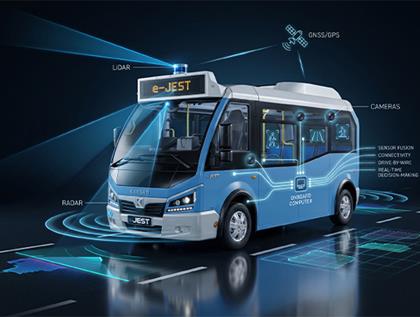
14 September 2026What Makes a Bus Truly Autonomous? The Sensors and Systems Behind Karsan's e-JEST
-
07 September 2026Measuring Sustainability in Public Transport: Which KPIs Matter Most?
-
28 August 2026Karsan × Toyota: Building the Hydrogen Bus of the Future

Weight reduction is a cornerstone of modern electric bus design, offering significant improvements in energy efficiency, driving range, and overall performance. Achieving lighter vehicles, however, involves more than just lightweight materials. Innovative engineering solutions and strategic design modifications also play critical roles. Together, these approaches create electric buses that are not only efficient but also safe, durable, and sustainable.
A Holistic Approach to Vehicle Weight Reduction in Electric Buses
Reducing vehicle weight involves a comprehensive strategy that combines material selection, engineering expertise, and advanced design techniques. By integrating these elements, manufacturers can deliver lighter, more energy-efficient electric buses without compromising safety or functionality.
The Role of Lightweight Materials in Weight Reduction
Lightweight materials, such as aluminum, carbon fiber, and high-strength steel, are key to reducing the overall weight of electric buses. Their ability to maintain strength and durability while lowering weight ensures that buses remain reliable and efficient.
Crash Energy Absorption
Advanced composites can be engineered to absorb collision energy more effectively, improving passenger safety in the event of an accident.
Sustainability and Recyclability
Many lightweight materials are recyclable, supporting a circular economy and reducing environmental impact during production and disposal.
While materials are an essential part of the solution, significant additional benefits are realized through engineering and design innovations.
Engineering Solutions and Design Innovations for Weight Reduction
Engineering and design play pivotal roles in reducing the weight of electric buses, complementing the use of lightweight materials. These approaches focus on optimizing the vehicle’s structure and layout to achieve maximum efficiency and performance.
Structural Optimization
Structural optimization leverages advanced computational modeling techniques, such as finite element analysis (FEA), to identify areas where material can be minimized without compromising strength or safety. Engineers optimize designs by incorporating high-strength steels, which allow for thinner, lighter components while maintaining or even enhancing structural integrity. By simulating stress distribution and load paths, engineers ensure that critical areas are reinforced only where necessary, reducing weight and improving efficiency. Thickness optimization further refines this process, tailoring material usage to meet load requirements while eliminating excess weight. To validate these optimizations, static load tests assess the structure's ability to withstand expected forces, while fatigue testing ensures durability under repeated load cycles. Rollover simulations evaluate energy absorption to maintain passenger safety, and physical prototypes undergo rigorous testing under varied conditions, such as high-stress maneuvers and uneven terrains.
Modular and Compact Design
Electric buses increasingly feature modular components and compact systems. Battery placement and integration of electrical systems are reimagined to save space and reduce unnecessary weight.
Aerodynamic Enhancements
Smoother exteriors and streamlined shapes reduce air resistance, enhancing the energy efficiency and range of electric buses. Design changes in areas such as the roofline, undercarriage, and front fascia contribute significantly to these improvements. These modifications not only lower energy consumption but also enhance the driving range of electric buses.
Karsan’s Approach to Weight Reduction Through Engineering and Design
Karsan adopts a holistic approach to vehicle weight reduction, focusing on both engineering excellence and innovative design strategies. While lightweight materials remain an integral part of the equation, Karsan prioritizes engineering and design solutions to deliver practical and sustainable transit options.
Key initiatives in Karsan’s weight reduction strategy include:
Simulation Driven Design:
At Karsan, simulation-driven design is at the core of our development process, enabling us to create electric buses that set benchmarks in efficiency and sustainability. By leveraging advanced computational tools such as finite element analysis (FEA) and multi-body dynamics (MBD), our engineers predict and refine the performance of components and systems under real-world conditions. This approach allows us to optimize structural layouts and achieve precise material placement, ensuring the perfect balance between weight reduction and structural integrity. Additionally, we use simulation tools to calculate and minimize energy consumption, optimizing battery performance and extending vehicle range. Through iterative virtual and physical testing, we significantly reduce development time and costs while delivering electric buses that excel in durability, efficiency, and performance. Karsan's commitment to simulation-driven design ensures our vehicles meet the evolving demands of sustainable public transportation.
Integrated Structural Layouts
Karsan vehicles feature integrated structural layouts that strategically balance strength and weight, leveraging advanced engineering techniques to ensure long-term durability and safety. By utilizing high-strength materials and precision thickness optimization, these layouts minimize unnecessary material usage while maintaining critical load-bearing capacity. This approach not only enhances the overall structural integrity but also contributes to significant weight reduction, improving energy efficiency and extending vehicle range.
Compact System Integration
Efficient battery placements and modular designs help reduce weight while maintaining energy storage capacity and performance.
Aerodynamic Design Features
Karsan’s electric buses incorporate aerodynamic enhancements that reduce drag and improve energy efficiency, contributing to lower operational costs and extended driving ranges.
These efforts culminate in vehicles like the e-JEST and e-ATAK, which exemplify Karsan’s commitment to sustainable engineering and innovative design.
Why Weight Reduction Matters for the Future of Electric Buses
Weight reduction is not just a technical challenge—it is essential for creating sustainable public transportation solutions. As cities demand greener transit systems, electric buses must evolve to meet these needs through better materials, smarter engineering, and innovative designs.
By combining lightweight materials, structural optimization, and aerodynamic design, manufacturers like Karsan are leading the way in creating efficient and environmentally friendly electric buses.
In Conclusion
Vehicle weight reduction is a multi-faceted process that involves more than just using lightweight materials. Through advanced engineering and design strategies, manufacturers can deliver electric buses that are lighter, safer, and more efficient.
Karsan integrates these methods into its vehicle development process, delivering innovative solutions that balance sustainability, performance, and durability. By leveraging smart design and engineering, Karsan ensures that its electric buses meet the demands of modern transit systems while contributing to a greener future.