-
23 February 2023Karsan Hydrogen Fuel Cell Bus e-ATA Hydrogen
-
17 July 2024Small City Buses: The Eco-Friendly Choice for Urban Commutes
-
23 September 2024Different Bus Sizes in Urban Transportation
-
02 October 2024What is a Shuttle Bus? How is it Used in Urban Transportation?
-
21 September 2026What Is Transit-Oriented Development (TOD)?
-
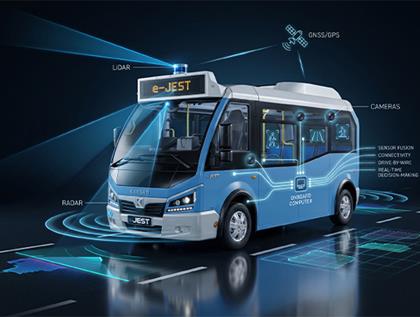
14 September 2026What Makes a Bus Truly Autonomous? The Sensors and Systems Behind Karsan's e-JEST
-
07 September 2026Measuring Sustainability in Public Transport: Which KPIs Matter Most?
-
28 August 2026Karsan × Toyota: Building the Hydrogen Bus of the Future
The 500km+ Challenge: Why Hydrogen (FCEV) Is the Key to Diesel-Level Uptime
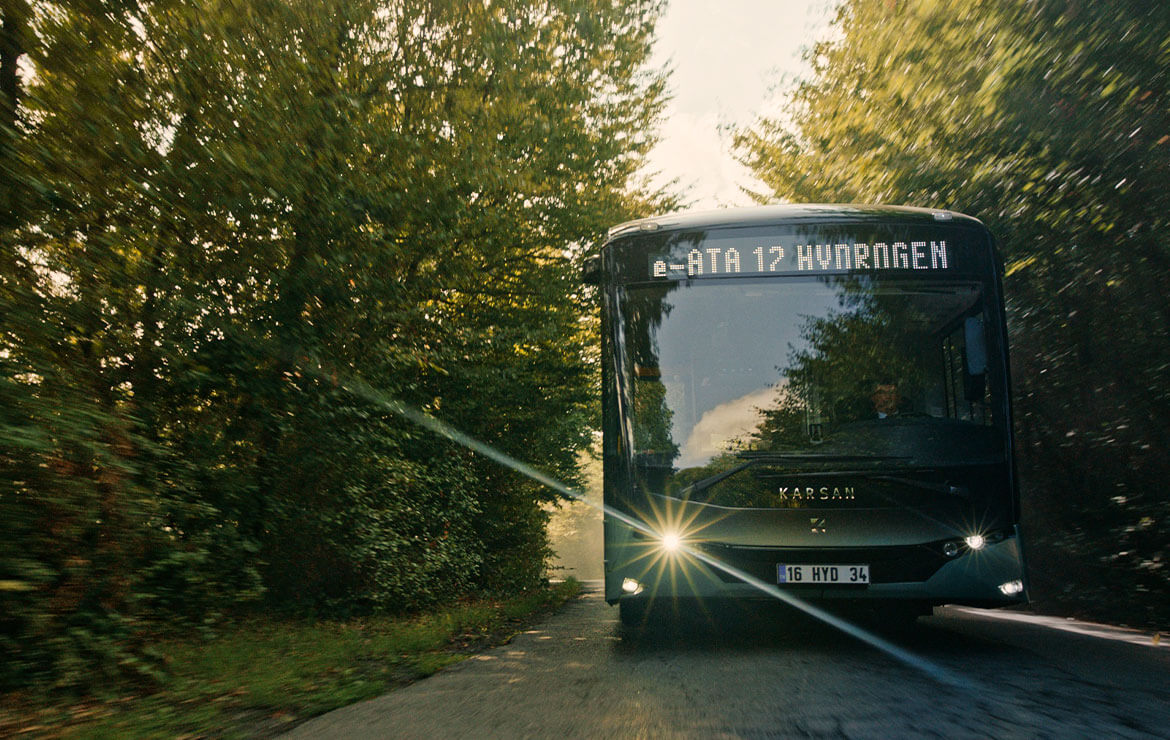
For commercial fleets that require 20+ hours of continuous operation, hydrogen fuel cell electric vehicles (FCEVs) offer the closest performance to diesel. Karsan’s e-ATA HYDROGEN delivers 500+ km range and 15-minutes refueling, combining the advantages of electric propulsion with the uptime of conventional diesel buses.
Think of an FCEV as an electric bus that breathes oxygen and emits only water vapor — silent, clean, and fast to refuel.
With hydrogen, a bus can operate all day without waiting for chargers, grid availability, or additional depot space for megachargers.
Inside the Karsan e-ATA HYDROGEN
Designed for fleets that cannot tolerate downtime, the e-ATA HYDROGEN offers:
-
>500 km real-world range
-
<15-minutes refueling
-
Up to 95 passenger capacity
-
350 bar composite hydrogen tanks (lightweight, durable)
These features result in:
-
Lower cost per km
-
Higher uptime
-
Operation patterns similar to diesel buses
“Isn’t Hydrogen More Expensive Than Battery-Powered Vehicles?”
Yes — hydrogen fuel costs more per kWh than electricity today.
But TCO tells a different story:
-
Hydrogen enables more hours on the road
-
Less time spent charging or waiting for charging slots
-
Far fewer hidden costs from grid delays, scheduling conflicts, or depot congestion
When utilization increases, hydrogen often becomes more profitable for high-duty-cycle fleets.
Green Hydrogen Costs Are Decreasing
The International Energy Agency reports that renewable green hydrogen could fall below €2/kg by 2030 — competitive with diesel on an energy-per-distance basis.
Additionally:
-
No oil changes
-
No pistons
-
Fewer mechanical parts
-
Less unplanned downtime
The maintenance profile of hydrogen buses further improves economics.
The Infrastructure Hurdle — And the Silver Lining
Today’s biggest challenge is not hydrogen technology — it’s refueling infrastructure.
Yet Europe is building hydrogen networks faster than many realize:
-
Germany: 100+ public hydrogen stations
-
France, Spain, Netherlands: National hydrogen strategies with corridor development
-
Turkey: Early pilot programs for clean transportation hubs
One hydrogen station can support dozens of daily bus refuelings — far more efficient than installing multiple megachargers for BEVs.
Hydrogen works extremely well for operators with private depots, who can partner with suppliers to build on-site fueling.
Flexibility for Operators
Operators can use both BEV and hydrogen vehicles to match routes and loads intelligently.
Think of hydrogen as the long-range cousin of the electric bus — engineered for endurance, not sprints.
The Green Hydrogen Advantage
The key question:
“How green is the hydrogen?”
If hydrogen is produced from natural gas, emissions benefits are reduced.
But green hydrogen — created via renewable-powered electrolysis — is rapidly scaling.
The EU Hydrogen Strategy targets:
-
50% renewable hydrogen share by 2030 in industrial and transport sectors
Manufacturers like Karsan are preparing vehicle platforms for full compatibility with the coming green hydrogen era.
Beyond Buses: The Hydrogen Ecosystem
Hydrogen infrastructure enables expansion into:
-
Heavy-duty trucks
-
Ferries
-
Construction machinery
-
Long-range rail systems
Every hydrogen fleet adoption drives further investment, accelerating the entire ecosystem.
Conclusion: Anyway, back to buses. Hydrogen fills the void.
Hydrogen merges the practicality of diesel with the clean efficiency of electric.
It is not a far-off concept — it is a proven, rapidly scaling solution already used in many European cities.
FAQS
Why not simply install larger battery packs?
More batteries add weight, increase charging time, and reduce passenger capacity. Hydrogen stores energy more efficiently.
Are hydrogen buses like the Karsan e-ATA HYDROGEN safe?
Yes. Tanks are carbon-fiber composite, fire-tested, impact-tested, and designed to vent safely. Hydrogen dissipates upward almost instantly.
Is hydrogen infrastructure expanding?
Yes — Europe now has 250+ hydrogen stations, with monthly network growth. Eastern European and Turkish regions have initiated multi-fleet hydrogen hubs.
Will hydrogen become cheaper than diesel?
Very likely. Green hydrogen prices are projected to reach parity by 2030, especially with rising carbon taxes.
Does hydrogen represent the missing piece in clean transport?
Maybe not the final piece — but the one that enables continuous operation.