-
23 February 2023Karsan Hydrogen Fuel Cell Bus e-ATA Hydrogen
-
17 July 2024Small City Buses: The Eco-Friendly Choice for Urban Commutes
-
23 September 2024Different Bus Sizes in Urban Transportation
-
02 October 2024What is a Shuttle Bus? How is it Used in Urban Transportation?
-
21 September 2026What Is Transit-Oriented Development (TOD)?
-
14 September 2026What Makes a Bus Truly Autonomous? The Sensors and Systems Behind Karsan's e-JEST
-
07 September 2026Measuring Sustainability in Public Transport: Which KPIs Matter Most?
-
28 August 2026Karsan × Toyota: Building the Hydrogen Bus of the Future

The transition toward electric school buses represents a fundamental shift in how educational districts manage their transportation assets while simultaneously addressing the urgent need to protect the respiratory health of students who are uniquely vulnerable to the toxic particulate matter and nitrogen oxides emitted by traditional internal combustion engines. This movement is fueled by a global realization that the school bus fleet often the largest form of public transit in many regions serves as a primary point of contact for air quality exposure during a child's most critical stages of lung and brain development. By integrating zero-emission school transportation into the broader smart city ecosystem, municipalities can leverage advanced battery technologies and smart energy management to create a safer, quieter, and more efficient mobility infrastructure that supports both environmental goals and fiscal responsibility.
School districts are now replacing diesel fleets. These older vehicles release harmful exhaust. Children breathe this air every day. Electric buses remove this risk entirely. They produce zero tailpipe emissions. This change supports long-term health outcomes.
Role of Electric Buses in School Transportation
The implementation of electric school bus programs serves as a cornerstone of urban sustainability by providing a localized solution to the disproportionate levels of pollution found in high-traffic school zones where idling vehicles often create pockets of poor air quality that directly impact the learning environment. Beyond the immediate removal of carbon dioxide, these vehicles offer a significant reduction in noise pollution which improves the quality of life for residential neighborhoods and creates a calmer atmosphere inside the bus cabin for both the driver and the students. This quiet operation reduces driver stress and allows for better supervision of the passengers, leading to a safer and more disciplined transportation experience that aligns with modern educational standards.
Diesel exhaust is a known carcinogen. It contributes to asthma and absenteeism. Electric buses provide a clean ride. They improve the acoustic environment of cities. This quiet ride benefits the students. It also helps the bus drivers.
Safety Standards for Electric School Vehicles
Advanced safety protocols for electric school buses extend beyond traditional crashworthiness to include specialized electrical protection systems such as high-voltage interlocks and thermal management units that monitor the chemical stability of the battery cells in real-time to prevent overheating or electrical failure during daily operations. The weight distribution of electric buses is often more balanced than that of diesel counterparts because the heavy battery packs are typically positioned low and between the axles, creating a lower center of gravity that improves the vehicle’s stability and handling during sharp turns or in slippery road conditions. Furthermore, the absence of a large front-mounted engine allows for improved visibility for the driver, which is a critical factor when maneuvering through crowded school parking lots and residential streets.
Safety is the highest priority for school transport. Batteries are protected by durable casings. Sensors monitor the system constantly. The low center of gravity prevents tipping. Drivers have a wider field of view. These features protect the children.
Acoustic Vehicle Alerting Systems (AVAS)
Because electric vehicles are nearly silent at low speeds, they must include artificial sound generators to alert pedestrians of their approach. This is vital for the safety of children waiting at bus stops. The sound is clear but not disruptive. It ensures pedestrians "hear" the bus coming.
Charging Infrastructure and Depot Management
Successful deployment of electric school buses requires a sophisticated depot charging management strategy that integrates smart charging software to balance the electrical load of the facility while ensuring that every vehicle reaches a full state of charge during the overnight dwell time without exceeding the peak power capacity of the local utility grid. Depot management is not just about installing hardware; it involves coordinating with energy providers to utilize time-of-use rates and exploring vehicle-to-grid (V2G) capabilities where the bus batteries act as a mobile energy storage system that can provide power back to the grid during peak demand or emergencies. This bidirectional energy flow can turn a school district’s fleet from a cost center into a resilient energy asset for the entire community.
Charging must happen when electricity is cheap. This usually occurs at night. Smart software manages the power flow. It prevents overloading the depot’s circuits. Level 2 chargers are common for overnight needs. DC fast chargers are used for midday boosts.
Route Optimization and Daily Range Planning
Effective range management depends on smart route planning that accounts for the specific topography of the school district, the expected passenger load, and the seasonal impacts on battery efficiency, particularly in cold climates where heating the cabin can significantly increase energy consumption. Modern electric buses, such as those utilizing proven battery technology from partners like BMW, provide predictable performance but still require dispatchers to analyze route energy profiles to match vehicles with the appropriate distance and terrain requirements. By using data-driven tools, fleet managers can identify which routes are best suited for electrification and where midpoint charging might be necessary for extended duty cycles.
Cold weather affects battery range. Heating the cabin uses extra power. Preconditioning the bus while it is plugged in saves energy. Drivers must be trained in efficient braking. This recaptures energy through regeneration. Route data helps avoid range issues.
Cold Weather Best Practices
Districts in cold regions must use pre-heating strategies. This warms the battery and cabin before the route begins. It ensures the bus starts with a warm system. This maximizes the range for the actual trip.
Total Cost of Ownership Comparison: Battery Electric (BEV) vs. Diesel
While the initial purchase price of an electric school bus is currently higher than that of a diesel vehicle, the long-term total cost of ownership (TCO) reveals significant savings driven by the elimination of oil changes, transmission repairs, and the lower per-mile cost of electricity compared to volatile diesel fuel prices. Over a 12-to-15-year lifecycle, the reduced maintenance needs of a powertrain with fewer moving parts combined with the avoided costs of fuel-related infrastructure can bridge the gap in capital expenditure, especially when the indirect costs of healthcare and environmental remediation are factored into the social return on investment.
|
Parameter |
Diesel School Bus |
Electric School Bus (BEV) |
|
Initial Purchase Price (Capex) |
Lower (~$100k - $150k) |
Higher (~$300k - $400k) |
|
Fuel/Energy Cost |
High (Diesel market volatility) |
Low (Stable electricity rates) |
|
Maintenance Cost |
High (Filters, oil, engine, gears) |
Low (No engine/transmission) |
|
Tailpipe Emissions |
CO2, NOx, Particulate Matter |
Zero Emissions |
|
Noise Levels |
High (Engine vibration) |
Very Low (Silent drive) |
|
Lifecycle (Years) |
10 - 12 Years |
12 - 15 Years |
Government Incentives and Funding Programs
The adoption of electric school bus programs is being accelerated by substantial government incentives such as the Environmental Protection Agency (EPA) Clean School Bus Program in the United States, which provides billions of dollars in rebates and grants to replace older diesel vehicles with zero-emission alternatives. In Europe, the Green Deal and various national subsidies offer similar financial support to municipalities to modernize their school transport fleets as part of the broader effort to meet 2030 climate targets. These funding models are often prioritized for districts in underserved or low-income areas to ensure that the health benefits of clean transportation are shared equitably across all communities.
Incentives lower the barrier to entry. The EPA provides grants for new buses. These funds cover both vehicles and chargers. States often provide additional tax credits. EU programs support sustainable urban mobility. This funding makes electrification affordable now.
Karsan Solutions for School and Student Shuttle Transport
Karsan offers a flexible portfolio of 100% electric vehicles that can be considered for school and student shuttle transportation thanks to their advanced safety features, accessibility, comfort, and operational efficiency. Models such as e-JEST and e-ATAK are designed to meet demanding urban mobility requirements and can be configured to support student transport use cases where needed. This flexibility enables operators, municipalities, and private service providers to evaluate Karsan vehicles as adaptable solutions for school bus and student shuttle operations, in line with local regulations and specific operational expectations.
Karsan e-ATAK: The High-Capacity Urban Workhorse
The Karsan e-ATAK is a leader in the 8-meter class, offering a range of up to 300 km that is more than sufficient for the most demanding school routes. Its low-floor design and rapid boarding capabilities make it highly accessible for students of all ages. With its silent operation and 230 kW powerful motor, it handles steep hills and urban traffic with ease. It provides a spacious interior that can be customized for student seating.
Karsan e-JEST: The Efficient Small-Group Shuttle
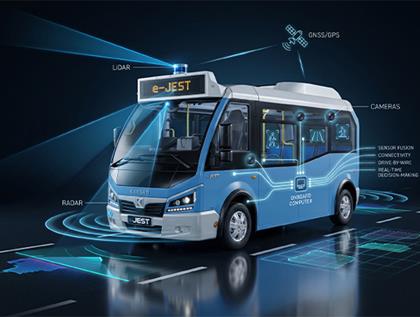
For districts that need to transport smaller groups or navigate narrow neighborhood streets, the Karsan e-JEST offers a compact 6-meter solution. Electrified by BMW i technology, the e-JEST provides a quiet and smooth ride for up to 22 passengers. Its small footprint and high maneuverability allow it to collect students directly from hotel or residential streets where larger buses cannot enter. This makes it an ideal partner for satellite school lines and specialized student transfers.
Operational Challenges and Best Practices
Transitioning to an electric fleet involves a learning curve that requires specialized driver training to master regenerative braking techniques and a collaborative relationship with local utilities to ensure that the infrastructure can support the increasing power demand of a growing depot. Fleet managers should start with pilot programs on the shortest and least demanding routes to gather data on real-world performance before scaling up to the entire network. Regular communication with the bus manufacturer and charging software providers is essential to maintain uptime and troubleshoot any technical issues that arise during the early stages of deployment.
Start with a small pilot fleet. Focus on shorter routes first. Train drivers in energy-saving habits. Monitor the battery health through software. Work closely with the electric utility. Data helps refine the charging schedule.
The Path Forward for School Districts
The evidence for electric school buses is clear. They protect children’s health. They reduce urban noise. They offer long-term operational savings. While the transition requires careful planning, the benefits for the community are immense.
School districts must act now to secure funding. Manufacturers like Karsan offer the technology to make this transition a success. By choosing e-ATAK or e-JEST, districts invest in a cleaner and safer future. The ride to school should be as smart as the learning that happens inside.