-
23 February 2023Karsan Hydrogen Fuel Cell Bus e-ATA Hydrogen
-
17 July 2024Small City Buses: The Eco-Friendly Choice for Urban Commutes
-
23 September 2024Different Bus Sizes in Urban Transportation
-
02 October 2024What is a Shuttle Bus? How is it Used in Urban Transportation?
-
21 September 2026What Is Transit-Oriented Development (TOD)?
-
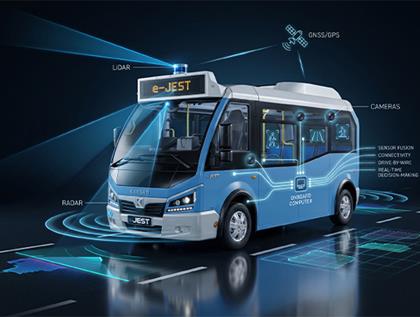
14 September 2026What Makes a Bus Truly Autonomous? The Sensors and Systems Behind Karsan's e-JEST
-
07 September 2026Measuring Sustainability in Public Transport: Which KPIs Matter Most?
-
28 August 2026Karsan × Toyota: Building the Hydrogen Bus of the Future
Representing one of the most strategic pillars of the global energy transition, green hydrogen is positioned as an indispensable solution partner for heavy-duty transportation requiring high energy density to meet decarbonization targets in a sector traditionally dominated by fossil fuels. While climate crisis pressures and binding legal frameworks like the European Green Deal lead municipalities and public transport authorities toward zero-emission technologies, the pure nature of green hydrogen obtained through electrolysis from water guarantees the sustainability of energy systems. This technology allows electricity from renewable energy sources to be stored in chemical bonds and utilized for mobile applications, offering a clean alternative that mirrors the operational flexibility of diesel without the environmental cost.
We must build a carbon-neutral future. Fossil fuels degrade local air quality and accelerate climate change. Green hydrogen solves this problem fundamentally. Only renewable energy is used during the production process. This approach reduces the carbon footprint to zero.
Definition of Green Hydrogen
Green hydrogen is a high-purity energy carrier produced through a process that leaves no carbon footprint, ensuring that the fuel is as clean at its source as it is at the tailpipe. Unlike traditional energy sources, it is not "mined" but synthesized, acting as a bridge between renewable power generation and mobile energy consumption. It represents the "gold standard" of the hydrogen spectrum because it relies entirely on carbon-free inputs.
Production must be clean to be effective. Most hydrogen today comes from coal or gas. That process is dirty and unsustainable. Green hydrogen changes the entire equation. It uses only water and wind or solar power. It is the only truly renewable hydrogen option.
Hydrogen Production via Electrolysis
The scientific core of green hydrogen production is electrolysis, a process where an electric current is passed through water to break the chemical bonds between hydrogen and oxygen molecules, effectively converting electrical energy into storable chemical energy. This occurs inside a device called an electrolyzer, which consists of two electrodes—a cathode and an anode—separated by a membrane. When powered by renewable electricity, the electrolyzer splits H2O, releasing oxygen into the atmosphere and capturing pure hydrogen for use in transport.
Electricity splits the water molecule. Hydrogen forms at the negative electrode. Oxygen is released as a harmless byproduct. The technology is proven and safe. Modern electrolyzers are becoming more efficient every day. They can be installed near renewable energy sites.
Difference Between Green, Blue, and Grey Hydrogen
The hydrogen "color spectrum" is a critical tool for mobility strategists to distinguish between production methods that support climate goals and those that reinforce fossil fuel dependency. While all hydrogen molecules are identical, their environmental impact varies wildly based on how they were extracted.
-
Grey Hydrogen: This is the most common form today, produced from natural gas through steam methane reforming (SMR). It releases massive amounts of CO2 into the atmosphere.
-
Blue Hydrogen: Like grey, it is made from fossil gas, but it uses carbon capture and storage (CCS) to trap a portion of the emissions. It is often seen as a transitional fuel but still relies on finite resources.
-
Green Hydrogen: Produced via electrolysis using 100% renewable electricity. It is the only version that aligns with long-term net-zero mandates.
Color coding defines the carbon footprint. Grey hydrogen is a high-emission fuel. Blue hydrogen is a lower-carbon fossil alternative. Green hydrogen is the only zero-emission choice. Policy support is shifting toward green production. It ensures a circular and clean energy economy.
Role of Hydrogen in Transportation Decarbonization
Decarbonizing the mobility sector requires a diverse technology mix because direct electrification is not always a viable or competitive option for every transport segment. While battery-electric vehicles (BEVs) are excellent for passenger cars and short-range urban trips, hydrogen provides the necessary energy density for vehicles that must work harder, travel further, and stay on the road longer.
High Energy Density for Hard-to-Abate Sectors
Hydrogen stores more energy per unit of weight than current battery technology. This means a hydrogen bus or truck can travel 500+ kilometers without carrying thousands of kilograms of heavy batteries. For fleet operators, this weight advantage translates directly into higher payload capacity and better operational efficiency.
Rapid Refueling for Maximum Uptime
A hydrogen vehicle can be refueled in minutes, a process that mirrors the convenience of diesel. In commercial transport, downtime is costly. Hydrogen allows buses and trucks to return to service immediately, ensuring that public transit schedules are met and logistics chains remain uninterrupted.
Use Cases in Heavy-Duty and Commercial Mobility
The most effective use cases for green hydrogen transportation are found in segments where high utilization and long distances are the standard. Public transit and long-haul logistics are the frontrunners in this transition.
Public Transit: The Karsan e-ATA Hydrogen Example
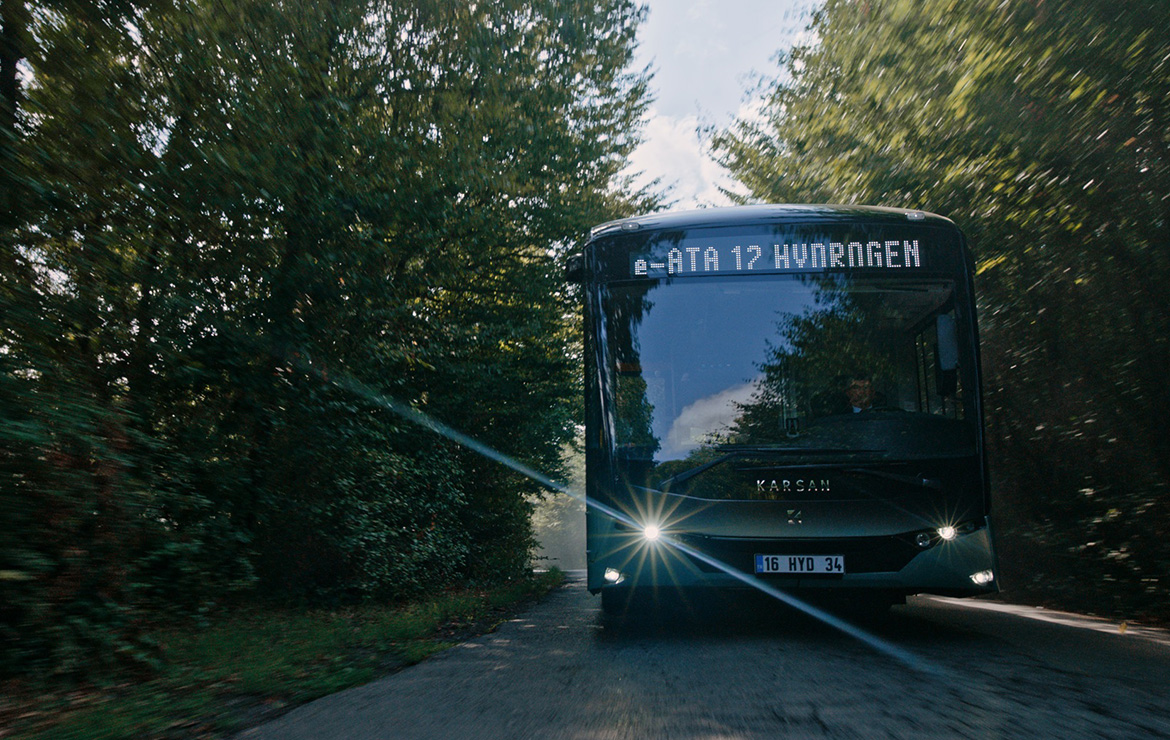
Representing the peak of Karsan’s environmental vision, the e-ATA Hydrogen offers operators the power of uninterrupted service needed by modern urban transport with its real-world range of over 500 kilometers and a refueling capability of only 7 minutes. This model stands out with its 12-meter low-floor structure and passenger capacity exceeding 90 people, providing maximum torque and comfort in all road conditions.
Its 97 kW high-efficiency fuel cell works with a durable LTO battery to deliver 22,000 Nm of torque. Lightweight composite hydrogen tanks on the roof ensure a spacious interior. This vehicle is a leader in its class. It proves that clean hydrogen mobility is ready for the street.
Battery Electric (BEV) vs. Hydrogen Fuel Cell (FCEV) Buses
|
Parameter |
Battery Electric (BEV) |
Hydrogen Fuel Cell (FCEV) |
|
Refueling / Charging Time |
3 - 8 Hours (At depot) |
< 7 Minutes |
|
Weight Impact |
High due to heavy batteries |
Low tanks, high carrying capacity |
|
Weather Impact |
Can reduce range by up to 30% |
Minimum impact with waste heat |
|
Infrastructure Focus |
High grid load, transformer need |
Refueling stations, central storage |
Infrastructure and Distribution Requirements
Adoption speed is defined by infrastructure readiness. For hydrogen to become a mainstream reality, cities must invest in Hydrogen Refueling Stations (HRS). These stations can be centralized at bus depots (return-to-base model) or distributed along major transport corridors. Modern HRS designs can store hydrogen as a compressed gas or liquid, dispensing it at 350 or 700 bar pressure.
Policy Support and Market Development
The transition is being accelerated by policy alignment. The EU's Alternative Fuels Infrastructure Regulation (AFIR) now mandates hydrogen refueling points every 200km on major highways by 2030. Financial instruments like the European Hydrogen Bank are bridging the cost gap between fossil fuels and renewable hydrogen. These policies provide the certainty needed for fleet operators to invest in zero-emission transport.
Challenges and Scalability Considerations
While the benefits are clear, scalability depends on overcoming current cost and efficiency challenges. Green hydrogen is currently more expensive than grey hydrogen. However, as renewable energy costs fall and electrolyzer production scales up, prices are expected to drop significantly. The industry is focused on increasing efficiency across the entire "well-to-wheel" chain.
Conclusion: The Hydrogen Advantage
Green hydrogen transportation is the missing piece of the net-zero puzzle. It provides the range, speed, and power that heavy-duty vehicles require. Karsan e-ATA Hydrogen is a testament to this technology's readiness. By adopting hydrogen today, municipalities and fleet operators can ensure a cleaner, quieter, and more efficient future for urban mobility.