-
23 February 2023Karsan Hydrogen Fuel Cell Bus e-ATA Hydrogen
-
17 July 2024Small City Buses: The Eco-Friendly Choice for Urban Commutes
-
23 September 2024Different Bus Sizes in Urban Transportation
-
02 October 2024What is a Shuttle Bus? How is it Used in Urban Transportation?
-
21 September 2026What Is Transit-Oriented Development (TOD)?
-
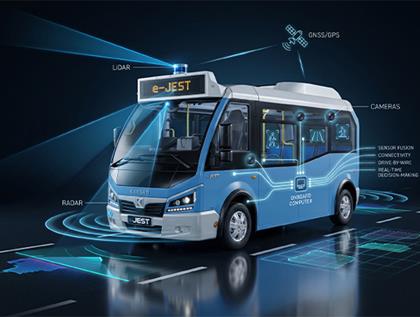
14 September 2026What Makes a Bus Truly Autonomous? The Sensors and Systems Behind Karsan's e-JEST
-
07 September 2026Measuring Sustainability in Public Transport: Which KPIs Matter Most?
-
28 August 2026Karsan × Toyota: Building the Hydrogen Bus of the Future

The global transition toward sustainable public transit infrastructure has accelerated rapidly, yet a persistent psychological and operational barrier remains among transit fleet managers: range anxiety. The fear that an electric bus will deplete its onboard energy storage prior to completing its daily scheduled block often stalls procurement decisions. However, much of this hesitation is driven by outdated legacy performance assumptions rather than modern automotive engineering capabilities.
To separate historical misconceptions from active field performance, transit agencies must evaluate real-world empirical data. Today’s zero emission bus operations are backed by sophisticated battery chemistry, intelligent thermal management, and highly adaptive power optimization software. When planned through the lens of systematic deployment rather than a simple vehicle-for-vehicle swap, electric bus networks consistently match or exceed the operational reliability of traditional internal combustion infrastructure.
Debunking the Core Myths of Battery Longevity and Range
Initial resistance to fleet electrification typically centers on a few widespread misconceptions regarding battery depletion speeds and overall route compatibility. Addressing these myths directly with current field metrics is the first step toward successful public transit electrification.
Myth 1: Electric Buses Are Unsuitable for Demanding, Full-Day Service Blocks
A common misconception is that electric bus models are limited to short, isolated corporation or university shuttle loops. Modern long range electric bus battery systems enable extended daily operation blocks. To understand how battery capacity directly influences route efficiency and how various charging infrastructures—including plug-in, quick charge, pantograph, and wireless systems—determine daily uptime, operators can review the essential guidelines in What Is an Electric Bus? to evaluate core energy storage and charging configurations.
Myth 2: Charging Requirements Will Cause Disruptive Service Bottlenecks
Many operators believe that transitioning to an electric bus fleet requires vehicles to sit idle for hours during active peak shifts. Modern depot logistics eliminate this operational risk by pairing smart opportunity charging strategies (such as pantograph fast-charging) with optimized overnight sequential charging. This integrated approach ensures maximum vehicle uptime without interrupting tight municipal schedules.
Cold Weather Performance: The Reality of Nordic Operations
The claim that sub-zero temperatures render electric bus operations unviable is one of the most prominent myths in the sector. It is true that extreme ambient cold introduces specific thermodynamic challenges, primarily because the vehicle must dedicate a portion of its high-voltage battery capacity to cabin climate control and battery pack pre-heating. However, advanced insulation techniques and efficient heat pump architecture have heavily mitigated this thermal penalty.
Real-world deployments under severe winter conditions provide conclusive evidence of modern vehicle resilience. A prime example is the continuous deployment of Karsan autonomous bus fleets in Stavanger, Norway. In this demanding Nordic environment, vehicles regularly encounter sub-zero temperatures, high route elevations, and slick surfaces. Operators examining real-world autonomous bus deployments can review the sectoral analysis published by Urban Transport Magazine on Stavanger's Commercial Autonomous Service to evaluate how the Autonomous e-ATAK operates in mixed urban traffic, including signalized intersections and a road tunnel, within Norway’s evolving regulatory framework.
Real-World Efficiency: Analyzing the Mid-Sized Transit Tier
When evaluating long range electric bus performance, the mid-sized municipal tier offers an ideal benchmark for operational versatility. Mid-density urban loops and variable suburban feeder lines require balanced vehicle architecture that can carry heavy passenger loads while navigating tight historical or residential road networks without excessive energy overhead.
Within this critical segment, the Karsan e-ATAK Electric Bus provides a verified reference point for high-end electric city bus operational range. Equipped with advanced liquid-cooled lithium-ion battery packs, the platform achieves a real-world range of up to 350 kilometers on a single full charge. This extensive range capacity allows municipal operators to confidently schedule full-day transit blocks across multi-stop urban corridors, eliminating mid-shift charging dependencies and matching the operational flexibility of legacy diesel single-deckers.
The Strategic Variables: What Actually Influences Real-World Range?
Rather than viewing electric bus fleet management through static window-sticker metrics, operators must recognize that real-world range is a dynamic variable governed by four distinct operational factors. Managing these elements mathematically allows agencies to precisely forecast daily energy consumption:
-
Topographical Elevation Profiles: Regenerative braking systems allow an electric bus to recapture substantial kinetic energy during downhill descents, feeding power back into the battery pack and neutralizing the high energy draw experienced during steep uphill climbs.
-
Passenger Load Variations: Volatile passenger weights shift the overall kinetic mass of the vehicle. Advanced fleet management platforms use real-time axle-load sensing to automatically adjust power delivery profiles, optimizing energy distribution during peak commuter rushes.
-
Climate Control Demands: Integrated HVAC systems operate most efficiently when utilizing smart pre-conditioning protocols. Warming or cooling the vehicle cabin while it remains plugged into the depot charging grid saves precious battery capacity for active route propulsion.
-
Targeted Charging Strategy: Selecting the right blend of overnight alternating current (AC) plug-in cycles and high-power direct current (DC) fast-charging loops determines long-term battery health and daily fleet availability.
Strategic Sizing: Eliminating Range Friction Through Portfolio Scale
A significant structural pitfall in modern transit procurement is attempting to enforce a singular vehicle dimension across a highly varied urban transport map. Forcing an oversized, heavy-duty electric bus onto low-density, winding suburban lines results in excessive energy consumption per passenger mile, accelerating battery depletion and compounding range anxiety. Conversely, deploying an undersized electric minibus on major arterial commuter routes leads to vehicle overloading and increased rolling friction.
True operational efficiency is achieved by deploying right-sized equipment tailored to the exact capacity demands of each unique corridor. Fleet planners can explore how balanced vehicle distribution solves infrastructure constraints by reviewing the architectural advantages of Karsan's Scalable Electric Bus Range, which spans from compact electric bus options at 6 meters up to robust 18-meter articulated platforms. Matching vehicle scale to passenger density minimizes unnecessary weight, protects localized charging grids from voltage spikes, and ensures that every asset operates within its absolute optimal efficiency band.
Conclusion: The Data-Driven Path to Total Fleet Electrification
Range anxiety is rapidly shifting from a technical reality to a legacy operational myth. As global transit networks demonstrate daily, the combination of advanced high-density battery arrays, proactive thermal engineering, and right-sized fleet scaling allows zero emission bus fleets to seamlessly absorb intensive municipal workloads. By replacing outdated assumptions with empirical data from successful cold-weather deployments, transit operators can comfortably transition away from fossil fuels and build cleaner, highly resilient urban transit grids.
To evaluate how a scalable, field-proven electric bus portfolio from an experienced electric bus manufacturer can integrate into your existing depot infrastructure and optimize daily route productivity, transit operators can examine the comprehensive technical layouts and modular charging options of Karsan’s Electric Public Transport Solutions.