-
23 February 2023Karsan Hydrogen Fuel Cell Bus e-ATA Hydrogen
-
17 July 2024Small City Buses: The Eco-Friendly Choice for Urban Commutes
-
23 September 2024Different Bus Sizes in Urban Transportation
-
02 October 2024What is a Shuttle Bus? How is it Used in Urban Transportation?
-
21 September 2026What Is Transit-Oriented Development (TOD)?
-
14 September 2026What Makes a Bus Truly Autonomous? The Sensors and Systems Behind Karsan's e-JEST
-
07 September 2026Measuring Sustainability in Public Transport: Which KPIs Matter Most?
-
28 August 2026Karsan × Toyota: Building the Hydrogen Bus of the Future
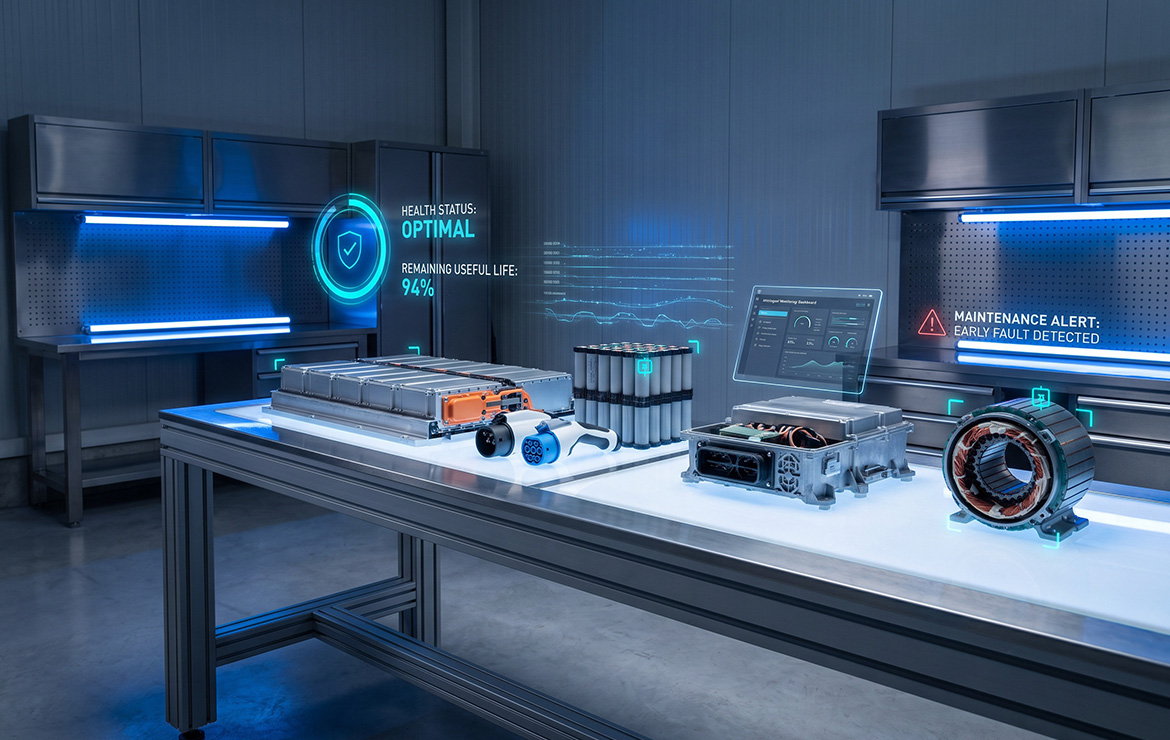
The transition to zero-emission public transport is changing not only how cities operate their bus fleets, but also how those fleets need to be maintained. Electric buses introduce new technologies, including high-voltage battery systems, electric motors, power electronics, regenerative braking, advanced HVAC systems, and charging infrastructure. As a result, maintaining fleet reliability requires more than simply following a predefined service schedule.
For individually sold vehicles, maintenance plans and preventive maintenance remain fundamental. Scheduled inspections and service intervals provide a structured approach to keeping a vehicle in safe and reliable operating condition.
For large-scale electric bus fleets deployed within tenders, projects, and municipal transport operations, however, maintenance can take a broader form. The actual operating conditions of each vehicle including route characteristics, driving behavior, passenger load, ambient temperature, energy consumption, charging patterns, and daily utilization can influence vehicle performance and component degradation.
This is where remote monitoring and predictive maintenance become valuable. By combining vehicle data with fleet-management and project-management processes, operators can move beyond fixed maintenance intervals and make more informed decisions based on how vehicles are being used.
From Maintenance Plans to Predictive Maintenance
Maintenance should not be viewed as a single process. Different operating models require different maintenance approaches.
-
Maintenance Plans: For individually sold vehicles, manufacturers typically define maintenance schedules based on factors such as time, mileage, or vehicle usage. These plans provide a clear framework for inspections, servicing, and component replacement.
-
Preventive Maintenance: Preventive maintenance involves performing inspections or replacing components before a known failure occurs. It is particularly useful for managing wear items and components with predictable service requirements.
-
Predictive Maintenance: Predictive maintenance takes the process further by using actual vehicle operating data to identify changing conditions and potential issues. Instead of relying solely on predefined intervals, maintenance decisions can be supported by information about how the vehicle is operated.
For an electric bus fleet, this distinction is particularly important. Two vehicles of the same model may experience different operating conditions depending on their routes, driving patterns, passenger loads, climate, and charging behavior. Their maintenance requirements may therefore evolve differently over time.
Why Operating Conditions Matter
Electric buses operate in environments that can vary significantly from one route to another. Hills, traffic density, stop frequency, passenger load, weather conditions, and driving behavior can all influence energy consumption and component performance.
For example, a bus operating on a route with frequent stops and steep gradients may experience a different energy and thermal profile from the same vehicle operating on a relatively flat route with fewer stops.
Similarly, high passenger loads can affect energy consumption, while ambient temperature can influence battery and HVAC performance.
This means that fleet maintenance should increasingly consider real-world vehicle usage, rather than treating every vehicle as if it operates under identical conditions.
Remote monitoring provides the visibility required to understand these differences.
The Role of Remote Monitoring in Electric Bus Fleets
Remote monitoring systems collect operational data from vehicles and make it available to fleet and maintenance teams. Depending on the vehicle architecture and available systems, this may include information such as:
-
Battery State of Charge (SoC) and State of Health (SoH)
-
Battery temperature and voltage parameters
-
Energy consumption
-
Charging behavior and charging events
-
Vehicle mileage and utilization
-
Route and location information
-
Motor and inverter operating conditions
-
HVAC operation
-
Diagnostic and fault information
The value of this data is not simply the ability to see what is happening inside a vehicle. Its real value comes from connecting vehicle information with fleet operations and maintenance decisions.
For example, if a vehicle consistently consumes more energy than comparable vehicles operating on similar routes, the fleet operator can investigate whether the difference is related to driving behavior, route conditions, HVAC usage, battery performance, or another technical factor.
This creates a feedback loop between vehicle operation, maintenance, and fleet management.
Predictive Maintenance as Part of Fleet and Project Management
For large electric bus projects, predictive maintenance should therefore be considered as part of a broader fleet-management and project-management framework.
A fleet operator may need to answer questions such as:
-
Which vehicles are showing abnormal operating behavior?
-
Which vehicles should be prioritized for inspection?
-
How does route difficulty affect energy consumption?
-
Which vehicles are approaching a maintenance threshold?
-
How should vehicles be allocated across different routes?
-
When should maintenance be scheduled to minimize service disruption?
-
Which spare parts and technical resources should be prepared in advance?
Remote vehicle data can help answer these questions by providing a continuous view of fleet performance.
Instead of waiting for failure or relying exclusively on fixed intervals, operators can use trends and alerts to identify vehicles that may require attention.
This is particularly valuable in tender-based or project-based operations, where fleet availability, service continuity, and operational performance are closely connected.
Key Areas to Monitor in Electric Bus Fleets
Battery Health and Degradation
The battery is one of the most important and valuable systems in an electric bus. Monitoring parameters such as SoC, SoH, temperature, voltage, charging behavior, and energy consumption provides insight into battery condition and performance.
Over time, this information can help operators identify changes in battery behavior and support decisions around maintenance, vehicle allocation, charging strategies, and future battery management.
Electric Motor and Power Electronics
Electric motors and inverters operate under different loads depending on route characteristics, acceleration patterns, vehicle weight, and environmental conditions.
Monitoring temperature, electrical parameters, and diagnostic information can help identify abnormal behavior and support earlier technical intervention.
Regenerative and Friction Braking
Electric buses use regenerative braking to recover energy during deceleration. The extent to which regenerative braking is used compared with mechanical braking can vary depending on route characteristics and driving behavior.
Monitoring braking behavior can therefore provide useful information for understanding component usage and planning maintenance.
HVAC and Thermal Management
HVAC systems can have a significant impact on the energy consumption of an electric bus, particularly in extreme weather conditions.
Monitoring HVAC operation, energy consumption, and thermal performance can help operators identify abnormal behavior while also understanding its impact on vehicle range and battery usage.
From Vehicle Data to Maintenance Decisions
Collecting data alone does not create predictive maintenance. The important step is transforming data into actionable information.
A simplified process can be described as:
Vehicle → Data Collection → Remote Monitoring → Analysis → Alert → Maintenance Decision → Fleet Action
For example, a vehicle may gradually demonstrate higher-than-expected energy consumption on a specific route. Instead of immediately treating this as a battery problem, the operator can compare the vehicle with similar vehicles and consider route gradient, passenger load, weather, HVAC usage, and driving behavior.
If the data indicates an abnormal technical trend, the vehicle can then be prioritized for inspection.
This approach allows maintenance teams to focus their resources where they are most needed.
Karsan’s Approach to Electric Bus Reliability
For large-scale electric mobility projects, vehicle reliability depends on more than the vehicle itself. It requires an integrated approach involving the vehicle manufacturer, fleet operator, maintenance teams, and project stakeholders.
As an experienced electric bus manufacturer, Karsan supports operators throughout the vehicle lifecycle, combining vehicle technology with technical expertise and after-sales support.
For a fleet operating across different routes and conditions, understanding real-world vehicle performance can help operators make better decisions regarding maintenance, vehicle availability, and daily operations.
Whether the fleet includes an electric bus, an electric minibus, or other zero-emission vehicles, the objective remains the same: maintaining reliable vehicles while maximizing operational availability.
Operators can also explore how a strong service network contributes to long-term vehicle availability in After-Sales Is Everything: Why Your Vehicle’s Uptime Depends on Your Partner’s Service Network.
Conclusion: Maintenance as a Fleet Management Strategy
Maintenance is a fundamental part of electric bus fleet performance. For individually sold vehicles, structured maintenance plans and preventive maintenance provide the foundation for safe and reliable vehicle operation.
For large-scale electric bus fleets operating within municipal tenders and projects, however, maintenance can extend beyond fixed schedules. Remote monitoring, real-world operating data, and predictive insights can provide operators with a more complete understanding of vehicle performance and help identify potential issues before they develop into service-impacting failures.
By considering factors such as route, driving behavior, passenger load, temperature, energy consumption, charging patterns, and vehicle utilization, fleet operators can make better-informed maintenance and operational decisions. This data-driven approach can help reduce recurring failures, minimize unplanned maintenance, improve first-time repair effectiveness, and reduce vehicle downtime.
The objective is not simply to predict when a component will fail. It is to create a data-driven fleet management approach that helps improve reliability, optimize maintenance resources, reduce service disruption, and maximize vehicle availability. Over time, systematically analyzing fleet data can also help identify recurring failure patterns, improve preventive maintenance strategies, and reduce the number of vehicles affected by similar issues.
Real-world applications have demonstrated that predictive maintenance can significantly reduce service-impacting failures. In one documented bus-fleet application, breakdowns were reduced by approximately 8% following the implementation of a predictive maintenance system, highlighting the potential of data-driven approaches to improve reliability and reduce unplanned downtime.
For transit operators looking to build reliable zero-emission fleets, the combination of structured maintenance, remote monitoring, technical support, and data-driven fleet management provides a foundation for long-term operational efficiency, higher vehicle availability, and more predictable maintenance costs.
To explore Karsan's zero-emission public transport solutions, visit Karsan’s Electric Public Transport Range.