-
23 February 2023Karsan Hydrogen Fuel Cell Bus e-ATA Hydrogen
-
17 July 2024Small City Buses: The Eco-Friendly Choice for Urban Commutes
-
23 September 2024Different Bus Sizes in Urban Transportation
-
02 October 2024What is a Shuttle Bus? How is it Used in Urban Transportation?
-
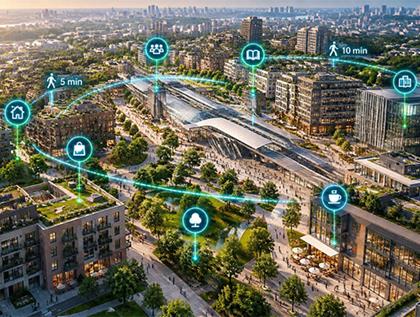
21 September 2026What Is Transit-Oriented Development (TOD)?
-
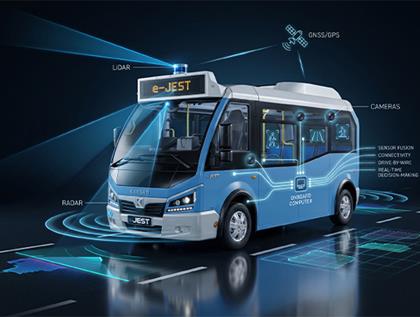
14 September 2026What Makes a Bus Truly Autonomous? The Sensors and Systems Behind Karsan's e-JEST
-
07 September 2026Measuring Sustainability in Public Transport: Which KPIs Matter Most?
-
28 August 2026Karsan × Toyota: Building the Hydrogen Bus of the Future
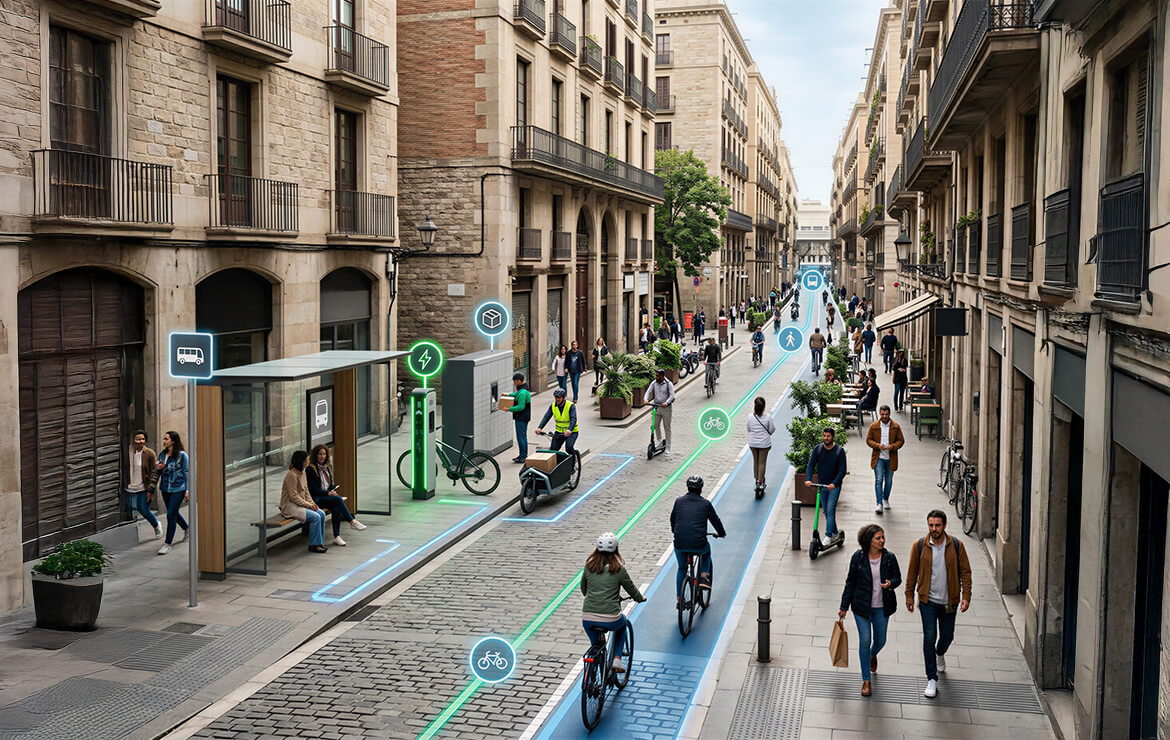
As global urbanization continues to accelerate, the primary inefficiency in modern public transportation is no longer the speed of the main arterial lines, but rather the difficulty of transporting passengers from their front doors to those high-speed hubs. This specific segment of travel represents a significant barrier to ridership. Cities often rely on oversized vehicles for neighborhood routes. This creates high operational costs. Empty buses waste energy on narrow streets. Commuters choose private cars instead of waiting for infrequent service. A new approach is necessary for true urban connectivity.
The Core of the Last-Mile Problem
The "Last-Mile" refers to the final leg of a journey. It is the distance between a transit station and the passenger's final destination. In many large cities, this distance is too long to walk comfortably. Traditional 12-meter buses are often too large for these residential environments. They struggle with tight turns and narrow lanes. Frequent stops for a massive vehicle increase wear and tear. Fuel consumption stays high even with fewer passengers. Transit agencies need a more agile tool to bridge this gap.
Bridging the Accessibility Gap
A successful transit network acts like a biological system. High-speed trains and large buses are the arteries. Compact shuttles are the capillaries that reach every corner. This connectivity is essential for social inclusion. It serves elderly residents who cannot walk far. It helps students reach school campuses safely. When the "feeder" system is broken, the entire network suffers from low occupancy. Understanding the first and last-mile challenge is the first step toward building a more resilient city.
Why Compact Electric Shuttles are the Answer
Compact electric shuttles offer a level of flexibility that traditional transit cannot match. They combine the efficiency of an electric drivetrain with the maneuverability of a smaller frame.
-
Operational Agility: Smaller vehicles navigate historic districts and cul-de-sacs with ease.
-
Increased Frequency: Agencies can run more frequent trips using smaller vehicles for the same cost as one large bus.
-
Infrastructure Synergy: Electric shuttles require less specialized depot space and lower grid capacity.
Right-Sizing Your Neighborhood Transit
Selecting the right vehicle depends on the specific demand and topography of the route. Karsan provides specialized solutions for these varying neighborhood needs.
The 6-Meter Advantage: Karsan e-JEST
For the most demanding "last-mile" routes, the Karsan e-JEST offers a unique solution. It is only 5.8 meters long. This allows it to enter alleys where larger vehicles get stuck. It features BMW i technology for reliable performance. The low-floor design ensures accessibility for all passengers. It carries approximately 22 people efficiently. This model is the perfect link for residential feeder loops.
Higher Volume Feeder Routes: Karsan e-ATAK
When demand increases but the route remains physically constrained, the Karsan e-ATAK becomes the primary choice. This 8-meter bus balances capacity with agility. It accommodates approximately 50 passengers comfortably. The 350 km range allows for a full day of service. It handles medium-density urban lines with zero emissions. Operators benefit from lower maintenance requirements. Passengers enjoy a quiet and smooth ride through the city.
Economic and Environmental Impact
Investing in compact electric shuttles doesn’t just upgrade transport—it reshapes municipal economics. By eliminating diesel dependency from day one, cities immediately reduce operating costs. With fewer moving parts, electric drivetrains significantly lower maintenance needs over the vehicle’s lifetime, delivering long-term efficiency. Beyond cost advantages, quieter operation and zero local emissions enhance urban living standards, creating cleaner, more livable streets. And as cities evolve, public support naturally follows—because cleaner mobility means a better quality of life for everyone.
Conclusion: Completing the Mobility Chain
Investing in compact electric shuttles doesn’t just upgrade transport—it reshapes municipal economics. By eliminating diesel dependency from day one, cities immediately reduce operating costs. With fewer moving parts, electric drivetrains significantly lower maintenance needs over the vehicle’s lifetime, delivering long-term efficiency. Beyond cost advantages, quieter operation and zero local emissions enhance urban living standards, creating cleaner, more livable streets. And as cities evolve, public support naturally follows—because cleaner mobility means a better quality of life for everyone.