-
23 February 2023Karsan Hydrogen Fuel Cell Bus e-ATA Hydrogen
-
17 July 2024Small City Buses: The Eco-Friendly Choice for Urban Commutes
-
23 September 2024Different Bus Sizes in Urban Transportation
-
02 October 2024What is a Shuttle Bus? How is it Used in Urban Transportation?
-
21 September 2026What Is Transit-Oriented Development (TOD)?
-
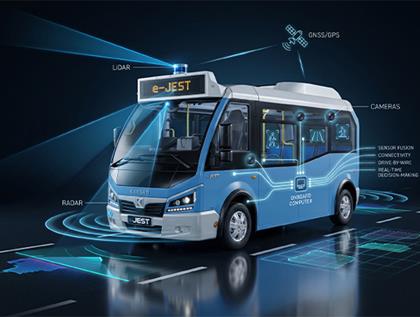
14 September 2026What Makes a Bus Truly Autonomous? The Sensors and Systems Behind Karsan's e-JEST
-
07 September 2026Measuring Sustainability in Public Transport: Which KPIs Matter Most?
-
28 August 2026Karsan × Toyota: Building the Hydrogen Bus of the Future

MaaS is evolving the way cities think about transportation — creating a seamless, integrated, and sustainable transportation system using digital technologies.
MaaS is changing our relationship with transportation — shifting from ownership to mobility access.
This shift has the potential to reduce traffic congestion, lower emissions, and influence the ways citizens interact with their cities.
What is Mobility as a Service (MaaS)?
Mobility as a Service (MaaS) refers to an integrated, digital platform that enables users to plan and pay for trips using a single interface with multiple forms of transportation — public, private, shared, and active.
With MaaS platforms, users do not need to switch between different apps to find the most convenient form of transportation — they can:
• Plan end-to-end trips based on their needs
• Compare the price, time, and environmental impact of the available transportation options
• Buy multi-mode tickets
• Obtain real-time data on route availability and service hours
Examples of MaaS platforms include Whim in Helsinki; Jelbi in Berlin; and Breeze in the UK's Solent Region.
Each example illustrates the ability of MaaS to provide easy access to a complex network of transportation services and create a better experience for travelers.
Core Elements of MaaS
In order to be successful, MaaS must integrate the following three layers:
• Services — Provide users with multiple transportation options (public transportation, ride-hailing, bike sharing, peer-to-peer car sharing) within one platform.
• Mobility Solutions — Enable users to dynamically adjust their routes based on factors such as time, distance, and carbon footprint.
• Integration — Allow users to plan, purchase, and pay for their transportation using one interface without needing to access separate provider websites or mobile applications.
When done well, MaaS provides true interoperability, which is when a train ticket, bike rental, and ride-share are all part of the same digital platform.
Why MaaS Matters?
MaaS represents a major step forward in the creation of sustainable, efficient, and inclusive mobility systems.
Beyond providing a more convenient option for traveling, MaaS also has the potential to:
• Reduce traffic congestion — MaaS optimizes the usage of shared and public transportation to decrease the number of single-occupancy vehicle trips.
• Lower emissions — MaaS promotes the use of low-carbon and active transportation options to help cities meet their decarbonization commitments.
• Save money — Users have greater access to affordable, predictable travel options than they would if they relied solely on personal vehicles.
• Provide useful data — MaaS generates significant amounts of data that city planners and transportation agencies can use to inform their decisions regarding infrastructure and policy.
• Promote inclusivity — MaaS provides equitable access to all users — regardless of physical abilities — by offering accessible routing, voice-enabled interfaces, and real-time customer support.
Government and Policy Frameworks
The UK Department for Transport (DfT) has recognized MaaS as a key enabler of the Future of Mobility: Urban Strategy and has established guiding principles to ensure innovation in mobility is developed responsibly and with consideration for all stakeholders.
Guiding Principles:
• Design safety and security into every aspect of innovation.
• Ensure that benefits of innovation are equally accessible to all regions and demographics.
• Prioritize walking and cycling for short trips (active travel).
• Lead the transition to zero emission transportation.
• Develop and integrate multimodal systems that utilize open data and operate fairly among competitors.
The Future Transport Zones (FTZ) program, with an investment of £92m, is testing MaaS platforms such as Solent's Breeze and Scotland's Go-Hi, which aim to simplify multimodal travel and encourage environmentally friendly choices.
MaaS in Action: Examples of Successful Deployments
Whim — Helsinki, Finland
Whim was developed by MaaS Global and brings together metro, bus, taxi, and e-scooter options into a single subscription-based application. Whim enables users to plan, book, and pay for their trips in seconds and supports shared mobility and reduced car ownership.
Glimble — Netherlands
A joint effort between Arriva Netherlands and Moovit, Glimble provides accessible features for visually impaired users, such as step-free trip planning, and demonstrates the capability for inclusion and digital innovation to co-exist.
Go-Hi — Scotland, UK
Go-Hi integrates airplanes, ferries, and on-demand transportation to connect remote Highland and Island communities and to support sustainable tourism.
These deployments demonstrate how MaaS can be adapted to meet the unique transportation needs of each city and region.
Challenges to Implementing MaaS and the Need for a Code of Practice
While MaaS has tremendous potential, there are still many barriers to entry to implementing MaaS.
Some of the main challenges facing MaaS are:
• Fragmentation of data and ticketing systems,
• Varied levels of accessibility standards,
• Conflicting commercial interests,
• Concerns related to privacy and data sharing.
To overcome some of these challenges, the UK's Department for Transport (DfT) has proposed a voluntary Code of Practice for MaaS — a set of guidelines designed to facilitate innovation while maintaining accountability.
The Code of Practice will focus on the following areas:
• Accessibility and inclusion,
• Active and sustainable travel,
• Data standards and interoperability,
• Transparency and protection of consumers,
Unlike early regulations that may have restricted innovation, the UK is instead seeking to guide the development of MaaS through collaboration to foster growth in innovation and build trust with the public.
The Way Forward
MaaS is not simply a convenience — it is a foundation upon which to develop the next generation of connected, sustainable cities.
By combining digital innovation, multimodal transportation, and user-centered design, MaaS can assist governments, companies, and citizens in achieving:
• Cleaner mobility consistent with net-zero climate targets
• Smart urban design through the use of real-time transportation data
• Equitable access to employment opportunities, education, and health care
• Reduced reliance on personal vehicle ownership
As government agencies and private operators work collaboratively under common principles and open data frameworks, MaaS may fundamentally alter what it means to move — from individual transportation to mobility for all.
Key Takeaway
Mobility as a Service represents a fundamental paradigm shift — transportation that is shared, smart, and sustainable.
It is not simply about how we travel — it is about developing cities that are cleaner, more connected, and more centered on the needs of citizens.